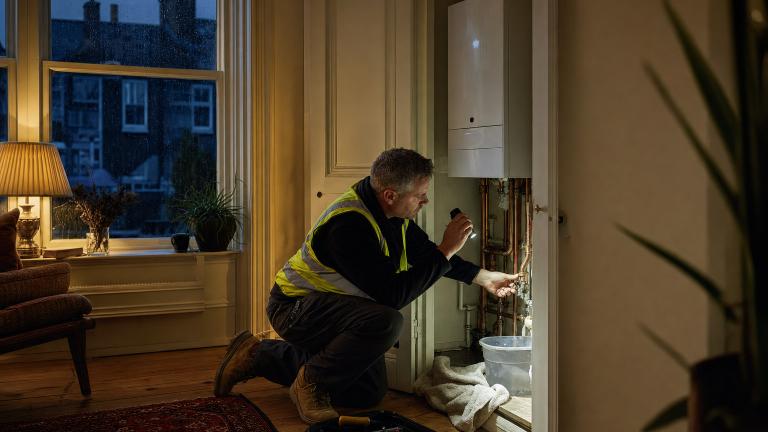
An emergency repair is one where waiting makes things materially worse: someone's health or safety is at risk, the property is not secure, or damage is escalating faster than you can contain it. That is the whole test. It is not decided by how distressed the caller sounds, how much the fix will cost, or what time of night it is. Settle those three questions on the first call and you will classify most out-of-hours reports correctly. Below is a definition you can put in a tenancy agreement, the grey areas that cause the real disputes, and a triage process that survives a bad Friday night.
The three-part test
Is anyone at risk?
Gas, electricity, fire safety, structural collapse, and anything that makes the home unsafe to occupy. Risk is judged against the real occupants, not an average household: a dead boiler in mild October weather with three healthy adults is not the same job as the same boiler with a newborn or an elderly resident in the property. Record the vulnerability when the fault is reported, because it changes the category.
Is the property secure?
A front door that will not lock, a smashed ground-floor window or a forced communal entrance is an emergency whatever the hour. Leaving a property insecure overnight also causes problems with the insurer later.
Is the damage escalating?
A slow drip into a basin is not escalating. Water running through a light fitting, a bulging ceiling or a soil stack backing up into a bath is. Ask: how much worse is this in twelve hours?
What almost always counts as an emergency
- Suspected gas escape or a sounding carbon monoxide alarm. Tell the caller to turn off at the meter if safe, open windows, avoid switches and naked flames, leave, and ring the National Gas Emergency Service on 0800 111 999 in Great Britain before they ring you.
- Exposed live wiring, burning smells, scorched sockets, or water reaching a consumer unit.
- Total loss of electricity that is not a network fault. In Great Britain, 105 confirms whether the distributor is already on it.
- Burst pipe, uncontrolled leak or flooding, including any leak into a flat below.
- Total loss of water supply, once a supplier-side interruption is ruled out.
- No heating or hot water in cold conditions, or at any time where an occupant is vulnerable.
- Sole WC unusable, or a blocked drain causing foul water back-up.
- Structural danger: falling masonry, an unsafe ceiling or staircase, storm damage to roof or chimney.
- Fire safety failures in a block: a dead alarm panel, a fire door that will not close, a blocked escape route.
Urgent is not the same as emergency
Urgent work needs a response this week, not a night rate: one dead socket circuit, one radiator out of six, a failed extractor fan, a dripping tap, an oven out of action where there is a working hob. Routine covers everything with no safety or habitability angle. The discipline is being willing to say "that is urgent, we will attend Thursday" and then attending on Thursday. Most escalations come from broken promises on ordinary jobs, not from misclassified emergencies.
The grey areas
Heating and hot water
Weigh season and occupant together. In winter, or where the household includes young children, older residents or anyone with a relevant condition, loss of heating is an emergency. Outside that, next-day attendance with temporary heaters delivered the same evening is usually defensible, logged with times.
Damp and mould
Long-standing mould is not an emergency at 9pm, but it is not routine either, and the regulatory direction has been firmly towards fixed response timescales. Awaab's Law set statutory timescales for social landlords, with extension to the private rented sector provided for under the Renters' Rights Act, so check the current commencement position for your sector before writing your own service levels. Where mould comes with an active leak, treat it as escalating damage and attend.
Partial loss
One of two bathrooms out of use is urgent; the only bathroom is an emergency. Half the sockets dead is urgent, unless the cause is unexplained tripping, which makes it an electrical safety question.
Damage the tenant caused
Cause does not change the category. If it is dangerous, attend, then recharge afterwards with evidence. Arguing liability at 11pm produces a complaint and does not fix the door.
The legal floor is only a floor
Section 11 of the Landlord and Tenant Act 1985 puts repair of the structure and exterior, and of the installations for water, gas, electricity, sanitation, space heating and water heating, on the landlord in most tenancies. Around it sit fitness for human habitation requirements, the HHSRS hazard framework, current gas safety rules, and electrical safety standards requiring remedial work within the timescale stated in the inspection report. Scotland and Wales run their own frameworks, so confirm which applies before quoting a duty to a landlord.
None of that hands you a tidy number of hours. It requires action within a reasonable time, judged by severity. That is why your written definition matters more day to day: tenancy agreement, tenant handbook and contractor instructions should share one set of categories and response targets you can genuinely meet.
A triage script that holds up
Ask these in order, every time:
- Is anyone hurt or in immediate danger? If yes, 999 first.
- What is happening right now, and when did it start?
- Is gas, water or electricity involved, and has anything been isolated?
- Who is in the property tonight, and is anyone vulnerable?
- Is the property secure and habitable as it stands?
- Can the occupant stay put safely, and what should they do in the meantime?
- Access: who will be there, and is there parking, a key safe or a door code?
Number seven is the one people skip, and the one that wastes the callout fee. If you are recruiting trades to staff the rota behind these calls, our sister community for UK contractors, Contractor Club, is one place to look.
Make safe first, repair second
Nearly every genuine emergency is two jobs. Stop the harm tonight: isolate the circuit and provide temporary lighting, cap the pipe and dry down, board the window and fit a temporary lock. Then raise the permanent repair as a separate, scheduled, priced piece of work, which protects the out-of-hours budget and shows the landlord what was spent under pressure.
Raising an urgent job in Plan@Job
Plan@Job is built around a job brief rather than a message thread, which is what makes that two-stage split easy to run. You raise the job with what the call gave you: property, reported fault, occupant and vulnerability notes, access details and the make-safe instruction.
Sophie Bennett, the AI Enquiries Coordinator, reviews that brief and asks for what is missing, such as a vague fault description or no access arrangement, with a two-attempt handoff to a person if she gets no answer. She does not sweep your inbox and convert every email into a job. Raising the job stays your decision.
You then split the work into internal stages on the project plan: make safe tonight, permanent repair next week, drying or decoration after that. Each stage carries its own scope, dates, status and costs. Your client, landlord or freeholder, sees the overall agreed scope and price plus the evidence you share, while internal stage costs and subcontractor identity stay internal. There is no automatic critical path, so sequencing stays your call, which is what you want at 11pm.
Daniel Reed, the AI Operations Manager, supports sharing eligible work with your existing vetted network, chases quotes and proposed dates, and produces a morning brief so overnight jobs are the first thing you see each day. He does not award work, set prices or move money: awarding, price approval and the decision to enter without notice stay with a person, and the AI staff page sets out those limits.
Illustrative example, not a customer case. A tenant rings at 22:40 with water coming through the kitchen ceiling light. Triage isolates the lighting circuit and the stopcock, confirms two adults and a toddler in the flat, and confirms a key safe. Stage one is the same-night make safe. Stage two is the failed tap connector in the flat above, booked for Tuesday. Stage three is ceiling reinstatement after drying, priced for the landlord.
Raise urgent jobs in two minutes on Plan@Job. See how it fits a managed portfolio on the property managers page.
FAQ
Is no heating and hot water always an emergency repair?
No, but it is close to it for much of the UK year. Treat it as an emergency in cold weather, or at any time where the household includes an infant, an older resident or someone whose health is affected by cold. Otherwise supply temporary heating that evening and attend the next working day, recording what you provided.
Can I enter a rental property without notice for an emergency repair?
The default is 24 hours' written notice at a reasonable time. Entry without notice is defensible where there is genuine risk to life, safety or the building, such as a gas escape or active flooding, but a named person should authorise it and record the reason, the time and who attended.
Who pays for an out-of-hours callout if the tenant caused the problem?
Attend first, settle the invoice afterwards. If the tenancy agreement permits recharging tenant-caused damage and you hold evidence such as photographs, the contractor's report and your triage notes, recharge through your normal process. Never make attendance conditional on payment where safety or habitability is at stake.