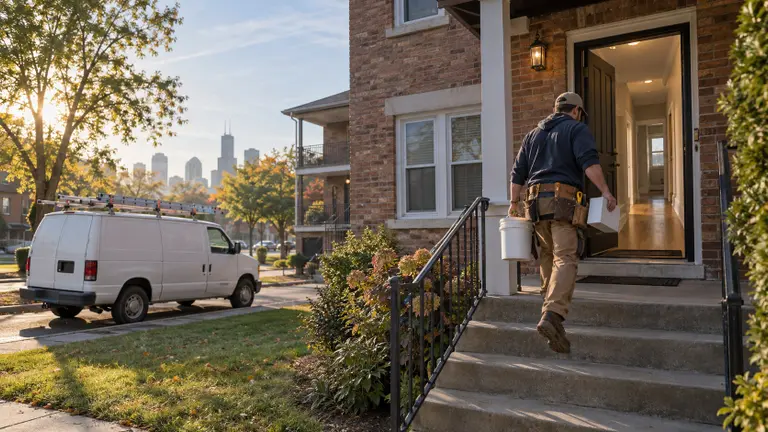
Section 8 contractor work is one of the steadiest sources of repeat jobs a small contractor can build. Every voucher unit has to pass a housing authority inspection before a new tenant moves in, and it gets inspected again on a regular cycle after that. The landlord can't skip that step, and the housing authority's share of the rent doesn't start until the unit passes. That's where you come in.
This isn't glamorous work. It's turnovers, punch lists and smoke alarms. But it keeps coming, because the system creates it. Here's how it works and how to run it without losing your margin.
What Section 8 contractor work actually is
Section 8 is the Housing Choice Voucher program. HUD funds it and local public housing agencies (PHAs) run it. The tenant pays part of the rent. The PHA pays the rest straight to the landlord under a Housing Assistance Payments contract, usually called the HAP contract.
You're not working for HUD, and you're not working for the housing authority. You work for the landlord or the property manager. HUD writes the standard, the PHA sends the inspector, and the landlord needs someone who can get the unit through.
The work comes in three shapes:
- Turnovers. The tenant moves out and the unit has to be made ready and pass an initial inspection before the next lease starts.
- Failed inspection repairs. A unit fails its periodic inspection and the landlord gets a list of items with a deadline.
- Pre-inspection walk-throughs. A smart landlord pays you to walk the unit before the inspector does, so nothing fails in the first place.
The third one is the best client you'll get. More on that below.
Why HUD turnovers keep coming back
Tenants move. Every move-out leaves the landlord with an empty unit earning nothing until it's turned and passed. The landlord feels every vacant day, and that pressure is what fills your calendar.
On top of that, voucher units get inspected on a cycle. Depending on the housing authority, that's every year or every two years. Every cycle, some units fail.
There's a third reason, and it's the one people miss. The standard is written down. You're not arguing about taste with a landlord who wants a different shade of gray. You're working to a checklist. Either the outlet near the sink is GFCI protected or it isn't. That makes quoting cleaner and arguments shorter.
Now the ugly side. Some units come back trashed. Some landlords pay slowly. Some just want the cheapest number and will call you at 9pm because the inspector is coming tomorrow and nothing's been done. You handle that with process. Take a deposit on big turns, photograph everything before you touch it, and get the scope in writing before the van leaves the yard.
NSPIRE or HQS: which standard are you working to?
For years, voucher units were inspected against Housing Quality Standards (HQS). HUD has replaced that with NSPIRE, the National Standards for the Physical Inspection of Real Estate. Public housing moved over first. For voucher units, the switch date has been pushed back more than once.
So don't guess. Call the local housing authority, or ask the landlord to, and find out which standard they're inspecting to right now. Get a copy of the checklist or inspection form they actually use. That one call saves you from redoing work.
The items that fail units again and again
The exact wording depends on the standard, but these come up all the time:
- Smoke alarms missing, painted over, or not working, plus carbon monoxide alarms where there's a fuel-burning appliance or an attached garage
- Outlets near water with no GFCI protection, missing cover plates, or exposed wiring
- Water heater relief valve with no proper discharge line
- Windows that don't lock, broken glass, or bedroom windows painted shut
- Peeling or chipped paint, which is a much bigger deal in older buildings
- Missing handrails on stairs, and trip hazards in floors and steps
- Stove burners that don't work, or a fridge that doesn't hold temperature
- Signs of pests, leaks or mold
The clock matters. Life-threatening items generally have to be fixed within 24 hours. Most other items typically get 30 days, unless the housing authority sets a shorter deadline. If the landlord misses it, the PHA can abate the payment, which means it stops paying its share. That's why a failed inspection is an emergency for the landlord and a fast job for you.
How to run a Section 8 turnover without losing your margin
This is the order I'd run it in. It's the same way I'd explain it to my own team.
- Walk the unit with the PHA checklist in hand. Not a generic list - their list.
- Photograph every room, every wall, every appliance before anyone touches anything. Those photos protect you when the landlord says the damage wasn't there.
- Write the scope and price it as stages: clean-out, repairs, paint, safety devices, final clean. One number for the landlord, but you know what each stage costs you.
- Sequence it properly. Pest treatment and clean-out first, then repairs, then paint, then the safety devices, then the clean. Paint before alarms, or you'll be replacing alarms covered in overspray.
- Do your own inspection before theirs. Test every alarm, every outlet, every burner, every window lock.
- Hand it back with after photos, so the landlord sees what they paid for.
Two things to get right before you start.
If the building was built before 1978, the EPA's Renovation, Repair and Painting rule applies when you disturb paint. Get your firm certified and follow lead-safe work practices. Plenty of voucher units are in older housing stock, so this isn't a side issue.
Licensing is set by your state and sometimes your city. Electrical and plumbing work goes to properly licensed trades. Carry general liability insurance and have your certificate ready, because a serious landlord or manager will ask for it.
What a Section 8 landlord actually needs from you
When I ran my maintenance company in London, a lot of our work came from housing associations. That's social housing, and it's the same game as Section 8. An empty unit, a standard to hit, a landlord losing rent every day it sits. The rule I took from it: you don't keep that client by being the cheapest. You keep them by handing the unit back ready.
It's not the price - it's the pass.
A landlord with ten or twenty voucher units doesn't want to manage you. They want one call, a clear quote, a date, photos, and a unit that passes the first time. Give them that and you're not a contractor they shop around. You're the one they call when the next move-out notice lands.
If you want to think harder about that position, holding the client and running subs underneath you, I write about the strategy side at Construction Arbitrage.
Where Plan@Job fits
Plan@Job is AI-powered project and operations management for construction and property businesses. In Plan@Job, you're the Operator: the contractor business that manages the client, the project, your subcontractors and your own crew.
Illustrative example, not a real job: a two-bedroom voucher unit comes back after a move-out. In the project plan you split it into internal stages - clean-out, drywall repairs, paint, smoke and CO alarms, final check - each with its own scope, dates, status and cost. Some stages go to a sub, some to your own crew. The landlord sees the agreed overall scope and price plus the photos you share. Your stage costs and the name of your sub stay internal.
The AI staff handle the chasing. Sophie Bennett, the AI Enquiries Coordinator, checks the job brief for missing information, like access details or the inspection date, and asks for it. Daniel Reed, the AI Operations Manager, follows up on quotes and proposed dates and puts together a morning brief. Maya Collins, the AI Finance Coordinator, prepares the deposit request and overdue payment actions for you to approve.
What stays with you: the price, who does the work, and every payment action. Nothing gets awarded or sent for money without your decision.
Here's the honest part. The UK is our live market right now. In the United States, Plan@Job is on a reservation list, and I'm not going to promise you a pipeline of Section 8 landlords on day one. What it's built for is the year-round, inspection-ready repair work those landlords need, run properly with your margin protected.
If that's the work you're building, reserve your place on the US contractors page. Meanwhile, go win two or three voucher landlords locally, run their turnovers clean, and let the inspections keep bringing you back.
FAQ
Do I need a special certification to do Section 8 contractor work?
There's no general HUD license for contractors doing voucher repairs. You need whatever your state and city require for the trades involved. If you're disturbing paint in a pre-1978 building, you need EPA RRP certification, and many landlords will want to see your insurance certificate too.
Who pays me, the landlord or the housing authority?
The landlord. The housing authority pays its share of the rent to the landlord, not to contractors. Your contract is with the landlord or their property manager, so agree the scope, price and deposit with them before you start.
How fast do failed inspection items need to be fixed?
Life-threatening items generally have a 24-hour deadline. Most other items typically get 30 days, but the housing authority can set a shorter date, so read the notice. If the landlord misses the deadline, the PHA can stop its payment, which is why these jobs move fast.