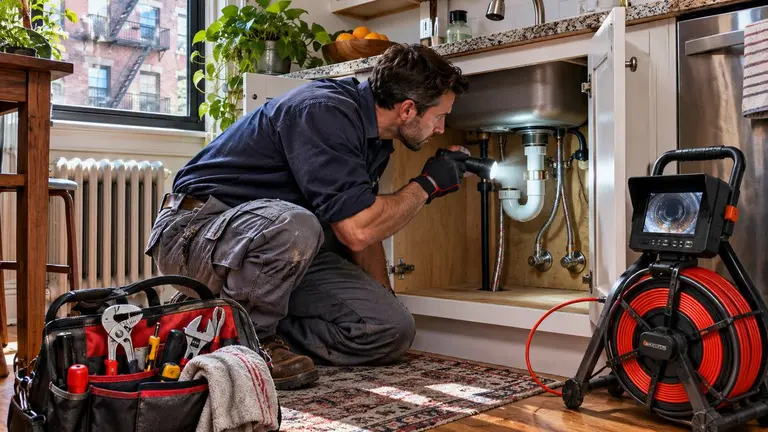
Repeat plumbing callouts in apartments usually come from three things: the first visit fixed the symptom instead of the cause, the work order was missing the details the plumber needed, or nobody noticed the same unit, fixture or stack kept coming back. You reduce them by fixing all three. That means writing better work orders, asking for a proper closeout on every visit, and tracking repeats so someone decides when to stop patching and start investigating.
This guide is for property managers and the maintenance contractors who work for them. Both sides lose when a plumber goes back to the same unit for the same problem. The resident loses patience, the manager loses time, and the contractor loses a slot that could have been paid work.
Why apartment plumbing problems come back
Apartment plumbing is not a set of separate houses. Units share drain stacks, risers and sometimes water heaters. A problem in one unit can start somewhere else in the building.
The symptom gets fixed, the cause does not
A tech snakes a slow kitchen drain, the water runs, and the ticket closes. Two weeks later it is slow again. The snake punched a hole through a grease buildup, but the line is still coated. The visit looked successful and changed nothing.
Shared lines hide the real source
Stacked units on the same kitchen or bathroom line often report problems one at a time. Each call gets treated as a single-unit job. The real issue may be in the stack, the horizontal run below it, or the building drain.
The work order did not say enough
A ticket that reads "sink leaking" sends a plumber out without knowing which sink, where it leaks, or whether it is the supply, the drain or the faucet. They may arrive without the right parts and have to come back. That second trip counts as a repeat even if the job was simple.
Track repeats by unit, fixture and stack
You cannot reduce something you do not count. Decide what a repeat means for your portfolio and apply it the same way every time.
A simple working definition:
- Same unit, same fixture, same type of problem.
- Within a window you choose, such as 30, 60 or 90 days.
- Or any problem on a fixture that shares a line with a unit that had the same issue recently.
Then tag each plumbing ticket with:
- Building and unit number.
- Fixture (kitchen sink, tub, toilet, water heater, washer box).
- Stack or line, if your building drawings or your plumber can identify it.
- Problem type (clog, leak, no hot water, low pressure, running toilet).
Once a month, sort by building and line. Look for clusters. Three kitchen clogs on the same vertical line in a quarter is not three bad tenants. It is a line that needs a camera inspection.
Write work orders that get fixed the first time
The first-time fix starts with the request. Before a plumbing ticket goes to a tech or a contractor, check it has these details:
- Unit, fixture and exact location. "Unit 4B, hall bathroom, leak at base of toilet" beats "bathroom leak".
- What the resident sees. Water on the floor, a drip, a smell, gurgling, slow drain, no hot water.
- When it started and whether it is getting worse.
- Photos or a short video. A photo under the sink tells a plumber more than a paragraph.
- Whether neighboring units are affected. Ask about the unit above, below and next door if it is a drain or water issue.
- Previous visits. List any recent tickets on the same fixture or line, with what was done.
- Access details. Permission to enter, pets, preferred times, and where the shutoff is if known. Follow your lease and your state and local entry notice rules.
- Urgency. Active water damage or no water needs a different response from a slow drip.
If a request is missing key details, get them before dispatch. A short follow-up message to the resident costs far less than a wasted trip.
Set a closeout standard for every plumbing visit
Maintenance contractors can cut repeats by agreeing a closeout standard with the property manager. It also protects the contractor when a problem returns, because the record shows what was found.
Ask for this on every plumbing job:
- Cause found. Not just "cleared drain" but "grease buildup in kitchen branch line".
- Work done and parts used.
- Before and after photos.
- Whether the cause is fixed or only the symptom. Be honest. "Line cleared, but likely to recur without jetting" is useful information.
- Recommendation. Camera inspection, jetting, part replacement or fixture replacement, with a rough scope.
- Follow-up needed, yes or no.
A manager reading that closeout can decide whether to approve further work now or wait. Without it, the next ticket starts from zero.
Common repeat callouts and what to check
These are general starting points. Your plumber will know the building and the fixtures best, and plumbing work should follow your state and local licensing and code requirements.
Slow or clogged kitchen drains
Often grease and food waste on a shared line. If the same line keeps clogging, ask about a camera inspection and jetting rather than another snake. Resident guidance on grease and garbage disposal use can help, but it rarely fixes a line that is already coated.
Running toilets
Worn flappers and fill valves are common. If they fail quickly across a building, ask whether water quality, mineral buildup or cheap replacement parts are part of the problem. Standardizing on one reliable part makes future visits faster.
Leaks under sinks
Loose slip joints, worn supply lines and failed P-trap washers are frequent causes. A plumber who replaces old supply lines while there, with approval, may prevent the next call.
Water heater issues
No hot water, leaks or noise can point to sediment, failing elements, thermostats or tank failure. Age matters. A unit near the end of its expected life may not be worth another repair. Any leak from the temperature and pressure relief valve should be looked at by a qualified plumber, not reset and ignored.
Low water pressure
Check aerators and faucet cartridges first. If several units report it, the issue may be at the building supply or a pressure reducing valve.
Decide when to stop repairing and replace
This is a human decision, not something a schedule or a software rule should make alone. A property manager or owner needs to weigh:
- How many times the same fixture or line has been repaired.
- What those visits cost in total.
- The age and condition of the fixture or system.
- Resident impact and any water damage risk.
- Whether a larger fix, like jetting a stack, would prevent calls on several units at once.
Set an approval threshold so contractors know when to pause and ask before spending more. Many managers also agree that after a set number of repeats on one fixture, the next visit must include a recommendation, not just a repair.
Where Plan@Job fits
Plan@Job is AI-powered project and operations management for construction and property businesses. Property maintenance is one of its main uses. The workflows that matter for repeat plumbing callouts are the ones covered above: complete job briefs, clear stages, and shared evidence.
Illustrative scenario, not a real customer: A manager logs a slow kitchen drain in Unit 3C. Sophie Bennett, the AI Enquiries Coordinator, checks the job brief, sees there are no photos and no answer on whether neighbors are affected, and asks for clarification. If the details still do not arrive after two attempts, the job is handed to a person. The operator, meaning the contractor business managing the work and its team, can split a larger fix into internal stages, such as camera inspection and then jetting, each with its own scope, dates, status and costs. The client sees the agreed overall scope and price and the evidence that is shared with them. Daniel Reed, the AI Operations Manager, can follow up on quotes and proposed dates and give the team a morning brief. People still approve the work, the price and every award.
Plan@Job does not diagnose plumbing faults, decide on repairs or approve spending on its own. It helps the people doing that keep the information in one place. You can read more about the AI staff and how each role works.
Plan@Job is live in the UK first. For the United States, property managers can check availability and reserve a place on the US property managers page. Maintenance contractors can do the same on the US contractors page.
FAQ
What counts as a repeat plumbing callout?
There is no single standard. A practical definition is a return visit for the same problem on the same fixture or shared line within a window you choose, such as 30, 60 or 90 days. Pick one definition and apply it consistently so your numbers mean something.
Should the contractor pay for a repeat visit?
It depends on your service agreement and the cause. If the first repair was faulty, many contractors return at no charge. If the closeout said the cause was not fixed and recommended further work that was not approved, the return visit is usually new work. Put your terms in writing before it becomes a dispute.
How can I stop residents causing repeat clogs?
Clear move-in guidance on grease, wipes and garbage disposal use helps. But do not assume the resident is the cause. If one line keeps clogging across several units, ask your plumber to inspect the line itself before blaming anyone.