
To recruit subcontractors in the UK with a trade advert, start by checking who you already have, then write an advert for one trade in one area, describe the work honestly, ask for the checks you need up front, and give every new subcontractor a small trial job before you trust them with anything bigger. The advert is the easy part. The value comes from knowing exactly what gap you are filling and from checking people properly once they reply. This guide walks through each step in Plan@Job, the order to do them in, and which steps need your decision rather than the platform's.
In Plan@Job, the Operator is the contractor business: you run the clients, the projects, your in-house operatives and the subcontractors you bring in. Everything below is written for that role.
Step 1: check your own network first
An advert costs time. Before you write one, make sure you actually have a gap.
- Open Subcontractors from the main navigation.
- Filter or scan the list by trade and by area.
- Look at the vetting status next to each name. Some will be vetted and working with you already. Others will be businesses you have added but never checked.
- Open Directory and see whether a suitable business is already listed for the trade and town you need.
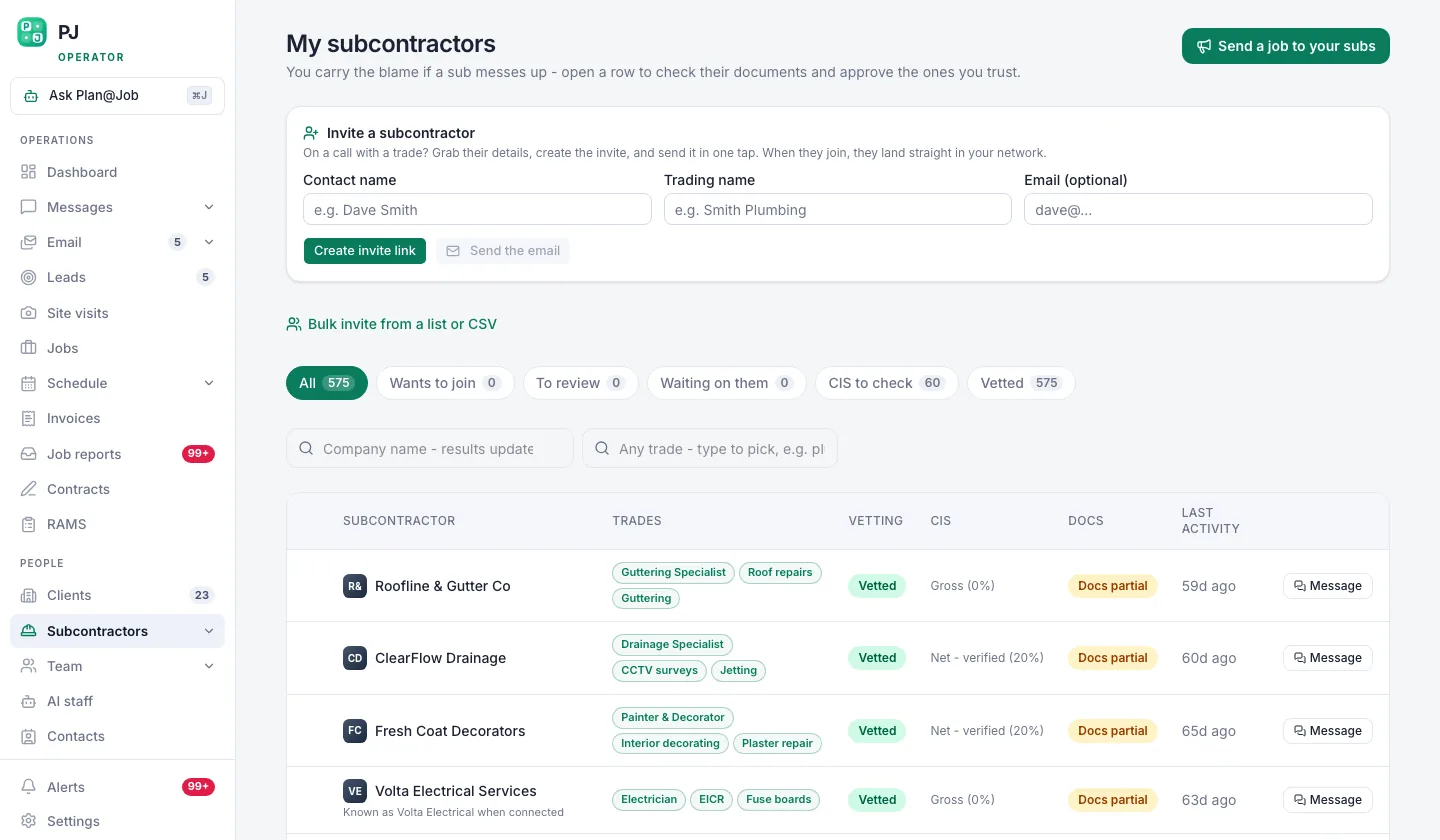 Your own subcontractor network, showing who is vetted and who is still a stranger.
If you have two vetted roofers who cover the town but are both booked solid, your problem is capacity, not coverage. That is a different advert from one where you have nobody at all.
Decide what the gap really is
This is your call, not the platform's. Write one line before you go further, for example:
- "No vetted plasterer within 20 miles of Reading."
- "One electrician in Leeds, and we lose a week every time he is on holiday."
- "Groundworks needed for a single extension job, not ongoing."
That line shapes everything in the advert.
Step 2: write the trade advert
When the directory is thin in a trade or a town, use the recruitment ads screen, which sits with your subcontractor tools.
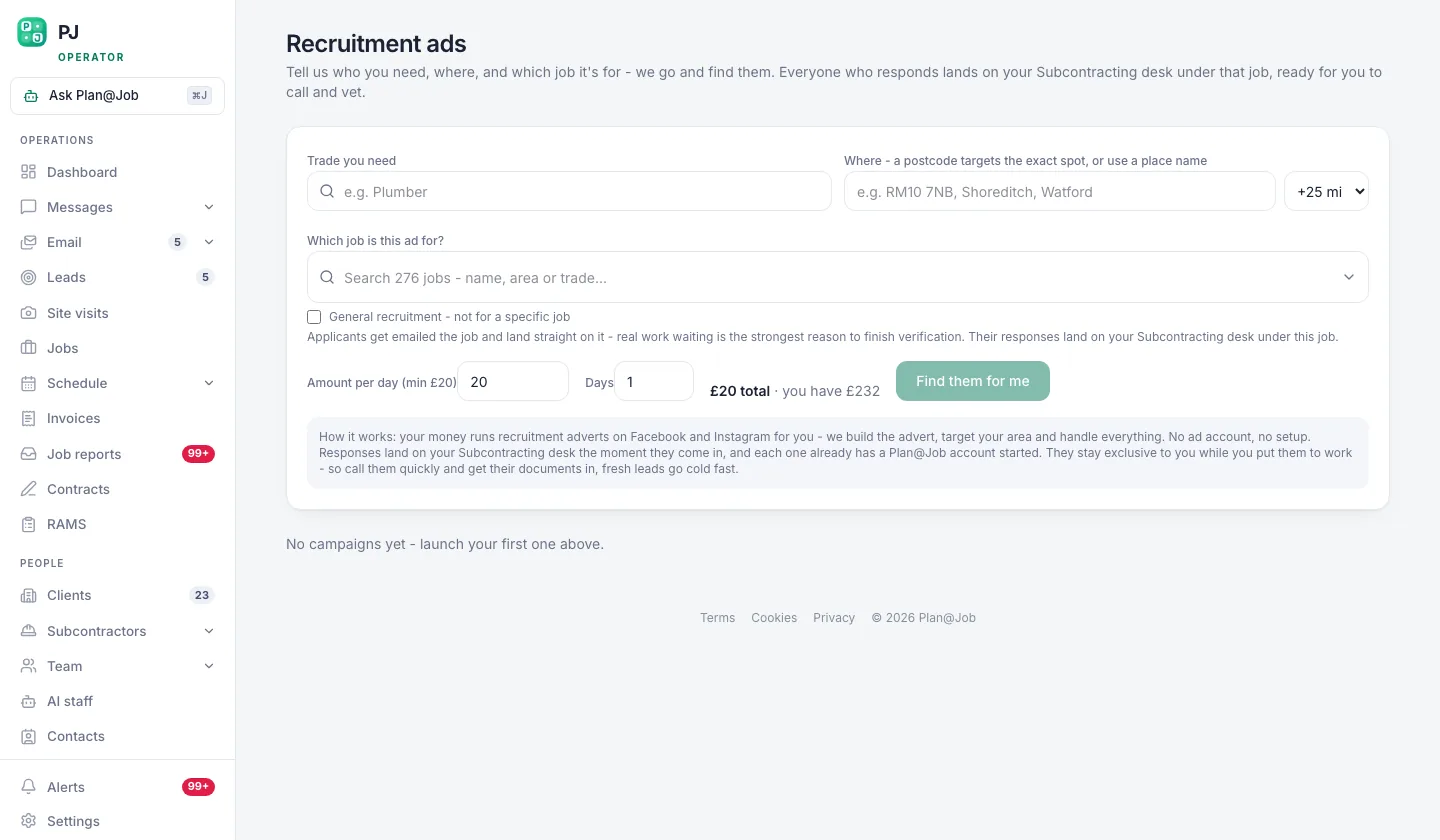 Recruitment ads for when the directory is thin in a trade or a town.
- Choose the trade. One trade per advert. A "multi-trader wanted" ad attracts people who are average at everything.
- Choose the city or area. Be specific about the patch you actually work.
- Write the description. Cover the points in the list below.
- Read it back as if you were the subcontractor, then publish it.
What a good advert says
Subcontractors get a lot of vague approaches. The ones worth having skip anything that sounds like unpaid quoting or chaos. Tell them:
- The type of work. Domestic refurbishments, reactive maintenance for letting agents, small commercial fit-outs. Be plain.
- How regular it is. A one-off job, occasional overflow, or steady weekly work. Do not overpromise volume you cannot give.
- The area. Towns and postcodes you cover, not "South East".
- What you need from them. For example, public liability insurance, the right competent person scheme or registration for their trade, and CIS details.
- How they get paid and when. State your normal payment terms in plain words. If you are vague here, good people assume the worst.
- What happens next. Tell them you will be in touch, ask for documents, and usually start with one small job.
Illustrative example
Fictional advert, for illustration only:
Plasterer wanted, Reading and Wokingham. We are a building contractor running kitchen, bathroom and loft projects for homeowners. We need a reliable plasterer for skimming and boarding on about two jobs a month, sometimes more. You will need public liability insurance and to be registered for CIS. We pay on agreed terms against completed, photographed stages. First job will be a small one so we can both see how it goes.
Notice what it does not say. No "top rates", no "loads of work", no promise of a long-term contract.
Step 3: handle the replies
Replies are where most recruitment falls apart, because they arrive in the middle of a busy week and get left.
- Keep every conversation in Messages so you have one record of what each person said and sent.
- Reply to every applicant within a day or two, even if it is a no. Your name travels in a local trade.
- Ask each promising reply for the same set of documents. Use a short checklist so you do not forget anything.
- Add the promising ones to Subcontractors. They will show as not yet vetted until you have done your checks.
The platform keeps the records together and shows the status. Deciding who looks worth a call is yours.
Step 4: check them before you rely on them
Plan@Job lets you record a new subcontractor before they are fully vetted, and in supported workflows a subcontractor may price work before vetting is complete. That is useful: you can see how someone prices and communicates early. It does not mean you should award them work blind.
Before you approve anyone, a person on your team should check:
- Insurance. See the certificate, check the dates and the level of cover suits your work.
- Trade registration or competence. For gas work, check current Gas Safe registration. For electrical work, check the relevant competent person scheme. For other trades, check whatever proof of competence your clients and insurers expect, such as CSCS cards where sites require them.
- CIS. Verify the subcontractor with HMRC under the Construction Industry Scheme before you pay them. HMRC's own guidance explains the current process.
- Employment status. If someone will work only for you, under your direction, check their status using HMRC's current guidance rather than assuming they are self-employed.
- References. Ask for one or two recent clients or contractors you can actually call.
Store the documents against the subcontractor record. Then a person approves them. The platform does not decide that someone is competent; it shows you who you have checked and who you have not.
RAMS and contracts
For anything beyond a small domestic job, get the paperwork right before they start. Use Contracts for your subcontract terms and RAMS for method statements and risk assessments on the job. A good subcontractor will expect this. One who resists it is telling you something.
Step 5: give them one small trial job
Do not hand a new subcontractor your biggest client on day one.
- Create the job in Jobs and split it into internal stages on the project plan, with scope, dates, status and costs.
- Assign one stage to the new subcontractor. Keep the rest in-house or with people you trust.
- Ask for photos and notes through Job reports at the end of the stage.
- Review the work yourself before you sign it off.
Your client sees the overall agreed scope and price and any evidence you choose to share. Internal stage costs and which subcontractor did the work stay internal. You can read more about this on the project management page.
After the trial, decide: keep, keep with conditions, or let go. Write a one-line note on the record so the next person in your team knows why.
Step 6: keep them busy once they are in
Recruiting is wasted if your new subcontractor never hears from you again.
- Use Cover a job or the Subcontracting desk when work needs covering, and offer it to vetted people first.
- If you use AI staff, Daniel Reed, the AI Operations Manager, can support eligible sharing of work with your existing vetted network and follow up on quotes and proposed dates. He does not award work or set prices. You do. See AI staff for what each assistant does.
- Pay on the terms you advertised. Late payment is the fastest way to lose a good subcontractor.
What usually goes wrong
Most failed recruitment comes down to a few habits:
- Advertising before checking the network. You recruit a stranger when a vetted firm was free.
- Vague adverts. "Builders wanted, good rates" brings replies you cannot use.
- Slow replies. The best applicants find other work in days.
- Skipping checks because you are busy. This is when uninsured work, CIS problems or bad workmanship land on your desk.
- No trial job. You learn about quality on the job where it matters most.
- Overpromising work. If you say "steady work" and deliver one job in three months, they will not pick up next time.
Fix these and an advert becomes a reliable way to fill gaps, not a gamble. If you want to compare notes with other UK contractors on finding good subbies, the Contractor Club community is a useful place to ask.
Run your subcontractor network in one place
Plan@Job gives operators one place for subcontractors, vetting status, adverts, jobs, contracts, RAMS and messages, with your team making the decisions that matter. See how it works for UK contractors on the contractors page.
FAQ
Can a subcontractor quote before they are vetted?
In supported workflows, yes. That lets you see how they price and communicate early. You should still finish your checks and approve them before you award the work.
Does Plan@Job check insurance and registrations for me?
No. Plan@Job stores the documents and shows each subcontractor's vetting status. A person on your team checks the evidence and decides whether to approve them.
Should I advertise for several trades at once?
Usually not. One trade in one area per advert gets clearer replies and makes it easier to compare applicants fairly.