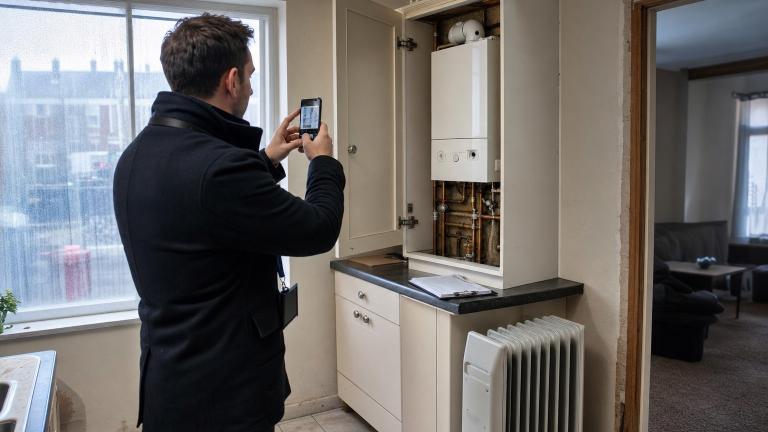
The honest answer is that there is no fixed statutory deadline in the private rented sector. A landlord must carry out the repair within a reasonable time of being told about it, and what counts as reasonable shrinks fast when the weather is cold, the loss is total, or someone in the household is vulnerable. In practice, most repairs policies treat a complete loss of heating or hot water as an emergency or high-priority job: attend within 24 hours, make the property safe and warm, then complete the permanent fix within a few days. If you manage property for landlords, the question you actually get asked is the tenant's version of that title, usually at 4pm on a Friday in January, and the answer you give sets the clock for everything that follows. Below is the legal test, the timescales that hold up when they are challenged, what "make safe" means when the part will not land until next week, and how to run the job so the record supports you later.
What the law actually says
The repairing obligation
For most tenancies granted for less than seven years, section 11 of the Landlord and Tenant Act 1985 requires the landlord to keep in repair and proper working order the installations for space heating and heating water. That obligation cannot be contracted out of, and it applies whatever the tenancy agreement happens to say.
Two other routes matter. The Homes (Fitness for Human Habitation) Act 2018 lets a tenant bring a claim directly where the property is unfit, without waiting for the council to act. And under the Housing Health and Safety Rating System, excess cold is one of the hazards environmental health officers assess, which gives the local authority its own enforcement powers regardless of what the landlord thinks is reasonable.
On the gas side, current gas safety rules require an annual check and a record, and only a Gas Safe registered engineer may work on gas appliances. This is a common way a no-heating job appears out of nowhere: an engineer attends for a routine safety check, classifies the boiler as immediately dangerous, caps it, and you now own an emergency you did not have that morning.
The clock starts when you are told
For defects inside the property, the duty generally bites from the point the landlord or agent has notice. That makes your reporting record the single most important document in the file. A timestamped entry saying "tenant reports no heating and no hot water, whole property, boiler showing fault code F28" is evidence. A note saying "tenant called about boiler" is not.
Where fixed timescales do exist
Social landlords work to specific statutory repair timescales under Awaab's Law, and the Renters' Rights Act creates the route to apply a Decent Homes Standard and similar hazard timescales to the private rented sector. Commencement has been phased, so check where it has got to before you quote a statutory deadline to a tenant or a landlord. Separately, your own management agreement, a landlord's insurer, or a selective licensing condition may impose response times stricter than the general law. Those bind you even when the statute does not.
The timescales that hold up in practice
These are sector conventions rather than statutory figures, but they are the ones that survive scrutiny:
- Total loss of heating and hot water, or any vulnerable occupant: attend the same day or within 24 hours, make safe, and provide temporary heating.
- Heating lost, hot water working, no vulnerability flag, mild weather: attend within a few working days.
- Intermittent fault, low pressure, one cold radiator: routine, batch it with other work on the property.
- Parts on order or a full replacement needed: the 24-hour target applies to attendance and making safe, not to the permanent fix. Temporary heating stays in place and the tenant gets a written update at every status change.
- More than a couple of weeks without permanent heat: escalate to the landlord in writing with options, costs and the risk if nothing is done.
Vulnerability is what moves a job up a tier, so record it on the property rather than in someone's memory: young children, older occupants, pregnancy, disability, respiratory or circulatory conditions, anyone recently discharged from hospital.
Making safe when the fix has to wait
A part on back order is not a defence, but a cold property with no interim measures is far harder to defend than a cold boiler with heaters in the rooms in use.
- Deliver appropriate electric heaters the same day, enough for the rooms actually being used, and confirm in writing who is covering the additional electricity. Usually the landlord. Never leave it unstated.
- If hot water is the only loss, check whether the cylinder has a working immersion heater. It is often the fastest route back to something workable.
- Keep the engineer's written classification if an appliance has been capped. It explains the gap.
- Alternative accommodation is the landlord's decision, not yours to offer. Put the recommendation in writing and let them decide.
Five things that turn a 24-hour job into a ten-day one
- A job brief that does not identify the appliance. Make, model, location, fault code and a photo of the data plate, captured at the point of reporting.
- No access arrangement. Key safe code, working hours, whether the tenant needs to be present.
- No vulnerability flag, so the job is triaged as routine by whoever picks it up.
- A quote sent out and never chased over a weekend.
- Nobody owning the job out of hours.
Running an urgent no-heating job in Plan@Job
Plan@Job is project and operations management for the operator, meaning the contractor business that manages clients, project delivery, subcontractors and its own operatives. Property managers use it alongside their operator, or run their own in-house maintenance team through it.
The brief is where an urgent job is won or lost, so the AI staff work on it first. Sophie Bennett, the AI Enquiries Coordinator, checks existing job briefs for missing information and asks for clarification, with a two-attempt handoff to a person if the answer does not come back. That means the missing boiler model gets chased before the engineer is standing in the kitchen, not after. Sophie does not automatically turn every incoming email into a job, so triage stays yours.
Daniel Reed, the AI Operations Manager, supports eligible sharing with your existing vetted network, follows up on quotes and proposed dates, and produces a morning brief. Friday's unanswered quote is on Monday's brief instead of buried in a thread. Note that subcontractors can price before vetting in supported workflows, with checks and approval happening at the appropriate stage, so getting a price on a Saturday is not blocked purely by the order of the paperwork. Nothing awards itself, sets a price or promises a date.
When it becomes a replacement, stage it
A full boiler replacement is no longer a single job. In a project plan you split it into internal stages, each with its own scope, dates, status and costs: make safe and temporary heating, survey and quote and landlord approval, removal and installation, then commissioning and the gas safety record. The client sees the overall agreed scope and price plus the evidence you share with them. Internal stage costs and subcontractor identity stay internal.
Two honest limits. Plan@Job does not build a critical path or schedule dependencies for you, so sequencing is a human decision. And tenant-facing messaging is still yours to send: the system gives you the current status and the evidence to attach, but do not promise a tenant an automatic feed.
Illustrative example, not a customer case. A managed two-bed flat loses heating and hot water on a Friday. The brief is raised with photos and a vulnerability flag; Sophie asks for the data plate photo the reporter forgot. A heating engineer attends Saturday morning, caps an unsafe boiler and leaves two electric heaters. The job is converted to a staged replacement, the landlord approves the quote Monday after Daniel's follow-up, and the install runs Thursday. Total gap on permanent heat: six days, every day of it documented.
What still needs a person's decision
Judgement calls that should never be automated: whether a household is vulnerable enough to escalate a tier; which engineer gets the job and at what price; repair versus replace above the landlord's authority threshold; alternative accommodation and any rent adjustment; and anything with legal exposure attached. Maya Collins, the AI Finance Coordinator, prepares deposits and overdue payment actions for approval where a replacement needs one, but approval stays with you.
If you are building a deeper bench of heating engineers to cover winter, Contractor Club is a community we also run for UK contractors and is one place to start looking.
Raise urgent jobs in about two minutes
The gap between a tenant's call and a properly specified job on an engineer's phone is the part you control. Raising an urgent job in Plan@Job takes a couple of minutes: the brief, the photos, the access details and the vulnerability flag, with Sophie chasing anything missing and Daniel chasing the quote. Everything after that is a record you can produce if the job is ever questioned.
Next step: see how UK property managers run maintenance and repairs on Plan@Job.
This article explains how the duty generally works. It is not legal advice, and you should check current guidance or take advice before relying on a specific timescale.
FAQ
Can a tenant withhold rent if there is no heating?
Not safely. Withholding puts the tenant into arrears and hands the landlord an arrears ground, whatever the state of the boiler. A limited repair-and-deduct route exists but has a strict process involving written notice, quotes and a reasonable time to act, and it is easy to get wrong. The safer sequence is a written report to the agent, then local authority environmental health, then a fitness-for-habitation claim with proper advice.
Is 24 hours a legal deadline for no heating in a private rented home?
No. It is a widely used policy and contractual standard rather than a general statutory rule in the private rented sector, where the test remains repair within a reasonable time of notice. Social landlords work to specific statutory timescales, and the private rented position is changing under the Renters' Rights Act, so confirm the current commencement position before quoting a fixed number.
Does a landlord have to provide temporary heaters?
There is no separate statutory duty to hand over heaters as such, but the duty to repair within a reasonable time, combined with the excess cold hazard assessment, makes it the sensible and usual step whenever a permanent fix will take more than a day or two. Supply enough for the rooms in use, and agree in writing who pays the additional electricity.