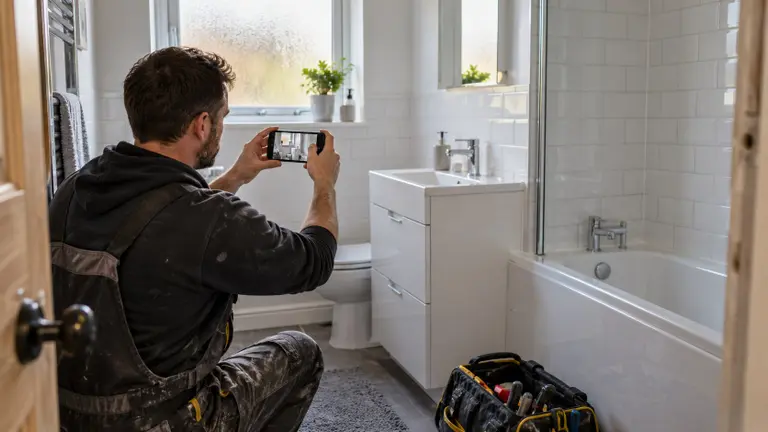
A property maintenance completion report is worth charging for. Just not as a piece of paper. Clients don't pay for a PDF. They pay for proof that the work happened and was done right, in a form they can forward to the landlord or their board without ringing you. If you price that and agree it on the quote, the report stops being free admin. It becomes the thing that gets your invoice paid.
I ran a property maintenance company in London working for housing associations and letting agents. The rule I ended up living by was simple: no photos, no invoice. That's not because clients are crooks. It's because the person approving your invoice was never at the property, and the report is all they've got.
Here's how to set it up, in the order you'd actually do it. I'm writing for operators. An operator is the contracting business that holds the client, runs the job and manages both subbies and its own operatives.
Should you charge for a completion report at all?
Yes. You just need to decide how before you quote. There are two ways to do it, and you pick per client.
- Build it into the price. The report is part of how you work and it's covered by your rate. Most reactive repairs for letting agents go this way. Nobody wants a separate line for a dripping tap.
- Put it on the quote as its own line. Some clients want more than standard proof. That could be room-by-room photos, a written note on condition, findings and recommendations for the next works, or a format their compliance team asks for. All of that is extra time on site and in the office, so price it as its own item.
Here's the part people hate hearing. If you didn't agree it before the job, you can't add it after. When a report line turns up on the invoice for the first time, you've got a dispute.
That call is yours, not the platform's. Plan@Job doesn't set your prices.
Keep one thing separate: statutory certificates. Gas safety records, electrical certificates and the like are issued by registered engineers under the current rules for that trade. Your completion report can reference them or sit alongside them. It doesn't replace them, so never sell it as if it does.
Step 1: Put the report in the scope
Open the job in Jobs and write into the scope exactly what the client gets at the end. If it's vague, the client will dispute it. If it's specific, they pay. A good standard list looks like this:
- before photos of the problem as you found it
- during photos of anything that gets covered up, like pipework behind boxing or a joist before the ceiling goes back
- after photos of the finished work, taken from the same angles as the before shots
- a short note of what was done, what was found and anything that needs a follow-up
- parts or materials replaced, if the client wants them listed
Once the client accepts the quote, they've accepted the report too. That's the whole trick.
On bigger jobs you might split the work into stages in the project plan. If you do, decide whether the report covers the whole job or each stage. The client sees the overall agreed scope and price, plus the evidence you choose to share. Your internal stage costs and which subbie did which stage stay internal.
Step 2: Brief whoever is going to site
The report is only as good as the photos, and the photos are taken by whoever is on site. That might be one of your operatives from Team or a subbie from Subcontractors.
When you assign the work and put it in the Schedule, add the photo list to the job brief. Tell them before they go, not after they've left the property.
Here's the ugly side. Subbies forget. Operatives forget. The after photo gets taken but the before doesn't, because they were keen to crack on. Once the old basin is in the skip, you can't get that photo back. So put it in the brief, then send a reminder in Messages on the morning of the job. It takes thirty seconds and saves you an argument.
This step is all people. The platform holds the brief and the messages, but you decide what goes in the brief and who goes to site.
Step 3: Build the report from the job
The photos and site notes go against the job, and the report is built from there in Job reports. You're not starting from a blank document every time, and you're not digging through a subbie's WhatsApp for pictures.
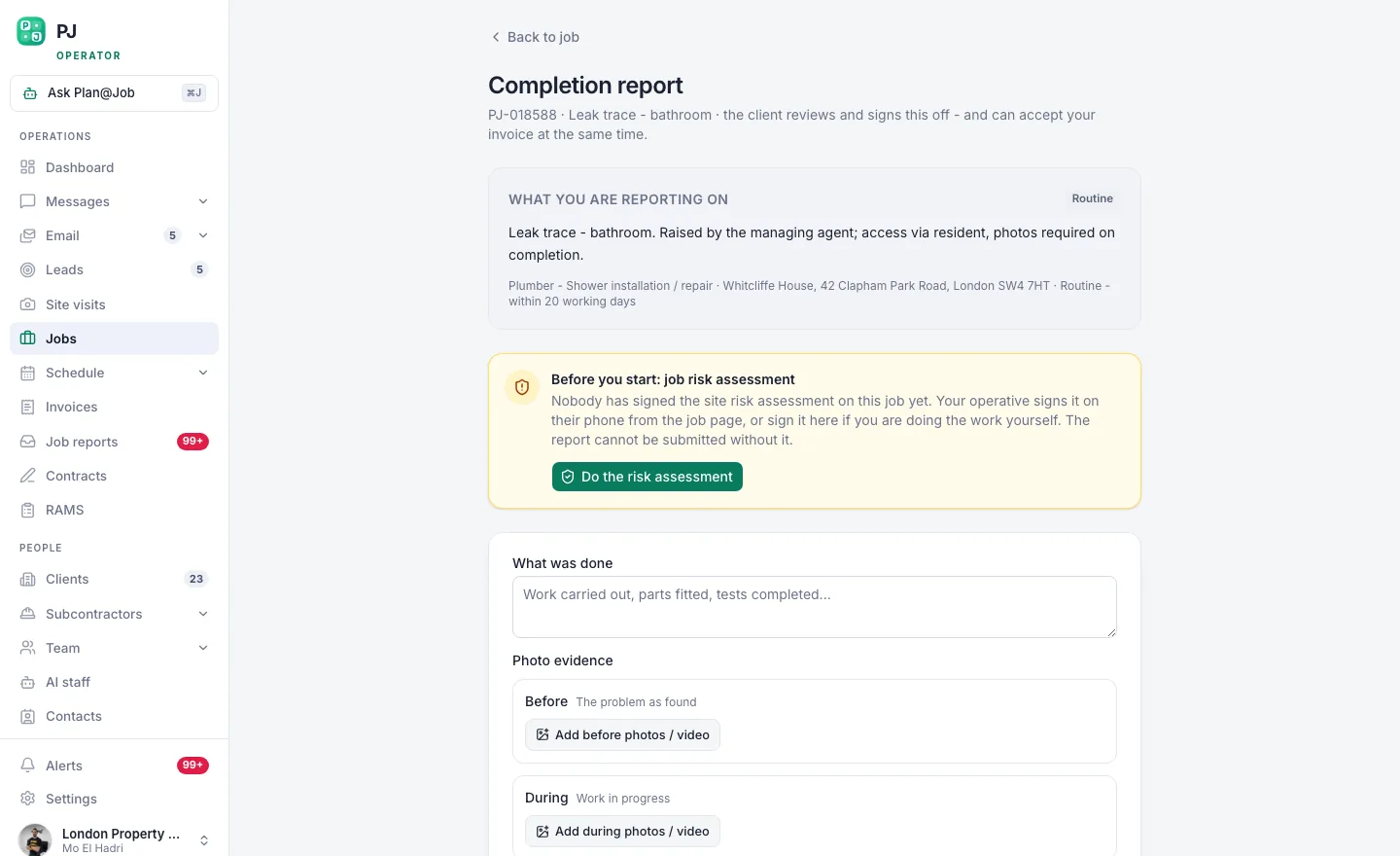 The completion report is the thing property managers actually pay for: proof the work happened.
The report goes out under your name, not the subbie's. The client is paying you and you hold the relationship. They see the evidence you share. They don't see who you subcontracted to or what you paid them. That's the margin in between, and it stays yours.
Step 4: Check every draft before it goes out
This step separates operators who get paid quickly from operators who chase. Every report sits in Job reports as a draft until somebody checks it.
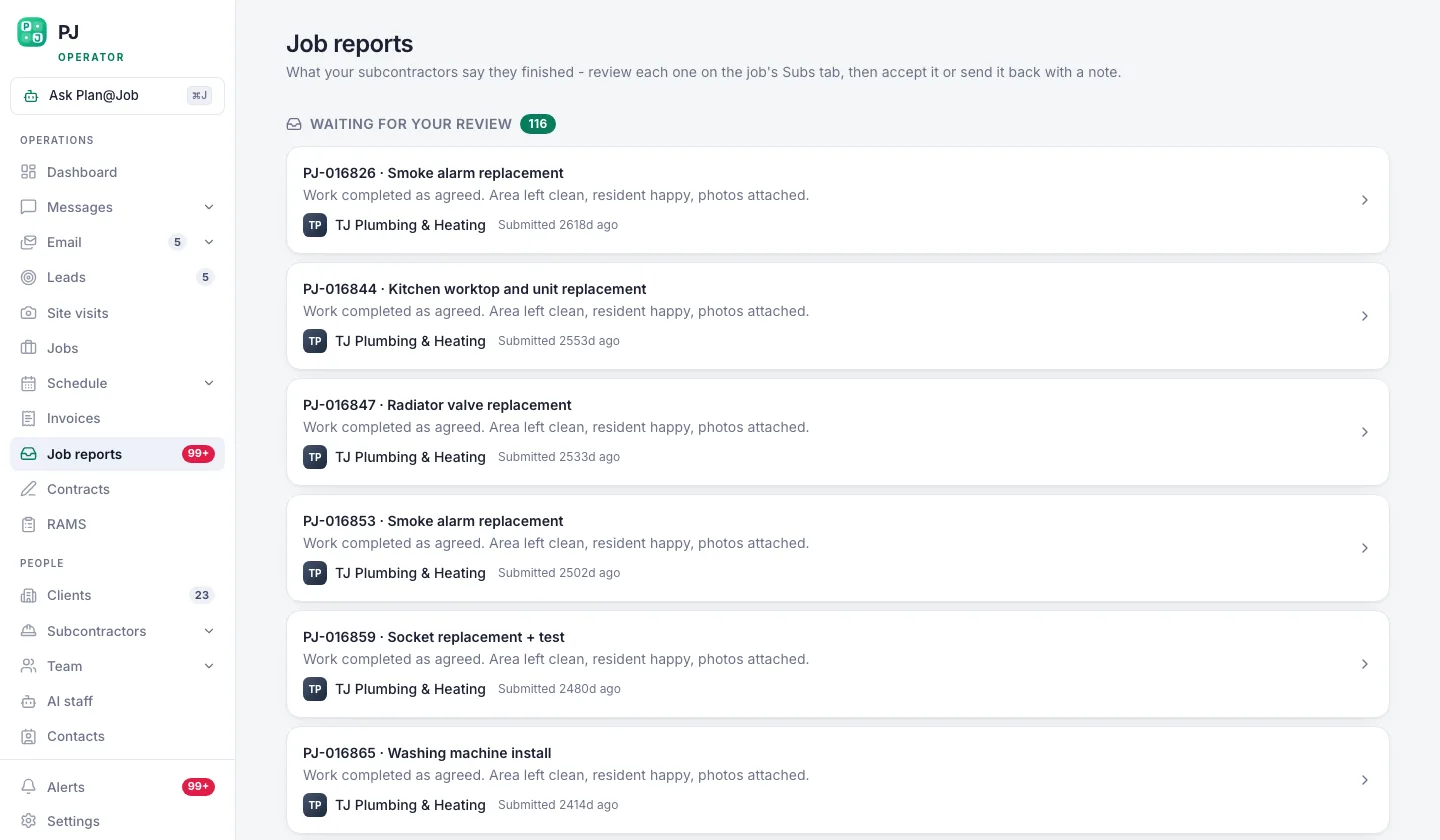 Reports queue up drafted, so a person checks them before a client ever sees one.
This is a person's job, every time. Open the draft and check these things:
- The before and after photos match and show the same area.
- Nothing embarrassing is in the background, such as tenant belongings, faces or post on the side.
- The note is written in plain English that a property manager can forward without editing.
- What the report says was done matches the scope on the quote. No more, no less.
- Any follow-up you spotted is written down as a recommendation, not quietly promised.
If a photo is missing, fix it now. Send someone back or call the client and explain. Don't send a thin report and hope nobody notices, because they will.
Step 5: Send it and get it signed off
Once the draft is right, send it to the client. If they use the Client portal, the shared evidence is there for them. Either way, the status in Job reports moves from drafted to sent, and then to signed off.
Sign-off is the moment the client agrees the work is done. Everything before that is your word. Everything after it is their word. If a report sits at sent for days, chase it in Messages. Deciding when to chase and how hard is your call, because you know the client.
Step 6: Raise the invoice off the signed-off job
Now open Invoices. The invoice raises off the signed-off job, so it isn't left to somebody remembering on a Friday afternoon.
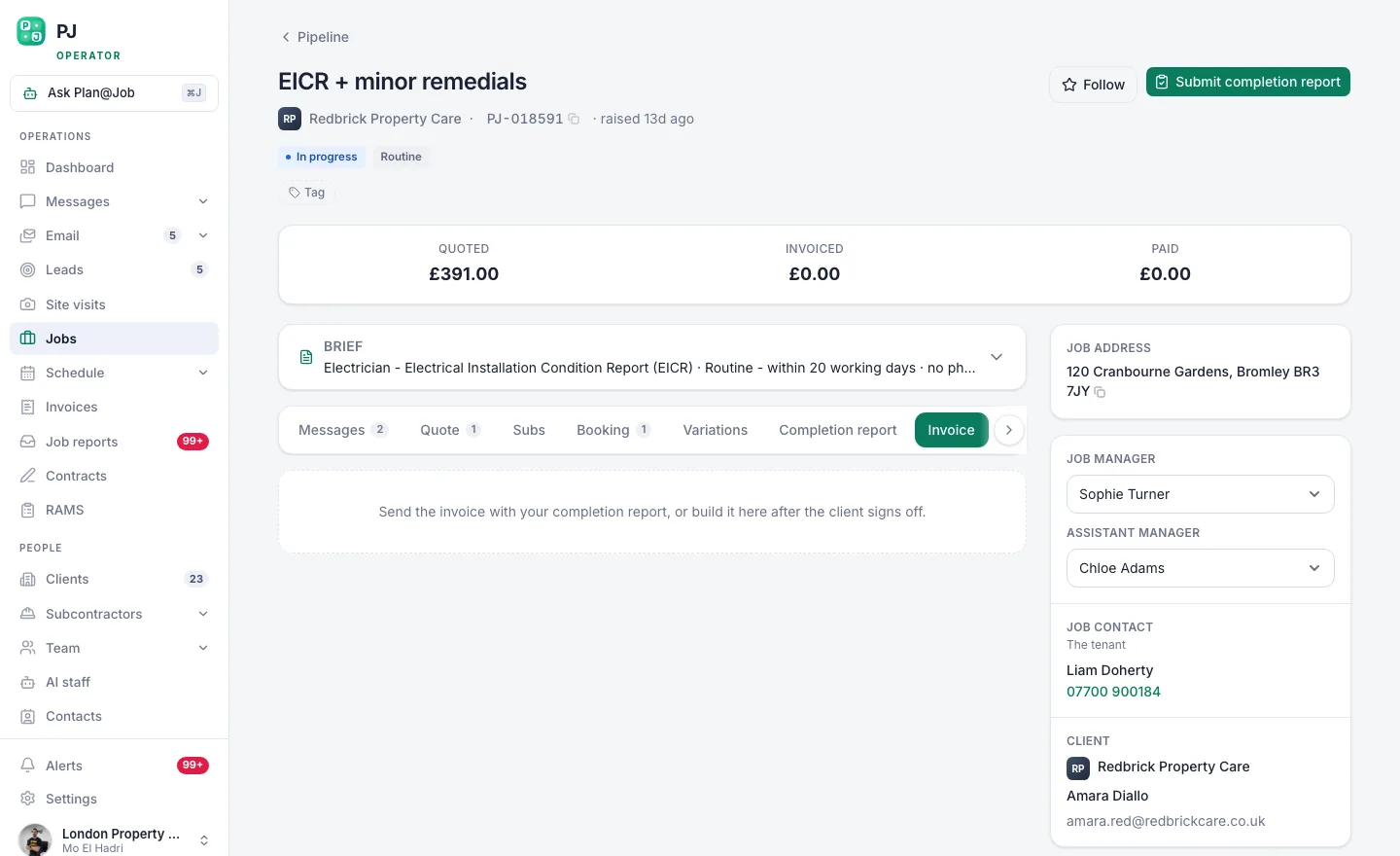 The invoice raises off the signed-off job, not off somebody remembering to raise it.
Before you send it, check that the invoice matches the quote. If you agreed the report as a separate line, make sure it's on there exactly as quoted. If it was built into the price, don't sneak it in now.
If payment is late, Maya Collins, the AI Finance Coordinator in AI staff, prepares overdue payment actions for you to approve. Nothing goes to your client about money until you say so. Approving it is your decision.
What usually goes wrong
I've seen every one of these, and they're all avoidable.
- The report wasn't on the quote. Fix it at Step 1, not at Step 6.
- The before photos are missing. Put them in the brief and send a reminder on the morning of the job.
- The report goes out a week late and the client has already forgotten the job. Check drafts the same day or the next morning.
- The report says more than you did. If you write that you checked the whole system when you only changed a valve, you've just taken on liability you didn't price.
- Every report looks the same. A copy-paste note with three photos tells a property manager you weren't paying attention. One specific line about what you found is worth more than a page of filler.
It's not the report that gets you paid. It's the fact that nobody can argue with it.
If you want to talk this through with people running the same kind of business, Contractor Club is where I spend time with operators building contracting companies. If you want the workflow itself, from scope to report to signed-off invoice, have a look at Plan@Job for contractors in the UK and set it up on your next job.
FAQ
How much should I charge for a completion report?
There's no standard figure, and I won't invent one. Work out the extra time it costs you on site and in the office for that client's format, then price that time like any other labour. For simple reactive repairs, build it into your rate and don't itemise it.
Can I add a report fee after the job is done?
You can try, but you'll probably lose the argument and some goodwill too. If the client didn't agree it on the quote, treat this job as a lesson and put it in the scope next time. The report should never show up for the first time on the invoice.
Does a completion report replace a gas or electrical certificate?
No. Statutory certificates come from registered engineers under the current rules for that trade, and they're a separate document. Your completion report can sit alongside them and reference them, but never present it as a substitute.