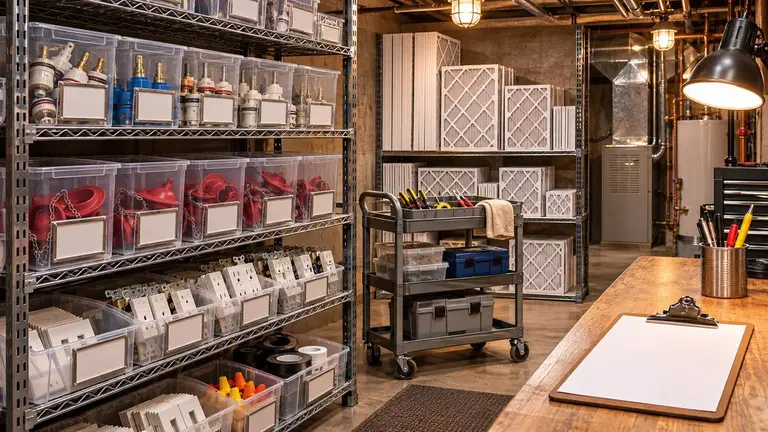
An apartment maintenance parts inventory should cover the small, high-frequency parts that close most work orders on the first visit: faucet cartridges and toilet internals, outlets and switches, HVAC filters, common appliance parts, door and lock hardware, and life-safety items like smoke alarm batteries. Everything else is usually better ordered per job. The goal is not a full hardware store in the basement. It is enough of the right parts that a technician rarely leaves a unit saying they will come back tomorrow.
This guide gives you a working list, a way to set stock levels, and a clear line on which decisions need a person.
What belongs on the shelf and what doesn't
A simple test works for most properties. Stock a part if it meets at least two of these:
- It fails often across your units.
- A missing one leaves a resident without water, heat, cooling, power or security.
- It is cheap and small enough that holding a few costs less than a second trip.
- It is standardized across your buildings, so one part fits many units.
Skip stocking parts that are expensive, model-specific and rarely needed, such as a compressor or a control board for one older range. Order those against the work order once the technician has confirmed the fault and the model number.
The core apartment maintenance parts list
Treat this as a starting template. Adjust it to the fixtures and equipment you actually have. A list built from your own unit specs beats any generic list, including this one.
Plumbing
- Faucet cartridges for each kitchen and bath faucet brand in your buildings
- Aerators, O-rings and assorted washers
- Toilet flappers, fill valves and flush valve kits in the sizes you use
- Wax rings and closet bolts
- Supply lines for toilets and faucets in common lengths
- Shower heads and tub spout diverters
- P-traps, slip nuts and tailpieces
- Drain stoppers and strainer baskets
- Plunger, closet auger and thread seal tape for each tech's kit
Electrical
- Standard receptacles and switches in your building color
- GFCI receptacles
- Cover plates in matching color and style
- Wire connectors and electrical tape
- Common light bulbs for units, hallways and exterior fixtures
- Basic ceiling fixtures in one standard style for quick swaps
Panel work and anything beyond like-for-like device replacement should go to a licensed electrician where your state or local rules require it.
HVAC
- Air filters in every size your units use, labeled by unit type
- Thermostats in one or two standard models
- Condensate pump and drain line cleaning supplies
- Capacitors and contactors only if a qualified tech on staff will fit them
Refrigerant handling is a certified-technician job under federal rules. Keep that work with your HVAC contractor.
Appliances
- Range burner elements and drip pans for your range models
- Refrigerator water filters and door gaskets for common models
- Dishwasher racks wheels, door seals and drain hoses
- Dryer vent hose and clamps
- Garbage disposal splash guards and a spare disposal unit
Doors, locks and windows
- Lock cylinders or rekeyable cores, depending on your system
- Door knobs, levers and deadbolts in your standard finish
- Hinges, strike plates and door stops
- Weatherstripping and door sweeps
- Window locks, balances and screen repair kits
- Blind brackets or a few spare blinds in common widths
Life safety
- Smoke alarm batteries and spare alarms in the models you use
- Carbon monoxide alarms where your buildings need them
- Fire extinguisher replacements or a service contact
Alarm types, placement and testing duties vary by state and city. Check your current local code rather than relying on a generic list.
General consumables
- Caulk, spackle and touch-up paint in your standard colors
- Assorted screws, anchors and fasteners
- Batteries, zip ties and shop rags
- Cleaning supplies for make-ready turns
Standardize first, then stock
The biggest saving in any parts room comes before you buy anything. If your buildings use five faucet brands, you need five sets of cartridges. If you move to one brand as fixtures fail, you eventually need one.
Pick a standard for the items you replace most:
- Faucets and shower valves
- Toilet internals
- Outlet and switch color and style
- Lock hardware and keying system
- Thermostats
- Light fixtures and bulb types
Write the standard down and share it with every technician and outside contractor. Each replacement then moves you closer to a smaller, simpler shelf.
Set min/max levels without guessing
Every stocked part needs two numbers: a minimum that triggers a reorder and a maximum you stop at. Base them on your own work order history, not on a vendor's suggestion.
A simple method
- Pull the last six to twelve months of closed work orders.
- Count how many times each part was used.
- Note how long your supplier takes to deliver.
- Set the minimum to cover usage during that delivery window, plus a small buffer for urgent items.
- Set the maximum so you are not tying up cash or shelf space in slow movers.
Review the numbers each quarter and before seasonal peaks. Filters, AC parts and make-ready supplies all shift with the calendar.
Illustrative scenario
This is a fictional example. A property manager running three garden-style buildings notices that most return trips come from toilet fill valves and one faucet brand's cartridges. They set those two parts as stocked items with a reorder point, move rarely used range parts to order-on-demand, and ask technicians to log the part used on every closed work order. After a quarter, they adjust levels from the logged data rather than memory.
Keep the parts room under control
A list only works if the room matches it.
- Label bins by part and fixture brand. A tech should find a cartridge in seconds.
- Record parts against the work order. This is your usage data and your billing record if parts are recharged.
- Use one person as the reorder owner. Shared ownership usually means nobody reorders.
- Count high-value items monthly and everything else quarterly.
- Keep a separate make-ready kit so unit turns do not drain stock needed for resident work orders.
- Check returns. Unused parts from a job go back to the right bin, not into a truck.
Decisions that need a person
Some parts decisions should never be left to a list or a system.
- Approving fixture standards and the budget for stock
- Deciding whether to repair or replace an appliance
- Choosing which work stays in-house and which goes to a licensed contractor
- Signing off any charge back to a resident or owner
- Confirming that safety items meet current local requirements
Write these down so your team knows who decides what.
Where Plan@Job fits
Plan@Job is AI-powered project and operations management for construction and property businesses. It is not a stockroom or inventory system, so keep your parts count in whatever tool or sheet you use today. Where it helps is the job flow around the parts.
A lot of wasted trips start with a vague request. Sophie Bennett, the AI Enquiries Coordinator, checks existing job briefs for missing information, such as the fixture brand, a model number or a photo, and asks for clarification. If two attempts do not get an answer, she hands the job to a person. That means your technician is more likely to arrive with the right cartridge.
When a job needs outside help, Daniel Reed, the AI Operations Manager, supports sharing eligible jobs with your existing vetted network and following up on quotes and proposed dates. He also prepares a morning brief. A person still approves the award and the price. You can read more about how these roles work on the AI staff page.
For larger work like a unit renovation, the project management features let you split a job into internal stages with scope, dates, status and costs, delivered in-house or by subcontractors.
The UK is the live market for this launch. If you manage apartments in the United States, check the US property managers page to see current availability and join the waitlist.
FAQ
How many of each part should an apartment maintenance team keep?
There is no universal number. Base each item on how often your own work orders used it and how long your supplier takes to deliver. Start small, record every part used, and adjust each quarter.
Should maintenance technicians carry parts on their trucks or carts?
Yes, for the fastest movers like flappers, washers, outlets and filters. Keep the truck or cart stock on a short, fixed list and restock it from the main room so you can still count what you have.
Can Plan@Job manage my parts inventory?
No. Plan@Job does not track stock levels or place parts orders. It helps with the job side: clearer job briefs, follow-ups with your existing vetted network and project stages with costs, with a person approving the decisions that matter.