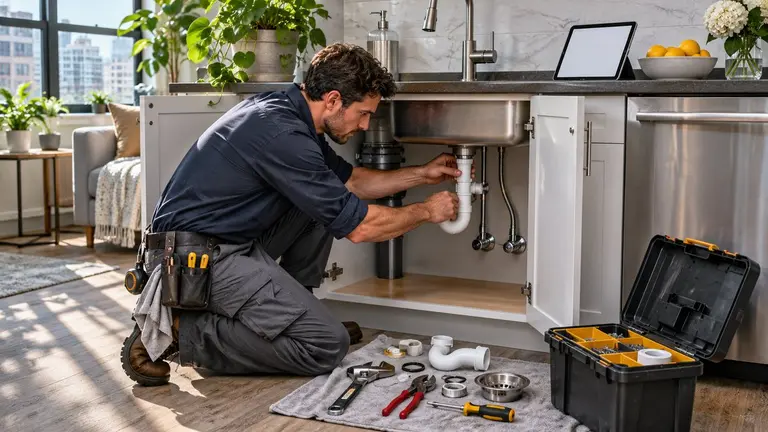
Apartment maintenance first time fix rate is the share of work orders that get resolved on the first visit and stay resolved for a set period afterward. To measure it, decide what counts as a fix, pick a callback window, set aside jobs that were never meant to be finished in one visit, and divide first-visit fixes by eligible work orders. The math is simple. The hard part is agreeing on the rules before you count, so the number means the same thing every month and nobody can game it.
What first time fix rate actually tells you
A first-visit fix saves a second trip, a second access request and a second disruption for the resident. A low rate usually points to something upstream of the technician: a vague request, the wrong trade sent, missing parts or no access to the unit.
That is why the metric is useful for both sides of the relationship. A property manager uses it to spot which buildings, categories or vendors generate repeat visits. A maintenance contractor uses it to show that their crews arrive prepared and to find where their own dispatch process lets them down.
It is not a complete measure of quality. A crew can post a high rate by only taking easy jobs, or by closing work orders that are not really fixed. Pair it with callback tracking and resident feedback rather than reading it alone.
Set the rules before you count
Write these rules down and share them with every vendor and in-house tech who will be measured. Changing them mid-quarter makes the trend meaningless.
Define a fix
A fix means the reported fault is resolved and the work order is closed on the first attended visit. Be specific about what does not count:
- A temporary patch that needs a return trip, such as capping a leak until a part arrives
- A diagnosis-only visit followed by a second visit to do the repair
- Closing the order after the resident was not home, then reopening it later
Some teams count a diagnosis visit as a separate, planned stage. That can be fair for large jobs, but if you allow it, apply it the same way to everyone.
Pick a callback window
A job that gets closed on Monday and reopened on Thursday for the same fault was not fixed. Choose a window, often somewhere between a week and a month, during which a repeat request for the same fault in the same unit turns the original visit into a failure. There is no industry-mandated number. Pick one that suits your property types and stick with it.
Someone has to decide whether a repeat request is the same fault. A second clog in the same drain is. A different leak under a different fixture is not.
Decide what is excluded
Take out work that was never meant to be finished in one visit:
- Planned multi-stage work, like a unit turn or a bathroom renovation
- Preventive maintenance rounds and inspections
- Jobs canceled by the resident or manager before attendance
- Visits where the tech could not get in, if you track access failures separately
Track access failures as their own number. They are a scheduling and communication problem, not a repair problem, and mixing them in hides both.
How to calculate it, step by step
- Pull every reactive work order closed in the period, for example one calendar month.
- Remove the excluded categories you defined above.
- For each remaining order, count the attended visits it took to close.
- Check for repeat requests for the same fault in the same unit within your callback window.
- Mark an order as a first-time fix only if it closed on one visit and had no qualifying callback.
- Divide first-time fixes by eligible orders and multiply by 100.
Because of the callback window, you cannot finalize a month's figure until the window has passed. If your window is 30 days, report October's rate at the end of November. Publishing early flatters the number.
Illustrative example
This is a fictional scenario to show the calculation, not data from a real property.
A 180-unit apartment community closes 120 work orders in a month. Fifteen are preventive maintenance and eight were unit-turn stages, so 97 are eligible. Six had no access on the first attempt and are tracked separately, leaving 91.
Of those 91, 70 were closed on the first visit. Within the callback window, four of those 70 came back for the same fault. That leaves 66 first-time fixes.
66 divided by 91 is about 72.5 percent. The useful part comes next: the manager sees that most of the failures were appliance repairs where the tech had to order a part. That points at the request intake and parts planning, not the techs' skill.
Break the number down
A single building-wide figure rarely tells you what to change. Split it by:
- Category: plumbing, electrical, HVAC, appliances, doors and locks
- Who did the work: in-house techs versus each outside vendor
- Property or building, since older stock often has different failure patterns
- Request source: resident portal, phone, email or staff walk-through
Keep vendor comparisons fair. A vendor who handles all your HVAC calls in summer will look worse than one handling simple lock changes. Compare like with like, and look at trends over several months before acting on one bad month.
Why first visits fail and what to change
Most repeat visits trace back to a few causes. Each one has a practical fix.
The request was missing key details
"Sink broken" could mean a leak, a clog or a cracked basin. Ask for the fixture, the symptom, when it started, and photos where possible. For appliances, the make and model number lets the tech bring the likely part.
The wrong trade was sent
A handyman sent to an electrical fault will often have to hand it over. Clear categories at intake and a short triage step help route the job correctly the first time.
No parts on the truck
Agree on a standard stock list for common repairs at each property. For recurring appliance models, keep common parts on site or with the vendor.
No access to the unit
Confirm the appointment with the resident and record entry permission and any pet or key notes on the work order. Follow your lease terms and applicable state and local rules on entry notice.
Where Plan@Job fits
Plan@Job is AI-powered project and operations management for construction and property businesses. An Operator, meaning the contractor business that manages clients, project delivery, subcontractors and in-house operatives, uses it to run jobs from request to completion.
A few parts of the workflow are relevant to first-time fix rate:
- Clearer job briefs. Sophie Bennett, the AI Enquiries Coordinator, checks existing job briefs for missing information and asks for clarification. If two attempts do not get an answer, the job is handed to a person. It does not automatically turn every incoming email into a job.
- Planned stages kept separate. The project plan splits larger jobs into internal stages with scope, dates, status and costs, delivered by subcontractors or in-house operatives. That makes it easier to keep a planned multi-stage job out of your first-time fix count.
- Follow-ups and a daily view. Daniel Reed, the AI Operations Manager, supports quote and proposed-date follow-ups and a morning brief, which helps catch jobs that stalled after a first visit.
You can read more about these background colleagues on the AI staff page. They support the team. They do not award work, set prices or guarantee outcomes.
What still needs a person's decision
Even with good records, people make the calls that shape this metric:
- Whether a repeat request is the same fault or a new one
- Which jobs are excluded as planned or preventive work
- How to respond to a vendor whose rate is falling
- Whether to change the callback window, and when
Write those decisions on the work order so the reasoning is visible when someone reviews the figures later.
Plan@Job's live launch market is the UK. If you manage apartments in the United States, you can register your interest on the US property managers page. Maintenance contractors can do the same on the US contractors page.
FAQ
What is a good first time fix rate for apartment maintenance?
There is no single benchmark that applies to every portfolio, because definitions and job mix vary so much. The most useful comparison is your own trend over time, measured with consistent rules, and split by category and vendor.
Should a diagnosis visit count against the first time fix rate?
It depends on the job. For routine repairs, a diagnosis-only visit followed by a second trip should count as a failure. For large or complex work, treating diagnosis as a planned stage can be reasonable, as long as you apply the rule consistently and record the decision.
How often should I report first time fix rate?
Monthly works for most teams, but wait until the callback window has closed before finalizing a month. Review quarterly trends before making major vendor or staffing decisions based on the figure.