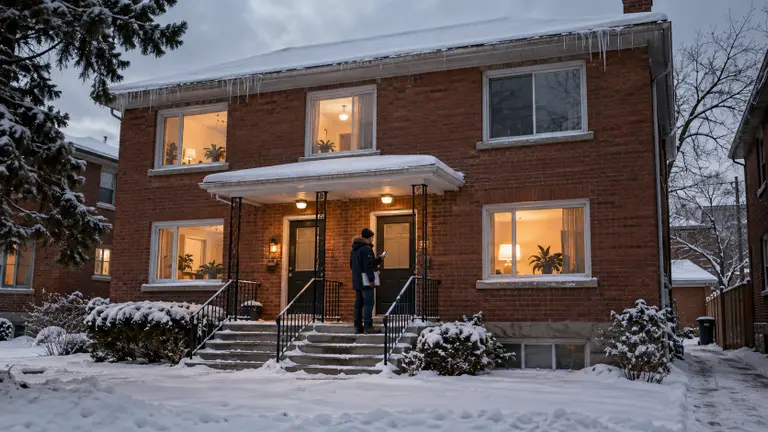
A vacant rental unit in a Canadian winter can go from fine to flooded in a single cold snap, and the first question your insurer will ask is when someone last checked it. Here is the direct answer: there is no Canadian law that sets a 72-hour inspection rule. Where a check interval exists, it comes from your insurance policy. Many property policies limit or exclude freezing and water damage in vacant or unoccupied units unless heat is maintained and a competent person checks the unit at an interval set in the wording, or the water supply is shut off and the system drained. That interval might be daily, every 72 hours, or something else. Your job is to find the strictest condition in your policy and build a check routine you can prove you followed.
Vacant vs unoccupied: why the wording matters
Insurers in Canada often treat "vacant" and "unoccupied" as different things, and the difference changes what is covered.
- Vacant usually means nobody lives there and the unit has little or no furniture or belongings, such as a suite between tenants or during a renovation.
- Unoccupied usually means the contents are still there but nobody is living in the unit, such as a tenant spending January out of the province.
Definitions vary between insurers, so do not rely on the general meaning. Many policies also set a threshold, often around 30 consecutive days, after which certain perils such as vandalism, glass breakage or water escape are restricted or excluded unless you have told the insurer and arranged a vacancy permit or endorsement.
What to find in your policy before the first frost
Pull the actual wording, not the summary page, and look for:
- The definitions of vacant and unoccupied.
- The number of days before vacancy restrictions apply.
- The freezing exclusion and its exceptions, including any stated check interval.
- Any heating requirement, such as maintaining heat in the building.
- Notice conditions: when and how you must tell the insurer about a vacancy.
- Whether a vacancy endorsement is available, and what it requires.
If anything is unclear, ask your broker to confirm in writing. A phone conversation will not help you much after a claim.
Where the "72-hour check" comes from
The 72-hour figure is common in conversation among Canadian landlords because some policy wordings and vacancy endorsements use it, or something close to it. Others ask for daily checks, and some let you avoid the check requirement by shutting off and draining the water. Treat 72 hours as one example, not a national standard.
Two practical points matter more than the number itself:
- The interval is a maximum, not a target. If your policy says every 72 hours, a check on day four during a cold spell may leave you uncovered. Schedule visits with a buffer so a snowstorm or a sick operative does not push you over the limit.
- Cold snaps compress the risk. A furnace that fails overnight in deep cold can freeze a supply line on an exterior wall well before the next scheduled visit. During extreme cold warnings, many managers add extra checks voluntarily.
What a winter vacancy check should actually cover
A walk-through that confirms the door is locked is not enough. A useful check covers the things that cause expensive winter claims.
Heat and water
- Confirm the furnace, boiler or baseboards are running and the thermostat is at the setting your insurer or policy expects.
- Open cabinet doors under sinks on exterior walls and look for frost, drips or staining.
- Check around the water meter, main shut-off and water heater.
- Look at ceilings below bathrooms and kitchens for fresh stains.
- Test the sump pump if the building has one.
Building envelope and exterior
- Look for ice damming along eavestroughs and icicles forming at one spot, which can indicate heat loss.
- Make sure exterior hose bibs are shut off and drained.
- Clear or report snow blocking exits, vents and gas meter access.
Safety and security
- Test smoke and carbon monoxide alarms.
- Check windows and doors for forced entry.
- Remove flyers and mail that signal an empty unit.
Every check should end with dated photos: thermostat display, under-sink areas, meter area and any issue found.
Keep records your insurer will accept
If you ever make a claim, your check log is your evidence. For each visit, record:
- Date and time of arrival and departure
- The name of the person who attended
- Thermostat reading and heating status
- What was checked and what was found
- Photos, with timestamps preserved
- Any action taken and who was told
Keep the log in one place, not scattered across text messages and personal phones. If a visit is missed, record why and when the next one happened. An honest gap is easier to explain than a missing record.
When to shut off and drain instead
If a unit will sit empty for weeks, winterizing may be safer than relying on visits. A licensed plumber can shut off the supply, drain lines and fixtures and add appropriate antifreeze to traps. Be careful in these situations:
- Hydronic heating: draining the domestic water does not drain a boiler loop, and the heat still needs to run.
- Sprinklered buildings: fire protection systems must not be shut off without the right approvals. Talk to your insurer and fire protection contractor first.
- Multi-unit buildings: you usually cannot isolate one suite completely, and shared walls mean the building still needs heat.
Confirm with your insurer that draining meets the policy conditions before you rely on it.
Multi-unit buildings and tenants who travel
A vacant suite in an occupied building is a risk to its neighbours. A burst pipe in an empty upper unit can damage several occupied suites below before anyone notices. Put vacant units in shared buildings on the same schedule as standalone properties, and give neighbouring tenants a number to call if they hear running water or notice a cold wall.
Unoccupied units are trickier because a tenant still has rights. Entering a leased unit generally requires proper written notice under provincial tenancy law, and the rules differ by province. Check the current guidance from your provincial authority, such as Ontario's Landlord and Tenant Board, British Columbia's Residential Tenancy Branch or Quebec's Tribunal administratif du logement. Many managers ask tenants in writing to report extended winter absences and to leave the heat on. Remind tenants that their own tenant insurance may carry its own conditions about absences.
Decisions that need a person
A schedule and a checklist keep the routine running, but some calls should always sit with a named person:
- Telling the insurer about a vacancy and arranging an endorsement
- Choosing between visits and winterizing
- Responding to a problem found on a check, including emergency plumbing or heating callouts
- Approving repair costs and choosing who carries out the work
- Deciding what to do when a check is missed
Running the routine with Plan@Job
Plan@Job is AI-powered project and operations management for construction and property businesses. It is live in the UK, and Canadian property managers can register interest through the Canadian property managers page. Here is how the workflow fits a winter vacancy routine.
Illustrative example (fictional): a property manager has a two-bedroom suite in a Winnipeg fourplex sitting empty from mid-December until a new lease starts in February. Their policy calls for checks at a set interval while the unit is vacant.
- Create one job for the vacancy. Using the project plan, split it into internal stages, one for each check window, each with its own scope (the checklist above), dates, status and cost.
- Assign the visits. Give stages to an in-house operative, or share the work with a vetted subcontractor. Daniel Reed, the AI Operations Manager, can support eligible sharing with your existing vetted network, follow up on quotes and proposed dates, and include what is coming up in a morning brief.
- Fill gaps in the brief. Sophie Bennett, the AI Enquiries Coordinator, checks job briefs for missing details, such as the lockbox code or the thermostat setting the policy requires, and asks for clarification.
- Keep the evidence together. Photos and notes from each visit stay attached to the job, giving you one record for your insurer.
The decisions stay with you. Plan@Job does not set your inspection interval, approve repairs on your behalf or guarantee that your insurer will pay a claim. Your policy decides that. Learn more about how the AI staff support the routine.
If you manage Canadian rentals, the next step is simple: pull your policy wording this week, confirm the check interval with your broker, and join the waitlist so you can schedule recurring vacant-unit checks through Plan@Job and keep your insurer satisfied.
FAQ
Do I have to tell my insurer when a rental unit is vacant?
Most policies require notice once a unit has been vacant beyond a set period, and many restrict coverage if you do not tell them. Check the notice condition in your wording and contact your broker as soon as you know a unit will be empty over the winter.
Can smart thermostats or leak sensors replace in-person checks?
They can alert you to problems sooner, and some insurers view them favourably. They only replace physical checks if your policy or insurer says so. Get that confirmation in writing before cutting back on visits.
Is Plan@Job available in Canada?
Plan@Job is currently live in the UK. Canadian property managers can register interest through the Canadian property managers page and will be contacted as availability develops.