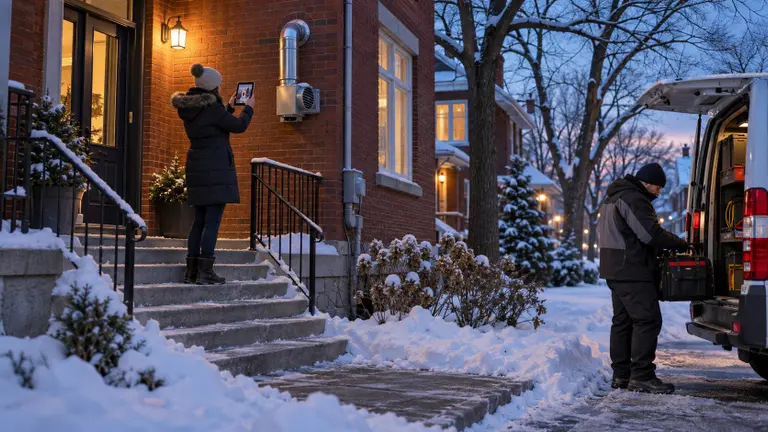
An owner who lives in Vancouver and has a condo in Toronto, or lives in Dubai and has a duplex in Halifax, doesn't need more updates from you. They need to trust that the right decisions get made while they're asleep, busy or eight time zones away. Remote landlord property management in Canada works when four systems do the job the owner's physical presence used to do: a written authority framework, a vetted local vendor bench, a job record built on evidence, and a money process that follows the rules for non-resident and out-of-province owners. Everything else, such as report formats, call schedules and apps, sits on top of those four. This guide covers how to build each one, and which decisions should always stay with a person.
Start with a written authority framework
Most friction with remote owners comes from unclear authority, not bad work. A furnace fails at 11 p.m. in January, the owner is unreachable, and you're left guessing how much you're allowed to spend. Settle that before it happens.
Spending limits and emergency definitions
In your management agreement, set out:
- A routine approval threshold chosen by the owner. Below it, you act and report. Above it, you need written approval.
- A list of emergencies where you can act straight away, whatever the cost. Typical items are no heat in cold weather, an active water leak, loss of power, a sewage backup and a security breach such as a broken entry door.
- A backup decision-maker, such as a family member or co-owner in Canada, for when the owner can't be reached.
- An approval window. For example, if the owner doesn't reply within a set time on a non-emergency quote, you either go ahead or put the work on hold. Agree on which.
Keep the tenant relationship with you
Tenants should contact you, not the owner. Remote owners who reply to tenants directly tend to make promises you then have to keep. Residential tenancy law is provincial. Ontario has the Residential Tenancies Act and the Landlord and Tenant Board, British Columbia has the Residential Tenancy Branch, and Quebec has the Tribunal administratif du logement. Notice rules for entry, repairs and rent increases differ between them. Your process has to match the province the property is in, not the one the owner lives in.
Check your own licensing
In several provinces, managing rentals for other people for a fee needs a licence or registration with the provincial real estate regulator. Confirm the current requirements for every province where you manage property before you take on out-of-province owners.
Build a local bench before you need it
For an owner who lives far away, you are their local boots on the ground. That only holds up if you have trades you can actually reach. Build the bench while things are calm:
- Heating and gas. Gas work needs a gas fitter licensed under provincial rules. Have at least two, because both will be busy on the first cold weekend.
- Plumbing and drain clearing, including someone who will come out after hours.
- Electrical, from a licensed electrician.
- Locksmith and board-up for security calls.
- Snow and ice clearing, where the lease or municipal bylaws make that the landlord's responsibility.
- Water damage restoration, agreed in advance, so you aren't picking a company in the middle of a flood.
- A general handyperson for small repairs and turnover punch lists.
For each vendor, keep current proof of liability insurance and workers' compensation coverage (WSIB in Ontario, WorkSafeBC, WCB in Alberta, CNESST in Quebec, and so on). Also record their trade licence details where they apply, and their real response times, not the ones they advertise.
Make every job leave an evidence trail
A remote owner can't walk through the unit, so the record has to do it for them. Use the same sequence on every job:
- Intake. Record the unit, the problem in the tenant's own words, photos or video, access details and any pets.
- Triage. Decide whether it's an emergency, urgent or routine, using the categories in the owner agreement.
- Brief. Send the trade a complete brief. Missing access details cause more wasted visits than anything else.
- Quote and date. Get a quote or a proposed visit date in writing, and chase it if it doesn't arrive.
- Approval. Approve it yourself if it's under the threshold. If it's over, send it to the owner with photos and a recommendation.
- Completion evidence. Collect before and after photos, parts replaced, and warranty or service records.
- Owner summary. Write two or three lines: what happened, what it cost and whether anything else is expected.
When an owner questions an invoice six months later, that trail settles it.
Money and tax for non-resident owners
This is where remote management gets expensive if you skip it.
Non-resident owners
When the owner is a non-resident of Canada for tax purposes, Part XIII tax usually applies to the rent. The standard rate is 25% of gross rent, withheld and remitted to the Canada Revenue Agency. As the agent collecting rent, you may be the person responsible for withholding and remitting it. The owner can file Form NR6 to have withholding worked out on net rental income instead, and then has to file a section 216 return. Get the details confirmed by the CRA or an accountant who works with non-residents before the first rent payment, not at year-end.
Out-of-province Canadian owners
Owners who live in another province aren't non-residents, but their tax filing still depends on their own circumstances. Give them clean year-end statements with income and expenses sorted by category, and point them to their own accountant.
Trust handling and statements
Handle rent and owner funds in line with your province's rules for trust accounts. Send statements on a fixed schedule, in Canadian dollars, with every expense linked to its job record.
Plan for Canadian seasons
An owner who lives overseas may have forgotten what a Prairie January or a Maritime nor'easter does to a building. Put these on a seasonal calendar:
- Fall: furnace servicing, eavestrough cleaning, turning off outdoor taps, checking weatherstripping and testing smoke and carbon monoxide alarms.
- Winter: confirming who clears snow under the lease and local bylaws, planning for frozen pipes, and checking on any vacant unit.
- Spring: testing the sump pump, checking the roof and flashing after the thaw, and looking at grading and drainage.
- Summer: servicing air conditioning or heat pumps, and doing exterior work while trades can book it.
On vacant units, read the owner's insurance policy carefully. Many policies set conditions for properties left empty, such as regular checks. Record every check with a date and photos.
Communicate across time zones
Remote owners don't want constant contact. They want predictable contact.
- A monthly report covering rent position, completed work, open jobs and anything coming up.
- Updates only when something needs them in between, meaning emergencies or approvals over the threshold.
- Approval requests an owner can answer from a phone: photos, quote, recommendation, deadline and what happens if they don't reply.
Illustrative scenario (fictional)
A property manager in Halifax looks after a duplex owned by someone living in Singapore. On a January evening, the lower tenant reports no heat. Because no heat in winter is on the emergency list, the manager sends the on-call heating technician without waiting. The job record gets the tenant's photos, the technician's diagnosis (a failed igniter), the repair and the invoice. When the owner wakes up, they get a three-line summary and the photos. Nobody had to make a 2 a.m. call, and nobody had to guess what they were allowed to do.
Where Plan@Job fits
Plan@Job is AI-powered project and operations management for construction and property businesses. It's designed to be the system behind that evidence trail. Jobs, briefs, quotes, visit dates and completion evidence stay in one record instead of scattered across texts and email threads.
The AI staff help with the admin that slows remote management down:
- Sophie Bennett, AI Enquiries Coordinator, checks existing job briefs for missing information, such as unit access or photos, and asks for it. If two attempts don't get an answer, she hands the job to a person.
- Daniel Reed, AI Operations Manager, supports sharing eligible jobs with an existing vetted network, follows up on quotes and proposed dates, and prepares a morning brief.
- Maya Collins, AI Finance Coordinator, prepares deposit and overdue payment actions, which a person then approves.
The AI staff don't award work, set prices or move money on their own. Those decisions stay with you and, above your threshold, with the owner.
For larger work such as turnover refurbishments, the contractor can use project management to split the job into stages with scope, dates, status and costs. You and your owner see the agreed overall scope, the price and the evidence the contractor shares. The contractor's internal stage costs and subcontractor details stay internal.
Plan@Job is live in the UK for this launch. Its features, including bank connections, aren't yet available in Canada. If you manage rentals for remote owners in Canada and want Plan@Job to be the system that helps you book, track and approve local work from anywhere, reserve your place on the Canadian property manager page.
FAQ
Can an overseas owner manage a Canadian rental without a local property manager?
Yes, but it's hard. They still have to meet provincial tenancy rules, respond to emergencies in the province where the property is, and handle non-resident tax withholding. Most owners who try it end up relying on a local contact anyway, and it works better when that arrangement is formal and written down.
Do I have to withhold tax on rent I collect for a non-resident owner?
Often, yes. Part XIII tax usually applies to rent paid to non-residents, and the agent collecting rent may be responsible for withholding and remitting it. The owner can apply with Form NR6 to have withholding based on net income. Confirm your obligations with the CRA or a qualified accountant before the first payment.
How often should a vacant rental be checked in winter?
That depends on the owner's insurance policy, the building and the weather. Start with the policy wording, because many policies set conditions for vacant properties. Then set a schedule that meets them, and record each check with the date and photos.