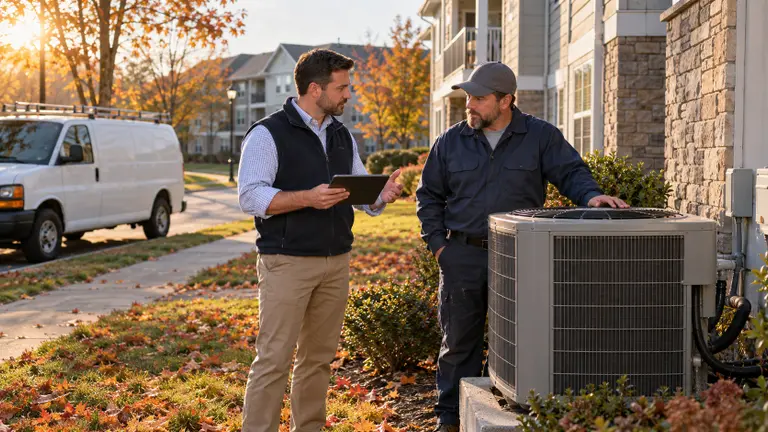
To reduce property maintenance costs without deferring maintenance, pay less for each job instead of doing fewer jobs. The biggest savings usually come from a few places: scopes that vendors can price accurately, fewer repeat trips, competing bids on planned work, preventive visits grouped by building, and catching small failures before they turn into after-hours emergencies. Deferral feels like a saving in this quarter's numbers. It usually comes back later as a bigger repair, a vacant unit, or a habitability complaint. The ten methods below are the ones experienced property managers use to lower spend while still keeping units in good condition.
Why deferring maintenance is not a saving
If you skip a repair, you haven't removed the cost. You've moved it to a later date, often at a worse rate. A slow drip under a sink becomes a swollen cabinet base and then a subfloor job. A water heater that should have been flushed fails on a Saturday night, and you pay emergency rates. Most US states also recognize some form of implied warranty of habitability, and local housing codes set minimum conditions, so some repairs can't legally wait. The aim is to spend the same maintenance dollar more effectively.
Cut the cost of each job
1. Write a scope a vendor can price without guessing
Vague requests like "kitchen faucet broken" lead to padded quotes and site visits just to find out what's needed. A good work order includes:
- Unit address, access instructions and tenant availability
- Two or three photos, including a wide shot and a close-up
- Make, model or serial number for appliances and fixtures
- What has been tried already, and when the problem started
- Whether the property was built before 1978, because the EPA's lead-safe rules for renovation, repair and painting may apply if painted surfaces will be disturbed
With a clear scope, vendors can quote more tightly and are more likely to fix the problem on the first visit.
2. Triage before you dispatch
Some calls don't need a vendor. A tripped GFCI, a garbage disposal that needs its reset button pressed, or a thermostat with dead batteries can often be solved with a short troubleshooting script over the phone or by text. Keep a list of common issues tenants can safely check themselves. Escalate right away for anything involving gas smells, electrical burning, active leaks or no heat in cold weather.
3. Stop paying for repeat trips
Each extra trip usually adds another trip charge. Repeat visits usually happen because the tech arrived without the right part, couldn't get into the unit, or found a different problem from the one described. Confirm access the day before, share model numbers ahead of time, and ask vendors to report "parts needed" with photos before they order. Then track how often each vendor fixes the problem on the first visit. That tells you more about value than their hourly rate does.
Buy work more competitively
4. Get competing bids on planned work, not emergencies
You can't shop around for a burst pipe at 2 a.m. You can shop around for exterior painting, parking lot sealcoating, gutter cleaning, appliance replacement programs and turnover work. Set a dollar threshold above which planned jobs get at least two or three quotes. Also compare what's included, like disposal, permits, warranty and cleanup, so you're not just picking the lowest number.
5. Set not-to-exceed limits and approval thresholds
Give trusted vendors a not-to-exceed amount for routine calls so they can finish small repairs without waiting for you. Anything above that needs a call and photos first. You avoid delays on small jobs and surprise invoices on large ones. Write the thresholds into your vendor agreements and management agreements so owners know what you can approve without them.
6. Bundle preventive visits by building or route
One HVAC tech servicing twelve units in one building on one day costs far less per unit than twelve separate calls spread over a month. Group recurring work by building, neighborhood or trade: filter changes, dryer vent cleaning, smoke and carbon monoxide alarm checks as your state and local rules require, and water heater flushes. Send tenants notices of entry with the timing your state or lease requires, and schedule one day for the whole building.
Prevent the expensive failures
7. Run a seasonal preventive calendar
A simple calendar catches most avoidable emergencies:
- Spring: roof and flashing inspection, AC service, exterior drainage check
- Summer: exterior paint and caulk touch-ups, irrigation check, pest prevention
- Fall: gutter cleaning, furnace or boiler service, hose bib and irrigation winterization in freeze-prone areas
- Winter: check for ice dams and pipe-freeze risk, confirm heat in vacant units, and review snow removal contracts
Adjust for your climate. A portfolio in Phoenix and one in Minneapolis need different calendars.
8. Track asset age and repair history
Know how old every water heater, HVAC system, roof and major appliance is. When a unit has had three repair calls in a year, compare continued repair costs against replacement before the fourth call happens. That way replacement is a planned purchase you can put out for bids, not an emergency.
9. Treat turnovers as planned projects
Turnover is when you have access, the unit is empty and time is short. Do a detailed move-out inspection, write one combined scope (paint, flooring, fixtures, cleaning), and get quotes before the tenant leaves where possible. Bundling turnover work lowers per-trip costs and shortens vacancy, which is often the bigger cost.
10. Check invoices against the approved scope
Compare each invoice against what was quoted and approved. Look for line items you didn't approve, duplicate trip charges and parts that don't match the photos. Most discrepancies are honest mistakes, but checking consistently tells vendors you read every invoice.
What still needs a person's decision
Systems can speed up the admin, but some calls should always be made by you or the owner:
- Whether a repair is urgent enough to justify emergency rates
- Which bid to award, weighing price against reliability, insurance and warranty
- Repair versus replace decisions on major systems
- Anything touching tenant safety, legal notice requirements or habitability obligations
- Spend above the owner's approved threshold
How this workflow runs in Plan@Job
Plan@Job is AI-powered project and operations management for construction and property businesses. It is live in the UK today. US property managers can reserve a place through the US property managers page while it launches here, so check that page for current US availability before planning around it.
In the live product, AI staff handle much of the admin in the workflow above. The AI staff are separate from the tools you drive yourself:
- Sophie Bennett, AI Enquiries Coordinator, checks an existing job brief for missing details such as photos, access or model numbers and asks for clarification. If she still doesn't have the details after two attempts, she hands the job to a person.
- Daniel Reed, AI Operations Manager, helps share eligible jobs with the existing vetted network, follows up on quotes and proposed dates, and sends you a morning brief of what needs attention.
You compare the quotes and award the work. Plan@Job doesn't award jobs, set prices or move money on its own. Operators are the contractor businesses that manage delivery with their own teams and subcontractors. They quote through the same workflow, so you can compare bids side by side.
Illustrative example (fictional): A manager with three small apartment buildings posts one job for fall furnace servicing across all units, instead of reacting to no-heat calls one by one in November. Sophie asks for the equipment ages that are missing from the brief. Daniel shares the job with eligible operators and follows up on the quotes. The manager reviews the bids in the morning brief, picks one operator, and schedules one visit day per building.
For portfolios, the savings in Plan@Job come from the same two levers covered in this article: competitive bids on planned work and bundled preventive visits. How much you save depends on your buildings, your vendors and how consistently you use the process. If you manage US rentals, the next step is to reserve your place on the US property managers page.
FAQ
What is a reasonable maintenance budget for a rental property?
There is no reliable single figure. Budgets depend on building age, climate, unit mix and how much deferred work you inherited. Build your budget from your own repair history and asset ages, and hold a separate reserve for capital replacements such as roofs and HVAC systems.
Is preventive maintenance actually cheaper than fixing things when they break?
For components that fail predictably, such as HVAC systems, water heaters, gutters and roofs, planned service usually costs less than emergency repair plus the damage it causes. The savings are biggest when preventive visits are grouped so you avoid paying separate trip charges for each unit.
Should I always choose the lowest bid?
No. Compare scope, inclusions, insurance, licensing where your state requires it, warranty and the vendor's first-visit fix record. A slightly higher bid that fixes the problem on the first visit often costs less overall.
Last updated September 30, 2026.