Public liability insurance for contractors pays out if your work injures a member of the public or damages someone else's property and they claim against you. It isn't a legal requirement in the UK. But try getting on a decent job list without it. Clients, platforms and main contractors ask for the certificate before you get near the work, and plenty of them name a minimum figure.
That's the straight answer. Below is what it covers, how much cover you'll actually get asked for, who asks, what moves the price, and when you genuinely don't need your own policy.
General information from someone who has run a contracting business, not insurance advice. Talk to a broker or insurer about your own cover.
What does public liability actually pay for?
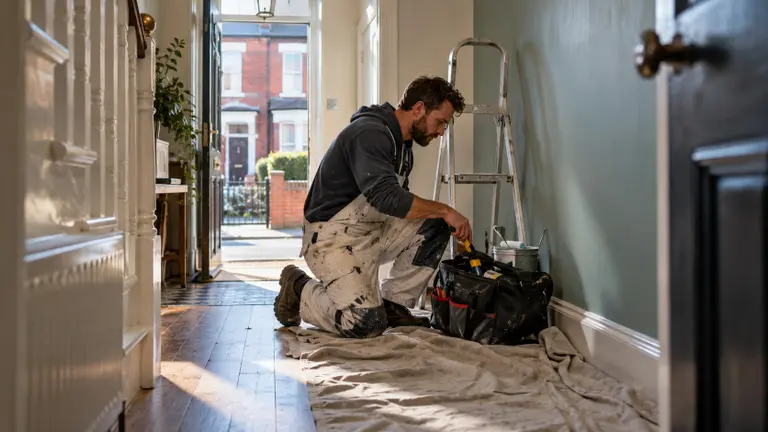
Think about normal site life. A tenant trips over your toolbag in the hallway. Your subbie floods the flat below. A ladder goes through a conservatory roof. Someone claims for injury or damage, and the policy pays the compensation and legal costs, up to the limit on your schedule.
What it doesn't cover matters just as much:
- Your own staff getting hurt. That's employers' liability, and that one is compulsory once you employ people. I've covered it in employers' liability insurance and when contractors legally need it.
- Your tools and the van.
- Putting your own bad work right. PL is about the damage caused, not the cost of redoing the job. Read your wording.
- Advice or design you sell. That's professional indemnity.
Is it a legal requirement for UK contractors?
No. There's no law saying a builder, plumber or decorator must hold public liability cover. Compare employers' liability, where GOV.UK says your policy must cover you for at least £5 million.
Here's the part people get wrong. Not legally required doesn't mean optional. Commercially, it's required. Housing associations, letting agents, trade schemes, main contractors and most platforms won't put you on their list without a valid certificate. No certificate, no work.
Who actually asks for it? What our data shows
We tracked 557 UK work sources: housing associations, councils, frameworks, tier-1 contractors, housebuilders, managing agents, trade platforms and accreditation schemes.
As of July 2026, at least 25 of the 557 UK work sources we tracked explicitly ask for public liability cover in the requirements they publish. That's a floor, not the real number. More than 30 others have a public liability field on the sign-up form, with the actual minimum set per tender. And a big chunk publish no insurance figure at all on public pages, because it lives in the tender pack.
Where a minimum figure was actually published, it looked like this:
- £1 million: 2 sources, both single-trade routes, the places a specific trade goes to find work.
- £2 million: 4 sources, single-trade routes and a trade marketplace.
- £5 million: 5 sources, spread across an accreditation scheme, a housebuilder, a council housing company and lead-generation apps for trades.
- Cover required but no level stated, just "send your certificate": the rest.
We also saw £10 million mentioned for some housing association and framework work. It was never confirmed on a published page, so treat it as a "check the tender pack" figure, not a rule.
The shape is simple. The smaller and more domestic the route, the lower the ask. The bigger the buyer, the higher.
How much cover do you need: £1m, £2m or £5m?
Buy for the work you want next year, not the work you've got today. If you plan to go after housing associations or a main contractor's supply chain, a £1 million policy closes doors before you've even applied.
| Your work | Level you'll typically be asked for |
|---|---|
| Single-trade domestic jobs, some trade scheme listings | £1m to £2m |
| Domestic trades through platforms and marketplaces | £2m |
| Accreditation schemes, housebuilders, council housing work | £5m |
| Larger frameworks and some housing association contracts | £5m, sometimes £10m, set in the tender pack |
Ask your broker to price £2 million and £5 million side by side, then decide. Don't guess.
Do you need your own policy? By trade and company type
| Who you are | Own PL policy? | Why |
|---|---|---|
| Sole trader working in people's homes | Yes, in practice | Customers, agents and platforms ask for the certificate |
| Small firm running subbies and operatives | Yes, and check every subbie's too | You hold the client relationship, so claims land on you first |
| Subcontractor working for a main contractor | Usually yes | Most supply chains want your own certificate. Don't assume their policy covers you |
| Labour-only worker under a contractor's direction | Ask before you buy | You may be treated as their employee for employers' liability. Get it in writing |
| PAYE employee | No | Your employer's policies cover the work |
| Office-only design or consultancy | PL matters less | Professional indemnity is the one to look at |
| Not trading yet | Not yet | But have it in place before day one on site |
What does it cost?
I'm not going to give you a number I can't stand behind. As of October 2026, our audited data doesn't hold premium figures, and anyone quoting you a flat price without knowing your trade is guessing.
What moves the price:
- The trade. Roofing, hot works and working at height cost more than painting.
- The limit. £5 million costs more than £1 million.
- Turnover, headcount and how many subbies you use.
- Your claims history.
- The excess you accept.
- What you bundle in: employers' liability, tools, contract works.
Get three quotes: a specialist construction broker, a direct insurer and your trade association's scheme if you're in one. If you pay monthly, check whether the price includes a credit charge. Then compare the wording, not just the premium. The cheap policy with the wrong trade description is worth nothing.
The rule I ran my company on
When I ran my property maintenance company in London, working for housing associations and letting agents, every job went out to subbies. I won the client, they did the work, I kept the margin in between. That model only works if the client trusts you with their tenants.
So the rule was simple: no certificate, no address.
Before a subbie got a job, I checked four things on their schedule:
- The name on the policy matches the business I'm paying.
- The expiry date is in the future, and I diarised it.
- The limit covers what my client asked me for.
- The trade description matches the work. A decorator's policy doesn't help when they're doing electrics.
The fourth one catches people. Nobody reads it until the claim.
Where Plan@Job fits
Plan@Job is AI-powered project and operations management for construction and property businesses. If you're the Operator, meaning the contractor business managing clients, project delivery, subcontractors and in-house operatives, this is where your jobs and your subbies live.
You split a job into internal stages with scope, dates, status and costs, delivered by subbies or your own team. The client sees the agreed scope and price. Your stage costs and which subbie did the work stay internal.
Daniel Reed, our AI Operations Manager, supports sharing eligible jobs with your existing vetted network and chasing quotes and proposed dates. He doesn't award work and he doesn't decide who's vetted. That stays your call. Subbies can price before vetting in some workflows, so do your insurance check before you award, not after. More on that at AI staff.
If you want to compare notes with other people building contracting businesses, that's what Contractor Club is for.
FAQ
Can I legally work in the UK without public liability insurance?
Yes. No UK law makes it compulsory for contractors. But most clients, platforms and supply chains will ask for it, so in practice you'll lose work without it. Employers' liability is different: that one is a legal duty once you employ people.
Does my policy cover the subbies I send out?
Not automatically. Some policies extend to subcontractors, others exclude them or only cover you if the subbie holds their own cover. Read your wording, ask your broker in writing, and collect every subbie's certificate anyway.
Is £1 million public liability enough for a sole trader?
For some domestic work, yes. But in our data most published minimums were £2 million or £5 million, and bigger buyers ask more. If you want to grow past one-off domestic jobs, price £2 million and £5 million before you settle.
Sort the certificate before someone asks for it. Then put your jobs, stages and subbies in one place: see Plan@Job for contractors or set up your contractor account.