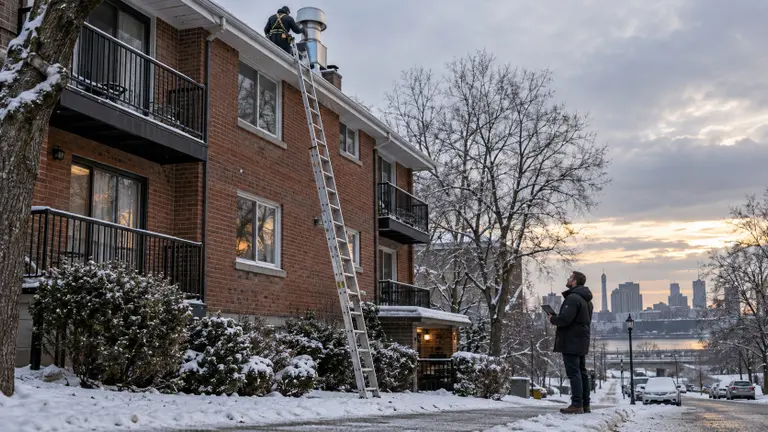
Preventive maintenance on a rental property is cheaper than reactive maintenance almost every time. That's not because the furnace service is cheap. It's because the 2am callout comes with everything else at once: the emergency rate, the water damage in the unit below, the tenant who stops trusting you, and the morning you lose on the phone. The real cost gap isn't on the invoice. It's in everything the invoice drags in with it.
I've run both sides of this. You plan the work, or the work plans your week for you.
What is the real cost gap between preventive and reactive maintenance?
Most property managers compare the wrong numbers. They put the cost of a planned service next to the cost of a repair and decide the repair might never happen, so why pay for the service.
That's the wrong maths. A reactive job is never just the repair.
The invoice is the smallest part
When something fails without warning, here's what you're actually paying for:
- The emergency or after-hours rate, if you can even get someone out
- Secondary damage, because water, cold and time don't wait for a quote
- Your own hours spent finding a trade, chasing them and calming the tenant down
- A unit that might not be habitable, and the conversations with the owner that follow
- Insurance excess and paperwork if it turns into a claim
- The tenant relationship, which is harder to fix than the boiler
A planned job has one cost: the job. You pick the day, you pick the trade, you get a proper quote, and nobody is standing in a cold kitchen waiting for you to call back.
That's the gap. Not price. Control.
Why Canadian winters make reactive maintenance expensive
In a mild climate you can sometimes get away with running things until they break. In most of Canada, you can't.
A furnace that quits in January isn't an inconvenience. It's an emergency. Frozen pipes split and flood. Ice dams push water under shingles and into ceilings. Freeze-thaw cycles open small cracks in foundations, walkways and parking areas that turn into big ones by spring. A sump pump that hasn't been tested fails during the spring melt, exactly when you need it most.
Every one of those has a cheap planned version in the fall and an expensive reactive version in the middle of winter. The weather decides the timing for you. Your only choice is whether you get there first.
What should a preventive maintenance plan for a Canadian rental cover?
Keep it seasonal. Building managers who try to track everything as a single annual list tend to lose track of it. Tie the work to the weather and it's much harder to forget.
Here's the order I'd run it in:
- Fall, before heating season. Furnace or boiler service, filter changes, check the heat in every unit, clear the eavestroughs and downspouts, shut off and drain exterior hose bibs, check weatherstripping on doors and windows, test smoke and carbon monoxide alarms.
- Winter. Snow and ice clearing on a contract with clear response expectations, roof checks after heavy snowfall where snow load is a concern, a walk-round for ice dams, and a quick check on any vacant units so pipes in empty spaces don't freeze unnoticed.
- Spring, during the melt. Test the sump pumps, check the grading so water runs away from the foundation, look over the roof and flashing for winter damage, and inspect the foundation, walkways and parking surface for new cracks.
- Summer. Air conditioning service where you have it, exterior paint and caulking, deck and balcony checks, and any bigger capital work you've been putting off, because trades are easier to book and the weather lets them finish.
Two Canadian rules to respect before you book anything. First, entering an occupied unit needs proper notice, and your province sets the notice period and the format. Check your residential tenancy rules before you schedule a building-wide inspection day. Second, alarm and safety requirements differ between provinces and sometimes between municipalities. Don't copy a checklist from another province or from the US and assume it covers you.
Why do most preventive maintenance plans die by February?
Not because the plan was wrong. Because nobody chased it.
This is the part people hate hearing. Writing the plan is easy. A spreadsheet with four seasons and fifty line items takes an afternoon. Then October gets busy, two contractors don't reply, one gives you a date and doesn't turn up, and by the time you look at the sheet again it's snowing and the furnace in unit 4 is making a noise.
When I ran my maintenance company in London, working for housing associations and letting agents, the rule I lived by was simple. Planned work is where the margin is safe. Reactive work is where it bleeds. The clients who booked the planned visits had fewer emergencies, and we had fewer 9pm calls. The ones who only phoned when something broke always paid more, one way or another.
The plan doesn't fail. The follow-up does.
How to run preventive maintenance without it becoming another spreadsheet
Treat every planned visit as a real job, not a line on a list. That means it has a scope, a date, a contractor, a status and a cost. If it doesn't have all five, it isn't booked. It's a wish.
Then run it the way you'd run any job:
- Write a clear brief for each visit. What's being serviced, which units, access arrangements and notice requirements.
- Get quotes early. September for fall work, not November.
- Confirm a date in writing and chase anyone who goes quiet.
- Record what was found. A furnace tech saying the heat exchanger is near the end of its life is the most valuable thing you'll hear all year.
- Feed those findings into next year's budget, so the owner hears about the replacement before it becomes an emergency.
That last step is the real win. Reactive maintenance gives you surprises. Planned maintenance gives you a forecast you can take to an owner or a condo board.
Illustrative example
This is a made-up scenario, not a customer story. Say you manage a 24-unit walk-up. In August you create one job for the fall heating service, split into stages: the boiler service, a filter and vent check, and an alarm test across all units. Each stage has its own date, contractor and cost. You send notice to tenants once the dates are confirmed. In October, the boiler tech flags a worn circulator pump. That goes on the list as its own planned job, quoted and approved before the cold hits, instead of becoming a no-heat call in January.
Where Plan@Job fits, and what still needs your decision
Plan@Job is AI-powered project and operations management for construction and property businesses. For a property manager, the value is in the follow-up that kills most preventive plans.
With the project plan, you split a job into internal stages, each with its own scope, dates, status and costs, and each delivered either by a subcontractor or in-house. Your fall service stops being a row in a spreadsheet and becomes a job you can track to completion.
The AI staff handle the chasing. Sophie Bennett, the AI Enquiries Coordinator, checks your job briefs for missing information, such as access details, and asks for clarification. Daniel Reed, the AI Operations Manager, can share eligible jobs with the existing vetted network, follow up on quotes and proposed dates, and send you a morning brief so you can see what's confirmed and what's slipping.
What stays with you: which contractor gets the work, what price you accept, and anything that commits an owner's money. The software doesn't award jobs or set prices on its own. That's deliberate. You know the building, the owner and the budget.
One honest note for Canadian readers. Plan@Job is live in the UK right now. In Canada, you can reserve your place through the Canadian property managers page, and we'll be in touch as availability opens up. I won't pretend the UK setup is running in Canada until it actually is.
The move is the same either way. Stop firefighting and start forecasting. Pick your fall jobs this week, put a date and a name on each one, and chase them until they're done. If you want the tool built for that, get on the Canadian list.
FAQ
Is preventive maintenance on a rental property really cheaper than fixing things when they break?
In most cases, yes. A planned service has one cost, while a failure brings emergency rates, secondary damage, lost time and an unhappy tenant along with it. In a Canadian winter the gap is wider, because heating and plumbing failures become emergencies fast.
How often should a Canadian rental property get preventive maintenance?
Run it by season, not once a year. Fall is the big one because of heating and freeze protection, spring follows the melt, and summer is for exterior and capital work. Check your manufacturer guidance and provincial rules for anything with a set service interval.
Do I need to give tenants notice for preventive maintenance visits?
In most cases, yes. Each province sets its own notice rules for entering a rented unit. Confirm the current requirements in your province's residential tenancy legislation before you book a building-wide visit, and send notice once the contractor's date is confirmed.