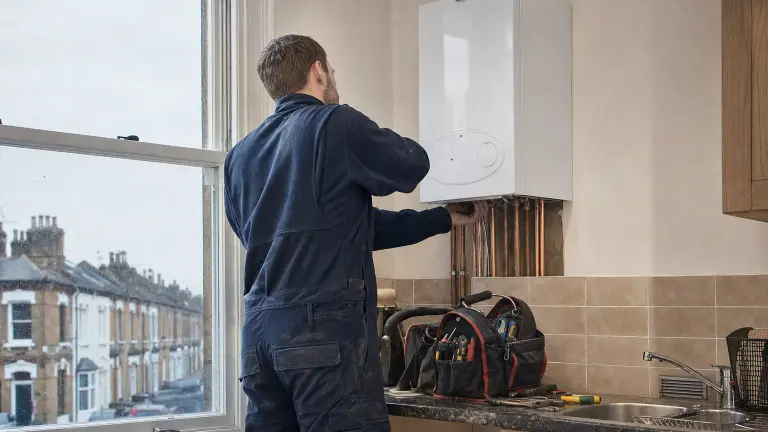
The new boiler cost for a standard like-for-like combi swap in the UK in 2026 is roughly £1,800 to £3,500 fitted. Heatable, an installer, publishes a median quote of £2,300 for a standard combi replacement, based on 2,000 quotes it gave between January and June 2026. That's the headline number. Here's the part people get wrong: the price itself isn't the problem. The problem is what's hiding inside a quote that's one line long.
If you manage rented property, you won't buy one boiler. You'll buy dozens over the years, usually in a rush, usually with a tenant ringing you from a cold flat. So this guide is about more than the price. It's about knowing what you're paying for and what to check before you approve.
What does a new boiler cost in 2026?
Take every figure online as a guide, not a quote. Most published prices come from installers and comparison sites, and they don't all agree. Here's roughly where the market sits this year:
- Like-for-like combi swap: about £1,800 to £3,500 fitted, according to Heatable. Selectra gives £1,800 to £3,200 and the same £2,300 median.
- Changing boiler type or moving it: Selectra says this adds roughly £500 to £1,200 on top of a straight swap.
- Regular or system to combi conversions, oil boilers and awkward flue runs: these sit higher, and the published figures vary too much to quote a single fair number. Get the survey done.
The figure that matters most: Selectra estimates the boiler itself is only 35 to 45% of the bill. The rest is labour, parts, flue, controls and making good afterwards. That's why two quotes for the same boiler can be a thousand pounds apart.
What should be inside a boiler quote?
When I ran my maintenance company in London, doing work for housing associations and letting agents, my rule on boilers was simple. No one-line quotes. Not from my subbies to me, and not from me to the client. If it just says 'supply and fit new boiler, £2,900', you can't compare it, you can't challenge it, and you can't tell what's missing until the invoice arrives.
An itemised boiler quote should list:
- The boiler make, model and output, plus the length of the manufacturer's warranty and what it depends on.
- Labour, including how many days and how many engineers.
- The flue: new or reused, the length, and any extensions or plume kit.
- Controls: thermostat or programmer, and whether they're included or extra.
- System cleaning: powerflush or chemical flush, plus the magnetic filter.
- Removal and disposal of the old boiler and any cylinder or tanks.
- Pipework changes, condensate route and gas supply upgrades if needed.
- Making good: filling holes, boxing in, redecoration (or a clear line saying it's excluded).
- Commissioning, building regulations notification and warranty registration.
- VAT, shown clearly.
If any line is missing, ask. A good installer answers in a sentence. One who gets defensive about an itemised breakdown is telling you something.
The extras that blow the budget
The usual surprises are the flue (especially on flats, where the route has to be checked on site), condensate pipes that freeze when they're run outside, an undersized gas pipe, and a dirty system that needs a proper flush before the new boiler goes on. Ask about all four at the survey stage, not after the old boiler is off the wall.
Repair or replace?
Simple rule: if the engineer can fix it with a part and the boiler isn't near the end of its life, repair it. If it's old, parts are hard to get and it keeps coming back as a callout every winter, stop paying for repairs.
What I'd ask the engineer, word for word: 'How old is it, are parts still available, and what's the honest life left in it?' Then ask for the repair price and the replacement price on the same visit. That gives you one decision instead of two callouts.
The repair-or-replace call is the landlord's money, so put both prices to the landlord in writing with the engineer's report. Don't decide it for them over the phone.
What paperwork should you get after a new boiler?
This is where rentals differ from a homeowner job. The paperwork is part of what you paid for.
- Confirm the engineer is on the Gas Safe Register and qualified for that appliance type before work starts. Check the card, and check the register itself.
- The installer should notify the work under building regulations. The compliance certificate follows afterwards. Chase it if it doesn't arrive.
- Get the completed Benchmark commissioning checklist.
- Make sure the warranty is registered with the manufacturer, and diarise the annual service the warranty depends on.
- Update your gas safety records, and line the new boiler up with the property's annual gas safety check under current gas safety rules.
- Check the carbon monoxide alarm while the engineer is there, in line with the current alarm rules for your property type.
File all of it against the property. When an inspection or a dispute comes along, 'the engineer said it was fine' won't cover you.
Tenants, access and the cold flat
A boiler swap is usually a day or two of work, but the job isn't finished until the tenant has hot water and you have the paperwork. If it's winter, agree temporary heating before the old boiler comes out. Confirm access in writing, with the date, the time window and who'll be on site.
The ugly side: the engineer turns up, nobody answers, the slot's gone and the next free day is a week later. Most of that is a communication failure, not a heating failure. Confirm the day before. Then confirm again on the morning.
How to get quotes you can actually compare
Get at least two, ideally three. Send every contractor the same brief, so you're comparing like with like:
- Address, property type and where the boiler sits
- Current boiler make, model and approximate age
- Photos of the boiler, the flue outside and the data plate
- The fault or reason for replacement
- Number of bathrooms and radiators
- Access details and tenant contact
- What you want included, such as a flush, a filter and controls
Then ask every contractor to quote against the same itemised lines. The cheapest total isn't always the cheapest job. A quote that leaves out the flush or making good will come back as a variation.
Approve itemised quotes in Plan@Job
This is the workflow we built Plan@Job for property managers to handle.
You raise the boiler job with the brief above. Sophie Bennett, our AI Enquiries Coordinator, checks the brief for gaps, like a missing boiler model or no photo of the flue, and asks for the detail. If it's still missing after two attempts, she hands it to a person. Daniel Reed, our AI Operations Manager, helps share eligible work with the existing vetted network and chases quotes and proposed dates, so you're not sending the same reminder five times. You can read how they work on the AI staff page.
What stays with you is the decision. You ask for the quote itemised, you read it, and you approve it. Nothing gets awarded automatically, and nobody picks a price for you. One thing to watch: in some workflows a contractor can send a price before every check on them is complete. So confirm Gas Safe registration for that appliance type before you approve, not after.
Illustrative example: a managed flat's boiler fails in November. The job goes in with photos and the model number, two quotes come back itemised, one leaves out the system flush, and the manager approves the other one with the landlord's sign-off attached. That's a decision taken in one go, with nothing to argue about afterwards.
If you're managing boilers across a portfolio, set the next one up properly. Itemised quote, paperwork checked, approved by you. Start on the Plan@Job property manager page.
FAQ
How much is a new combi boiler in the UK in 2026?
For a like-for-like combi swap, published 2026 guides put it at roughly £1,800 to £3,500 fitted, with a median around £2,300. Conversions, relocations and complicated flues cost more. The only number that counts is an itemised quote after a survey of your property.
Who pays for a new boiler in a rented property?
In most tenancies the landlord is responsible for keeping heating and hot water installations in repair, so the landlord pays for a replacement. As the manager, your job is to put both repair and replacement options to the landlord with the engineer's report and get written approval. If damage was caused by the tenant, check the tenancy agreement and get advice before you recharge.
Do I need a new gas safety certificate after a boiler replacement?
The installer should commission the boiler, complete the Benchmark checklist and notify the work under building regulations. Make sure your gas safety records reflect the new appliance and that it's covered by the property's annual gas safety check. If you're unsure what's needed for your property, ask the Gas Safe engineer before they leave site.