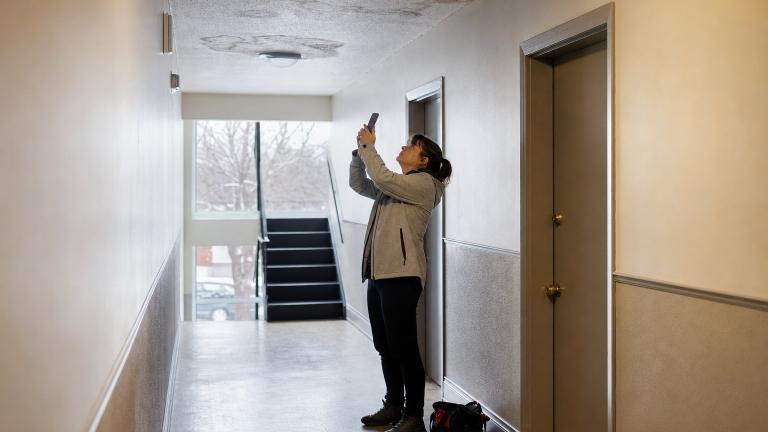
If a tenant files a maintenance application at Ontario's Landlord and Tenant Board (LTB) or British Columbia's Residential Tenancy Branch (RTB), the hearing rarely turns on whether the repair was eventually done. It turns on whether you can show what you knew, when you knew it, and what you did next, using documents created at the time rather than a timeline assembled the week before the hearing. So the direct answer to both halves of the question: document the unbroken chain from the tenant's first report to the tenant's confirmation that the work is finished, with dates and photographs at every link, and keep that chain for at least seven years after the tenancy ends, longer for building systems and anything under warranty or still in dispute.
That paragraph is most of the advice. The rest is what each link looks like in practice, where property managers usually lose the thread, and which record types need to survive longest.
Why contemporaneous beats complete
Adjudicators weigh evidence; they do not audit your filing cabinet. A thin record made on the day of the call generally carries more weight than a thick one assembled afterwards, because the first one could not have been shaped by knowing how the dispute turned out.
Three practical consequences:
- A dated entry beats a confident memory. "We attended within 48 hours" is an assertion. A work order timestamped 4:12 p.m. on the day of the report, with an attendance photo two days later, is evidence.
- Gaps are read against whoever should have the record. You control the maintenance system; the tenant does not. An unexplained three-week hole in your file tends to be read as three weeks of inaction.
- Late evidence may not be heard at all. Both the LTB and the RTB set out in their rules of procedure when documents must be filed and served before a hearing, and evidence produced at the last minute can be excluded no matter how good it is. Build the record so it is ready to serve, not ready to assemble.
The seven records that decide maintenance cases
For any single repair, these are the links. A missing one is where most files break.
- The intake record. Date and time received, channel (call, email, portal, text), unit, and the specific defect in the tenant's own words. Keep their wording, not your paraphrase of it.
- The acknowledgement. Dated written confirmation back to the tenant saying what will happen and roughly when. This is often the most useful single document you own, because it proves the report was not ignored.
- The entry notice. Ontario and BC both require 24 hours' written notice for non-emergency entry, within the hours their legislation permits. Keep the notice itself and proof of how it was delivered.
- The attendance record. Who attended, arrival time, what they found. If access was refused or nobody was home, record the attempt that day. A missed access appointment only helps you if you wrote it down at the time.
- The work record. Scope, dates, status, and the trade or subcontractor assigned. If the job ran in stages (make safe, part on order, final fix), each stage needs its own dates so a delay is explained rather than merely implied.
- The cost record. Quotes and invoices tied to the job, for abatement arguments and for your tax file.
- The closure confirmation. The tenant confirming the issue is resolved, or your dated note that you asked and had no reply. Closing a job without this is the most common avoidable gap.
Illustrative scenario (fictional)
A fictional Ontario property manager gets a text at 9:40 p.m. about no hot water. They log it that night, send written acknowledgement at 7:05 a.m., serve entry notice at 7:20 a.m. for the following morning, attend, photograph a failed element, order the part, record the arrival date, complete the repair, and receive a one-line text saying it is sorted. Seven records, one week, no real argument left about diligence. This example is illustrative, not a customer result.
Photographs that actually help
- Shoot wide, then close. A close-up of mould with no context does not tell an adjudicator which wall in which room.
- Put something in the wide shot for scale.
- Take the "after" from the same position as the "before". Matched pairs persuade; two unrelated images do not.
- Keep the original files. Camera metadata carries the capture date, and screenshots, re-exports and images pasted into documents usually lose it.
- Photograph the defect, not the tenant and not their belongings. Canadian privacy expectations apply to your file too, and nobody needs a picture of someone's kitchen table.
Build the record around the legal standard
Ontario's Residential Tenancies Act puts landlords under a continuing duty to keep the rental property in a good state of repair and fit for habitation, and to comply with health, safety, housing and maintenance standards. British Columbia's Residential Tenancy Act imposes a comparable repair and maintenance duty. Neither statute asks whether you were busy. So your file should answer four things on its face: when you acquired knowledge, who assessed severity and how, how fast you responded, and what interim mitigation you offered while the permanent fix was pending.
Essential services deserve their own discipline. Loss of heat, water or electricity is treated differently from cosmetic repair in both provinces, and BC's emergency repair provisions require landlords to give tenants a contact for emergencies and set out steps a tenant must follow before arranging repairs themselves. Keep proof that your emergency contact details were provided and kept current. It is a small record that often decides who bears a cost.
One terminology note worth getting right in your own documents: Manitoba's Residential Tenancies Branch also abbreviates to RTB, Alberta uses the Residential Tenancy Dispute Resolution Service, and Quebec matters go to the Tribunal administratif du logement. Name the body correctly in correspondence you might later file.
Arrears files need a ledger, not a narrative
For unpaid rent applications, the adjudicator wants a period-by-period ledger: period start and end, rent due, amount received, date received, method, part payments applied, credits, and a running balance. Files fall apart when someone tries to reconstruct this from bank statements during the hearing. Plan@Job's Rent Book runs weekly or monthly rent periods, imports bank statements, matches payments by reference, flags unmatched items for a human to review, and tracks part payments, credits and arrears as the money arrives, so the ledger builds itself in real time. Money moves from the tenant's bank to the manager's bank; bank connection availability depends on supported account setup, and the UK is the live market for this launch, so confirm availability for your market before planning around it.
How long to keep what
- Open or disputed matters: until fully resolved, including any review or appeal window, then apply the periods below from that point.
- Unit-level maintenance after move-out: seven years is the sensible floor. The CRA generally requires business records to be kept six years from the end of the last tax year they relate to, and most provinces have a two-year basic civil limitation period (Quebec differs). Ontario tenant applications about maintenance generally must be brought within a year of the conduct complained of. Confirm current filing and limitation periods with your provincial tribunal rather than relying on a blog post, including this one.
- Building systems: fire safety equipment, elevators, HVAC, water and electrical inspection records should be kept for the life of the asset, and provincial fire and safety regulation may impose its own retention rules on top.
- Warranties and capital work: the warranty term plus the retention period above.
- Photographs and messages: same schedule as the job they belong to. A phone gallery is not an archive, and neither is a staff member's personal messaging app.
What still needs a person
Software can hold the chain together. It should not make these calls for you: whether a report is an emergency, whether to enter over an access dispute, whether to offer an abatement or settle before the hearing, and how much internal detail to disclose. In Plan@Job, the client sees the overall agreed scope and price plus the evidence you share; internal stage costs and subcontractor identity stay internal. Disclosing beyond that is a judgment call, not a setting. No AI staff member awards work, sets a price or moves money on its own.
Running this inside Plan@Job
Plan@Job is AI-powered project and operations management for construction and property businesses, built for operators (the contractor business managing clients, delivery, subcontractors and in-house operatives) and for the property managers who commission them. Once a job brief exists, Sophie Bennett, the AI Enquiries Coordinator, checks it for missing information and asks for clarification, handing off to a person after two attempts. That is where "no unit number, no description of the defect" gets caught before it becomes a gap in your evidence. The project plan splits the job into internal stages with scope, dates, status and costs across subcontracted and in-house delivery, so a parts delay appears as a recorded stage rather than silence. Daniel Reed, the AI Operations Manager, supports eligible sharing with your existing vetted network, quote and proposed-date follow-ups, and a morning brief. Maya Collins, the AI Finance Coordinator, prepares deposits and overdue payment actions for your approval.
The practical payoff is simple: every Plan@Job job generates a dated, photo-backed record you can produce at a hearing, without anyone rebuilding a timeline from an inbox and a camera roll the night before. (If you also run the trade side of the business, we publish contractor operations and strategy writing on our related site Construction Arbitrage.)
Next step: the UK is the live market for this launch. Canadian property managers can check current availability and register interest at planajob.com/ca/property-managers.
FAQ
How long should I keep maintenance records after a tenant moves out?
Seven years is a defensible default for unit-level maintenance, driven mainly by the CRA's six-year rule for business records measured from the end of the last relevant tax year, with a margin on top. Keep records for building systems, warranties and anything still in dispute longer. Check your provincial tribunal's current limitation and filing periods before you destroy anything.
Do my photos need a visible timestamp burned into the image?
No, and a burned-in stamp is easy to fake, so it is not what gives a photo weight. What helps is the original file with its camera metadata intact, plus a work record showing the same date and context. Avoid screenshots and re-exports, which usually strip that metadata.
Is a text thread with my contractor enough evidence on its own?
It is real evidence and better than nothing, but it is weak alone. Threads are unordered, often incomplete, and usually silent on entry notice, attendance and closure. Use messages to corroborate a job record that already carries dates, scope, status and photographs rather than as the record itself.