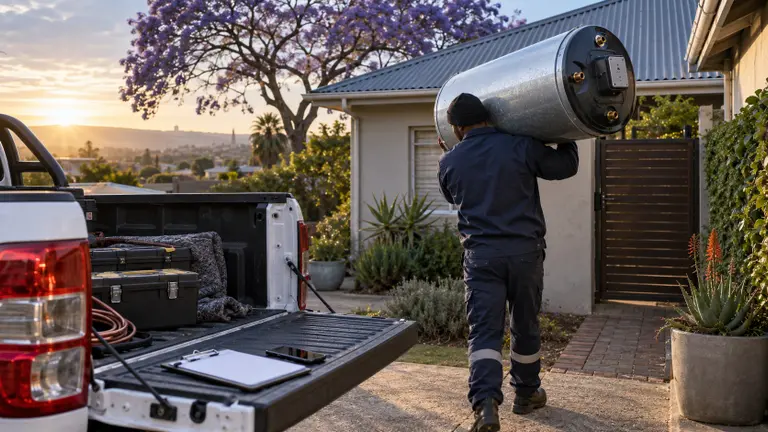
Yes, you can get insurance repair work as a contractor in South Africa. But you won't get it by filling in a form and waiting. Each insurer has its own route in. Santam only takes on building and plumbing suppliers when it has an open application window. OUTsurance runs Kwande, an enterprise and supplier development programme that brings mentorship and funding as well as market access. Discovery Insure works through its procurement team and its partner network. All three check one thing first: whether you can sign off your own work. For plumbers that means a PIRB card and the ability to issue a plumbing CoC. On the electrical side it means a registered electrician who can issue an electrical CoC. If you can't certify the work, you're not getting onto the panel.
I built a property maintenance company in London on work from housing associations and letting agents, with a network of subbies doing the jobs. Different country, same game. Panel work is all volume and paperwork. The contractors who last are the ones who treat the paperwork as part of the job.
I checked these routes against the insurers' own published pages in October 2026. Programmes open and close, so confirm with the insurer before you apply.
How does insurance repair work reach a contractor in SA?
The homeowner claims. The insurer validates the claim. On bigger losses an assessor or loss adjuster looks at the damage and sets the scope. Then the job goes to an approved supplier, either straight from the insurer or through a larger partner that manages the repairs.
The jobs are mostly the same few things: burst geysers, water damage to ceilings and floors, storm and hail damage to roofs, and the odd fire. Geysers alone keep a lot of plumbers busy. Discovery's own buildings cover lists bursting, leaking or overflowing geysers as covered events.
Here's the part people hate hearing. The insurer is your client, not the homeowner. The homeowner is the one you're standing in front of, but the insurer approves your quote, checks your photos and pays on its terms. Get that relationship wrong and the work stops coming.
Santam: wait for the window, then register
Santa handles this through Group Sourcing: Claims Procurement. Its property supplier onboarding document says it straight. There won't always be an open application process, and you should contact the procurement staff first to ask whether one is open. Don't just register on the Santam vendor portal and hope.
The contacts are split by region. One covers building and plumbing suppliers in Gauteng, KwaZulu-Natal, North West and national work. Another covers the Eastern Cape, Free State, Limpopo, Mpumalanga, Northern Cape and Western Cape. Find your region's contact in the current onboarding document and email them first.
On top of the standard governance documents, Santam asks building and plumbing suppliers for:
- a copy of the front and back of the plumber's PIRB card, with the company name on the card matching your business name
- for electrical work, an ECA certificate, wireman's certificates and registration with the Department of Employment and Labour
- your latest public liability insurance
- a company profile with photos of your vehicles, previous work and equipment
Read that first point again. The name on the PIRB card has to match your business. You can't put a mate's card on your application and call yourself a plumbing supplier. If you run your business through subbies, that's the bit that catches you out.
OUTsurance Kwande: the ESD route
Kwande is OUTsurance's enterprise and supplier development (ESD) programme. It started in April 2019, and the name comes from the isiZulu for "to multiply". It's aimed at small businesses in OUTsurance's value chain, and the page names builders, plumbers, electricians and other artisans.
What you get is more than a job list. There's one-on-one mentorship, boot camps, specialist support, access to OUTsurance's supply chain, and loan and grant funding for operating and capital costs through the ASISA ESD Fund. A development cycle runs 18 to 24 months. OUTsurance measures success by turnover, new clients and Customer Service Index scores.
That last bit tells you how to approach it. Kwande isn't free money. It's a business development programme, and service scores are part of how you're judged. If your callbacks are slow and your snag lists drag on, the funding won't fix that.
The page doesn't publish eligibility criteria or application dates. Phone OUTsurance, ask whether a Kwande cohort is open, and find out what they need from a business your size. If you already do work in their value chain, say so first.
Discovery Insure: procurement and the partner charter
Discovery Insure's buildings cover includes geysers, and its Home Assist benefit gives policyholders emergency plumbing, electrical and locksmith services. Someone has to do that work. Discovery runs it through partners who sign up to its Partner Service Charter, and it gives annual awards to partners, including non-motor ones.
I couldn't find an open public application form for building contractors on Discovery's site. The route is to approach Discovery Insure's procurement team through its official contact channels, with your documents ready. Some of the volume also goes through larger partners who appoint subcontractors of their own, so it's worth a conversation with them too.
Why CoC capability is the real filter
On every route, the question underneath is the same. Can this business certify what it installs?
A geyser replacement needs a plumbing CoC, and only a PIRB-registered licensed plumber can issue one. Any electrical work on the geyser circuit or the DB board needs an electrical CoC from a registered electrician. An insurer paying for that work needs that paper on file. Without it, the claim isn't closed and you don't get paid.
So before you chase any panel, sort out where you stand:
- Check the PIRB card is in your business name and current.
- Confirm who in your business can issue an electrical CoC, and that their registration is valid.
- Renew your public liability insurance and keep a copy ready to send.
- Build a company profile with real photos of your bakkie, your tools and finished jobs.
- Set up a standard photo routine for every job: before, during and after, with the certificate attached at close-out.
If you can't tick the first two yet, that's your next move. Get a licensed plumber or registered electrician on staff or in the business. Insurance work is not where you learn on the job.
What keeps you busy between claims
Insurance work comes in lumps. A hail storm can fill your diary for weeks, then it goes quiet. Then you're waiting on payment terms you didn't set.
My rule from running maintenance: never let one client type be the whole business. Panel work is a good earner. It is not a foundation. The base is your own maintenance clients. That means landlords, letting agents, body corporates and managing agents who need geyser servicing, leak callouts and small repairs every month, claim or no claim.
That's the work Plan@Job is built to run. It's AI-powered project and operations management for construction and property businesses. In Plan@Job you're the Operator: the contractor business managing clients, project delivery, subbies and your own operatives.
Here's how an insurance-style job runs in it:
- You split the job into internal stages with scope, dates, status and costs, for example strip-out, plumbing, ceiling and paint. Each stage can go to a subbie or your own team. See project management.
- The client sees the overall agreed scope, the price and the evidence you share, like photos. Your internal stage costs and who your subbie is stay internal.
- Sophie Bennett, the AI Enquiries Coordinator, checks job briefs for missing information and asks for clarification before anyone wastes a trip. Daniel Reed, the AI Operations Manager, follows up quotes and proposed dates and sends you a morning brief. More on the AI staff.
You still make the calls. The AI staff don't award jobs, set prices or move money. You decide.
One honest point. Plan@Job is live in the UK. In South Africa it's on a reserve list, so it isn't running SA jobs yet. If you want in when it opens here, reserve your place as a South African contractor.
My advice: get your CoC capability sorted this month. Then email Santam's regional contact and phone OUTsurance about Kwande. Keep your maintenance base growing the whole time.
FAQ
Can I subcontract insurance repair work in South Africa?
It depends on the agreement you sign, so ask before you assume. What doesn't change is that insurers check your business's own registrations. On a Santam plumbing application, for example, the PIRB card has to be in your company name. Subbies can help you deliver the work. They can't stand in for your credentials.
How long does it take to get onto an insurer's supplier panel?
There's no published timeline. Santam only onboards when a window is open, which is why you contact them first. Kwande runs development cycles of 18 to 24 months. Plan to keep earning from your own clients while you wait.
Do I need B-BBEE documents to apply?
Expect insurers to ask for standard governance documents, and ESD programmes like Kwande exist to grow small businesses in their supply chains. Ask the procurement contact exactly what they want for a business your size. Have your current B-BBEE certificate or affidavit ready before you call.