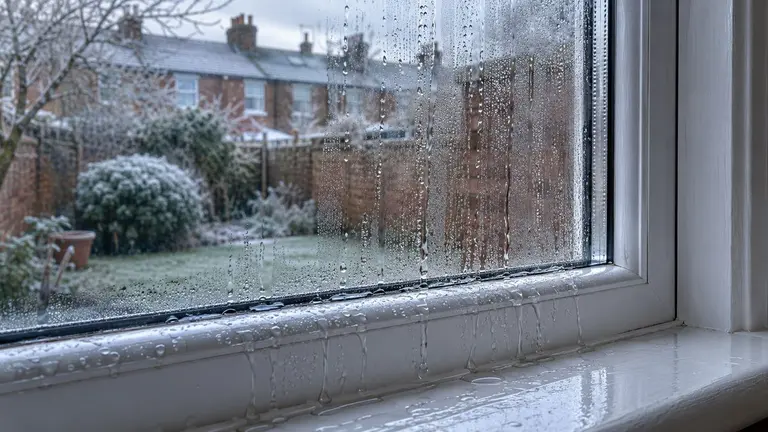
To stop condensation on windows, you need to cut the moisture in the air, get that moist air out of the home, and keep the glass and frames from getting so cold. In a rented property that usually comes down to three checks. Is the ventilation working? Is the home heated steadily? Is the window itself sound? Condensation on glass is often the first visible sign of a wider damp problem, so treat it as an early warning rather than a cosmetic nuisance.
Why windows stream in winter
Warm air holds more water vapour than cold air. When it touches a cold surface, it cools and drops that water as droplets. Single glazing, older double glazing and metal frames are often the coldest surfaces in a room, so they show it first.
Everyday living adds a lot of moisture. Cooking, showers, kettles, breathing and drying clothes on radiators all contribute. In winter, tenants keep windows shut, and heating costs push some households to heat only part of the home. Moist air drifts into cooler bedrooms and settles on the glass overnight.
A little morning mist that clears within an hour is common. Water running onto sills, black mould on seals or reveals, rotting timber and peeling paint are not. That is the point where it becomes a property problem you need to manage.
Rule out the things that are not condensation
Before you talk to a tenant about habits, make sure you are dealing with condensation at all.
- Misting between the panes. If the moisture is inside a sealed double-glazed unit, the seal has failed. No amount of ventilation will fix it. The unit needs replacing.
- Water at one corner or after rain. That points to a leak through the frame, failed sealant, a blocked drainage slot or a defect in the wall around the window.
- Damp patches low on walls. Tide marks near skirting boards may be rising or penetrating damp, which needs a different kind of contractor.
- Damp in one room only. Look for a leaking pipe, an overflowing gutter or missing insulation behind that wall.
Ask the tenant for photos, find out when it is worst, and note which rooms are affected. If you are unsure, send someone competent to look. A wrong diagnosis wastes visits, money and goodwill.
How to stop condensation on windows: the fixes that work
Work from the cheapest and most likely fixes to the most invasive.
1. Make the existing ventilation work
Most rented homes already have some ventilation. It just is not working.
- Check kitchen and bathroom extractor fans run, actually pull air, and are not clogged with grease or dust. A sheet of tissue held against the grille is a crude but quick test.
- Check fans have a run-on timer or humidistat, so they keep going after the shower or hob is off.
- Open trickle vents in the window heads. Many are shut, painted over or blocked.
- Make sure air bricks outside are clear of soil, plants and bins.
- Check any tumble dryer vents outside, or is a condenser type with the tank emptied regularly.
2. Help tenants reduce moisture without blame
Tenants are more likely to change habits when the advice is practical and the property is clearly being looked after. A short winter guidance note helps. Cover:
- Lids on pans and the extractor on while cooking.
- Bathroom door shut and fan on during and after showers.
- Drying clothes in a ventilated room with the door closed, or outside where possible.
- Wiping glass and sills in the morning and opening a window briefly to let damp air out.
- Keeping furniture slightly away from external walls.
- Low, steady heating rather than short blasts, where that is affordable for them.
Watch the tone. Some tenants cannot afford to run the heating as much as they would like. Putting the whole problem down to lifestyle when the building has defects will not fix it, and it can damage the relationship and your position if a complaint escalates.
3. Improve ventilation where it falls short
If the fans and vents work and condensation is still heavy, the home may not have enough ventilation for how it is used. Options a competent contractor might suggest include:
- Upgrading weak bathroom or kitchen extractor fans.
- Adding trickle vents to windows that have none.
- Fitting a positive input ventilation unit, often in the loft, which pushes filtered air into the home.
- Heat recovery ventilation, either single-room or whole-house, in suitable properties.
The right answer depends on the building. Ask the contractor to explain why they recommend a particular option and what it will change.
4. Warm up the cold surfaces
Condensation forms on the coldest surface. Raising that temperature helps.
- Repair heating that is faulty, and bleed or balance radiators that are not heating fully.
- Check loft insulation and, where relevant, cavity wall insulation.
- Consider secondary glazing where replacement is restricted, such as in listed buildings or conservation areas, with the right consents.
- Replace failed double-glazed units, and plan replacement for single glazing or badly degraded frames.
5. Deal with mould that is already there
Where mould has appeared on reveals, sills or seals, it needs proper treatment, not paint over the top. Clean or treat the affected areas, replace mouldy sealant and repair damaged timber. Then fix the cause, or it will be back next winter.
What the rules expect from you
Damp and mould are a health and safety issue in rented homes, not just a comfort issue. In England, landlords have duties under the Housing Health and Safety Rating System and fitness for habitation rules, and Awaab's Law has introduced timed duties on damp and mould for social landlords. Wales, Scotland and Northern Ireland have their own rules, and the position across the UK continues to change.
Check current official guidance from GOV.UK or the relevant devolved government for the homes you manage. Whatever the exact rules, the practical expectations are consistent:
- Respond promptly when a tenant reports damp, mould or heavy condensation.
- Inspect and identify the cause, rather than assuming it is lifestyle.
- Keep records of reports, photos, inspections, advice given and work done.
- Tell the tenant what you are doing and when.
Good records are your best protection, and they also make the next winter easier.
A repair brief contractors can act on
Vague jobs lead to wasted visits. "Condensation in flat" tells a contractor almost nothing. A useful brief includes:
- The address, flat number and access arrangements.
- Which rooms and windows are affected.
- Whether moisture is on the room side of the glass or between the panes.
- Window type and rough age, if known.
- Whether extractor fans run, and whether trickle vents are open.
- Any mould, rot or damaged decoration.
- Photos, ideally taken in the morning when it is worst.
- What you want: a diagnosis, a quote, or a specific repair.
Illustrative example: a tenant in a two-bed flat reports streaming bedroom windows and black spots on the seals. The manager asks for morning photos and learns the bathroom fan has stopped working and the bedroom trickle vents are painted shut. The job becomes "replace bathroom extractor with run-on timer, free trickle vents, treat mould on bedroom window seals", which a contractor can price from the brief and then confirm on site.
Raising a condensation repair job on Plan@Job
Plan@Job is AI-powered project and operations management for construction and property businesses, and property maintenance is one of its main uses. As a property manager, you can raise a repair job on Plan@Job with the details above and your photos.
The AI staff support the admin around the job, while the decisions stay with you:
- Sophie Bennett, AI Enquiries Coordinator, checks the job brief for missing information, such as whether the moisture is between the panes or which fans are affected, and asks for clarification. If the detail is still missing after two attempts, she hands it to a person to pick up.
- Daniel Reed, AI Operations Manager, supports sharing eligible jobs with the existing vetted network and follows up on quotes and proposed dates. The contractor business that picks up the work is called an operator on Plan@Job. That is the company that manages delivery, its own operatives and any subcontractors.
You choose which quote to accept and agree the date. Nothing is awarded or priced automatically. You can read more about how each colleague works on the AI staff page.
FAQ
Will a dehumidifier stop condensation on windows?
A dehumidifier can reduce moisture in a room and help in the short term, especially while drying clothes. It does not fix broken fans, blocked vents, faulty heating or failed glazing. Treat it as a stopgap while you find and fix the cause.
Is condensation the tenant's responsibility?
Tenants are responsible for living in the home reasonably, and good habits make a real difference. But you are responsible for the building, including ventilation, heating, insulation and the windows themselves. Investigate before deciding, and check current official guidance on your duties.
When should I replace windows rather than improve ventilation?
Replace a double-glazed unit when it mists between the panes, because the seal has failed. Consider full replacement when frames are rotten, warped or single glazed and condensation stays heavy after ventilation and heating are working properly. Ask a competent contractor to inspect and explain the options.
Last reviewed: 22 November 2026.