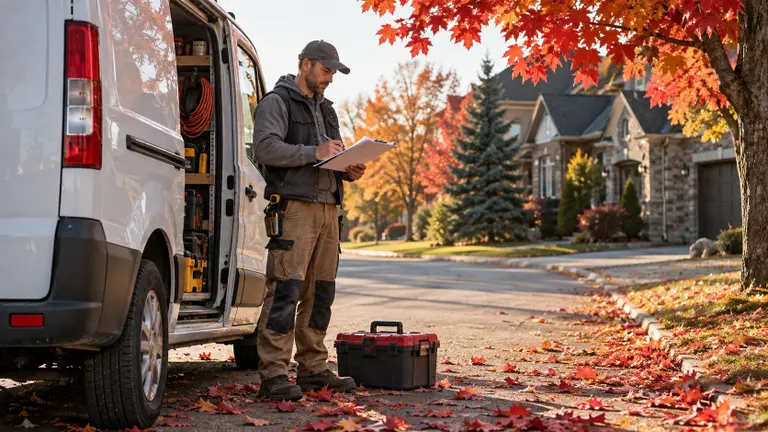
Handyman liability insurance in Canada is commercial general liability cover, usually called CGL. It pays out when your work damages someone's property or injures someone. If you work in other people's homes or buildings, you need it before your first job, not after your first claim. On what it costs: it depends on your trade, your province, your revenue and your claims history. The only real price is the one a broker quotes you. So here's what to buy, what to skip and how to get it priced properly.
One thing first. I built my business in the UK, not Canada. The principles of contractor insurance are the same everywhere. The rules aren't. Anything provincial in here, check with your broker and your provincial board before you rely on it.
What does handyman liability insurance actually cover?
CGL covers damage you cause to other people and their stuff. It doesn't cover you, your tools or your van.
The core of a standard CGL policy:
- Bodily injury to third parties, like a tenant tripping over your extension cord in a hallway.
- Property damage to third parties, like scratching a hardwood floor or cracking a countertop while you fit a sink.
- Completed operations, meaning damage that shows up after you've packed up and left.
- Legal defence costs if someone sues you over any of the above.
Completed operations is the one people forget. Here's an illustrative example, not a real job. You replace a bathroom tap on a Tuesday. Three weeks later a fitting lets go and water comes through the ceiling of the unit below. You're long gone. The claim still lands on you. That's what completed operations is for.
What it usually doesn't cover
Read the exclusions. This is where contractors get caught.
Many policies won't pay to redo your own faulty work. They pay for the damage the faulty work caused, not the work itself. So if your tap fails, the insurer may cover the ceiling below but not a new tap and your labour.
Your own tools, your vehicle and your own injuries sit outside CGL too. Mould and pollution are often excluded or limited. And if you give design advice or sign off on specs, that's professional liability territory, not general liability.
What other insurance do small contractors in Canada need?
CGL is the base. Depending on how you work, you'll want some of these on top:
- Tools and equipment cover. If your van gets broken into overnight, CGL pays nothing. A tools floater does.
- Commercial auto. A personal auto policy may not cover a vehicle used for business. Tell your insurer exactly how you use the van.
- Workers' compensation. This is provincial and separate from your private insurance. WSIB in Ontario, WorkSafeBC in British Columbia, CNESST in Quebec, WCB in Alberta and other provinces. Whether you must register, and whether that applies to you as a sole proprietor, depends on your province and trade. Check with your board directly.
- Errors and omissions. Only if you're advising, designing or project managing for a fee.
- Bonding. Some contracts, and some licensing regimes, ask for a bond. That's a guarantee to the client, not insurance for you.
You don't need all of it on day one. CGL and tools cover are the minimum for most handymen. Workers' comp is often not optional. Add the rest when your work demands it.
How much liability coverage do you need?
Let your clients answer this one. Read the contracts you're signing and the jobs you want to win.
You'll see $1 million, $2 million and $5 million limits on most quote requests and contracts. Homeowners rarely ask. Property managers, condo corporations and commercial clients usually do, and they'll tell you the limit in the contract or the vendor onboarding pack.
They'll often ask to be named as an additional insured on your policy too. That's normal. Your broker adds them and sends a certificate. Don't panic about it, just don't promise it before you've checked your insurer will do it.
My take: buy the limit that gets you into the work you want. If the clients you're chasing all want $2 million, carrying $1 million to save a bit on premium means you can't even bid. That's not saving money. That's turning work away.
What does handyman liability insurance cost in Canada?
I'm not going to give you a number. Anyone online quoting you a flat figure without knowing your trade and revenue is guessing.
What I can tell you is what moves the price:
- Your trade mix. Hanging pictures and assembling furniture is a different risk to plumbing, electrical work or anything on a roof.
- Your revenue and payroll. More work means more exposure.
- Your province and where you actually work.
- The limit and deductible you choose.
- Your claims history.
- How much you subcontract, and whether your subbies carry their own cover.
Here's the part people hate hearing: describe everything you do on the application. If you tell the insurer you do "general handyman" and then you're on a ladder doing gutters or swapping a water heater, you're giving them a reason to deny the claim. A cheap policy that doesn't pay out is the most expensive one you'll ever buy.
How to buy it without getting caught out
This is the order I'd do it in.
- Write down every service you offer, even the ones you only do now and then. Licensed trades work needs to be mentioned separately.
- Get quotes from at least two or three brokers who place contractor business. Brokers are licensed and regulated provincially, so ask who they're licensed with.
- Compare the wordings, not just the premium. Ask each one directly about completed operations, the faulty workmanship exclusion and any conditions on subcontractors.
- Ask how fast they issue a certificate of insurance and add additional insureds. If a property manager wants a certificate by Friday, you need a broker who answers the phone.
- Put your renewal date in your calendar a month early. A lapsed policy on a live job is a disaster.
Simple. Most people skip step three, then find out what their policy says on the day they need it.
Your subbies need their own insurance
This is where the middleman model lives or dies.
I built a maintenance company in London on a network of subbies. The rule I'd give anyone running that model is short: no certificate, no keys.
If your subbie floods a unit and they've got no cover, the claim comes back to you. Your insurer may then ask why you let an uninsured sub on site. Some policies have conditions about this. Ask your broker what yours says.
So before any subbie starts:
- Get their certificate of insurance and check the limit matches what your client asked you for.
- Check the expiry date and diarise it.
- Get proof of their workers' comp standing where your province requires it. In Ontario that's a WSIB clearance certificate, in BC a WorkSafeBC clearance letter. Other provinces have their own version.
- Keep copies against the job, not buried in an email thread.
It feels like admin. It's actually protecting the margin. One bad claim can wipe out a year of spread.
Where Plan@Job fits
Plan@Job is project and operations management for construction and property businesses. It's built for the operator, meaning the contractor business that manages the clients, the project delivery, the subbies and the in-house team.
You split a job into internal stages with scope, dates, status and costs. Some stages go to subcontractors, some to your own operatives. The client sees the agreed scope, the price and the evidence you choose to share. Your stage costs and who your subbies are stay internal. You can see how that works on the project management page.
The AI staff do the chasing in the background. Daniel Reed, the AI Operations Manager, helps share eligible jobs with an operator's existing vetted network and follows up on quotes and proposed dates. A person still decides who gets the work and at what price. Nothing gets awarded automatically. More on that on the AI staff page.
Straight answer on Canada: Plan@Job is live in the UK right now. In Canada it's a reservation list. I'm not going to promise you features or matching that isn't running in your market yet. If you want to be first in when it opens, reserve your place on the Canadian contractors page.
While you're waiting, get your certificate current and keep a clean copy handy. Any operator worth working for will check your paperwork before trusting you with a client's keys. That's true on Plan@Job and everywhere else.
FAQ
Is liability insurance mandatory for handymen in Canada?
There's generally no single national law forcing every handyman to carry CGL. But licensing rules in some provinces and trades can require insurance or bonding, and most property managers and commercial clients won't hire you without it. In practice, no insurance means a lot less work. Check your provincial and municipal requirements for your specific trade.
Does my CGL policy cover my subcontractors?
Don't assume it does. Many policies have conditions about subcontracted work, and an uninsured subbie's mistake can end up on your claims record. Make every sub carry their own cover and give you a certificate before they start. Then ask your broker exactly what your policy says.
How fast can I get a certificate of insurance?
Once your policy is bound, a good broker can usually issue a certificate quickly, often the same day. Adding a client as an additional insured can take a bit longer because the insurer has to agree to it. Ask about turnaround before you buy, not when a property manager is waiting on you.