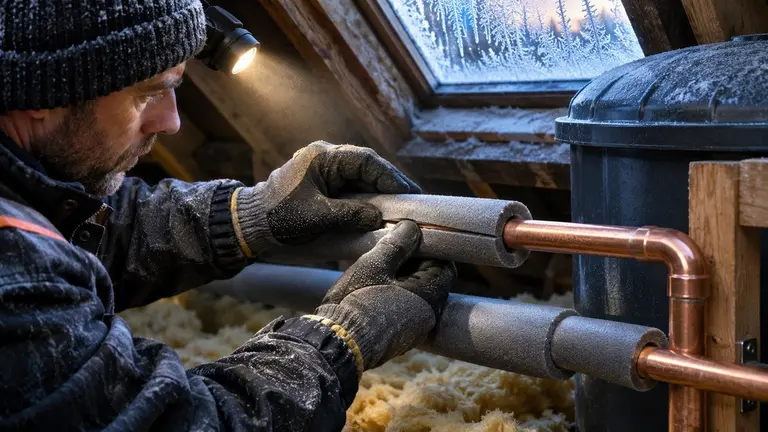
Frozen pipes are one of the most predictable winter callouts in a rental portfolio, and most of them can be prevented with a few weeks of preparation. When a pipe does freeze, your job is to stop it bursting. If it has already burst, your job is to get the water off, keep the tenant safe and get the right trade on site quickly. This guide covers both: what to check before the cold arrives, and a clear routine for when the call comes in.
Published 24 November 2026.
Why frozen pipes land on your desk
Water expands as it freezes. Inside a pipe, that pressure can split copper or plastic, or push a joint apart. Often nothing shows until the thaw, when water starts running through ceilings, into light fittings and across floors.
For a managed rental, one cold night can become several problems at once. A tenant without water or heating. Damage to the landlord's building and possibly a neighbour's. An insurance claim. Repair obligations to meet.
Under the Landlord and Tenant Act 1985, landlords are generally responsible for keeping the installations for water supply and heating in repair. Check current guidance and the tenancy agreement for the detail on each property, and take advice if responsibility is disputed.
Prevention before the first hard frost
Autumn is the time to do this. Once a cold snap is forecast, every plumber in your area will be busy.
Survey the risk points
Use your next inspection, or ask your maintenance contractor, to check:
- Pipes in lofts, garages, outbuildings and under suspended floors, especially anything on an external wall.
- Lagging that is missing, split or has slipped off bends and joints.
- Loft water tanks. The tank and its pipework should be insulated, but not the floor directly beneath the tank, as warmth rising from below helps stop it freezing.
- Outside taps. Fit an internal isolating valve, turn it off and drain the tap, or fit an insulated cover.
- The boiler condensate pipe. On many condensing boilers this runs outside to a drain. If it freezes, the boiler locks out. Ask a heating engineer whether it can be insulated or rerouted.
- Draughts near pipework, such as airbricks, gaps around waste pipes or a cold cupboard under the sink.
- The stopcock. Confirm it exists, it turns, and note exactly where it is.
Write it up per property. A photo of the stopcock location saved against the property saves a lot of time when a tenant is standing in water.
Void and empty properties
Empty properties carry the highest risk because nobody notices a dripping ceiling for days. Agree a plan with each landlord before winter:
- Keep the heating on a low or frost setting with a timer.
- Schedule regular visits during cold spells.
- For longer voids, have a competent plumber drain down the system and label it clearly so the next person knows.
Check the landlord's insurance policy too. Policies often include conditions for unoccupied properties, such as inspection frequency or draining down, and a claim can be affected if those were not met.
Brief your tenants
Send a short winter note before the cold arrives. Keep it practical:
- Where the stopcock is and how to turn it off.
- Keep the heating on low when away, rather than switching it off.
- In very cold spells, open the loft hatch and cupboard doors under sinks so warm air reaches the pipes.
- Report no water, a frozen tap or a boiler fault straight away, with photos.
- Never use a naked flame or blowtorch to thaw a pipe.
- How to report a problem out of hours.
What to do when a tenant reports a frozen pipe
The first call decides most of the cost. Have whoever takes it work through these questions in order:
- Is water coming out anywhere? If yes, treat it as a burst.
- Is water near electrics, light fittings or the consumer unit?
- Is there no water at all, or just one tap affected?
- Is the boiler showing a fault?
- Is anyone vulnerable in the property, such as an older person, young children or someone with a health condition?
The answers tell you which of the three routes below to follow.
Frozen but not burst
No water from a tap, but no leak. Ask the tenant to:
- Turn off the stopcock if they can.
- Open the affected tap, so water has somewhere to go as it thaws.
- Warm the pipe gently, starting at the tap end and working back, using a hot water bottle, a towel soaked in warm water or a hairdryer on low kept well away from any water.
- Watch for leaks as the pipe thaws, and call you immediately if they see one.
If the frozen section is somewhere they cannot safely reach, such as a loft or under a floor, book a plumber.
Burst pipe
This is an emergency. Talk the tenant through it:
- Turn off the water at the stopcock.
- Turn off the heating and the boiler.
- If water is near electrics, do not touch anything wet. Switch off at the consumer unit only if it can be reached safely from a dry spot. Otherwise wait for an electrician.
- Open cold taps to drain the system and reduce the flow.
- Move belongings, catch water and take photos for insurance.
Then get a plumber booked, tell the landlord and agree who notifies the insurer. In a flat, contact the block's managing agent and check on the flats below.
Frozen condensate pipe
A boiler that stops during a cold snap with a fault showing is often a frozen condensate pipe. The tenant can pour warm, not boiling, water over the outside section, usually at a bend or the open end, then reset the boiler following the manufacturer's instructions. Anything inside the boiler casing is work for a Gas Safe registered engineer only.
Decisions that need a person
Some calls should never be left to a system or a junior colleague without clear rules. Settle these before winter:
- Your emergency spending authority with each landlord, and when you must call them first.
- Whether out-of-hours or emergency rates are approved.
- Which contractor gets the job, and at what price.
- Whether the tenant needs temporary heating or alternative accommodation.
- Who notifies the insurer, and when.
Write these into the management agreement or a short winter plan per landlord. At 11pm on a Sunday, nobody wants to be negotiating authority.
Running frozen pipe jobs on Plan@Job
Plan@Job is AI-powered project and operations management for construction and property businesses. For a frozen pipe, the useful part is getting a complete, clear job out quickly and keeping track of it.
You raise the job with the property, what has happened, photos, access details and urgency. Sophie Bennett, our AI Enquiries Coordinator, checks the brief for missing information, such as whether the stopcock is off or how the contractor gets in, and asks for clarification. If two attempts do not get an answer, the job is handed to a person on your team.
Daniel Reed, our AI Operations Manager, can support sharing eligible jobs with the existing vetted network and follow up on quotes and proposed dates. His morning brief shows what is still outstanding. You choose the contractor and approve the price. Nothing is awarded automatically, and attendance times depend on the contractor's availability, not on the software. You can read more about how the AI staff work.
Illustrative example: a tenant in a ground-floor flat reports water dripping from the kitchen ceiling on a freezing morning. The property manager talks them through turning off the stopcock, then raises the job with photos. Sophie asks for the access arrangements. The manager reviews the responses and approves a plumber. The landlord is updated within the agreed emergency limit.
If you manage rentals in the UK, you can raise urgent jobs in about two minutes on Plan@Job, with the details a contractor needs to act. See how it works for property managers.
After the thaw
Once the repair is done, close the loop:
- Record the cause, the fix, photos and the invoice with the job.
- Check for hidden damp in ceilings, floors and walls, and book a follow-up visit if needed.
- Watch for mould in the weeks after a leak, and respond promptly to any reports.
- Add the failure point to next year's prevention list for that property.
One burst pipe usually points to a weak spot. Fixing it properly before next winter is cheaper than a second claim.
FAQ
Who pays for a burst pipe in a rental property?
Generally the landlord is responsible for repairing water and heating installations. A tenant may be liable if damage was caused by their negligence, depending on the tenancy agreement. Insurance may cover some or all of it. Check the tenancy and the policy, and take advice if it is disputed.
Should tenants keep the heating on when they go away in winter?
On a low setting, yes. It is one of the simplest ways to prevent frozen pipes. Put the advice in your winter note to tenants and in any move-in pack.
Can a tenant thaw a frozen pipe themselves?
They can use gentle methods on pipework they can reach safely, such as warm towels or a hairdryer on low, with the tap open. They should never use a naked flame. Any work inside a gas boiler must be done by a Gas Safe registered engineer.