A condo board that opens a tender by phoning three contractors for a price has already lost control of the comparison. The sequence that survives owner questions, an audit and the occasional lawyer runs the other way: the reserve fund study (the depreciation report in British Columbia) tells you what is coming and roughly when, a condition assessment turns that line into a defined scope, a written specification makes the scope biddable, prequalification decides who is allowed to bid, and only then does the request for proposals go out. Boards that jump straight to the RFP do not get three comparable prices. They get three prices for three different jobs, plus a pile of change orders that arrives after the contract is signed. Here is the order to run it in, and the decisions that have to stay with people.
Start with the reserve fund study, not the bidder list
The study is a funding plan, not a scope
Your study gives each major component an estimated remaining service life, a replacement cost in today's dollars, and the year the funding plan expects to spend it. Those numbers come from a reserve fund planner working with observed condition, standard service lives and a cost database. They are not quotes. They were never priced against your loading dock, your elevator protection rules, or the fact that half the roof can only be reached over a neighbour's easement, and they usually assume like-for-like replacement rather than the upgrade the board actually wants.
So use the study line as a budget sanity check, not as a target for bidders to beat. When the board wants better than like-for-like, treat that as a scope decision with its own approval path, not as a variance from the study.
Know your province's cycle before you plan the tender
Requirements differ by province and several have moved recently. Ontario corporations update reserve fund studies on a three-year cycle under the Condominium Act, 1998, alternating comprehensive studies with updates carried out with and without a site inspection, and owners receive notice of how the board intends to fund the reserve. British Columbia moved to a mandatory five-year depreciation report cycle for strata corporations of five or more lots in 2024 and removed the previous ability to waive the report by vote, with phased first deadlines. Alberta corporations renew the reserve fund study and plan on a five-year cycle. Quebec syndicates are working through the maintenance log and contingency fund study obligations introduced under Bill 16. Confirm the current rule and your corporation's next due date with the professional who prepares your study before you commit a tender to a budget year.
Turn the line item into something a contractor can price
Commission the condition assessment separately
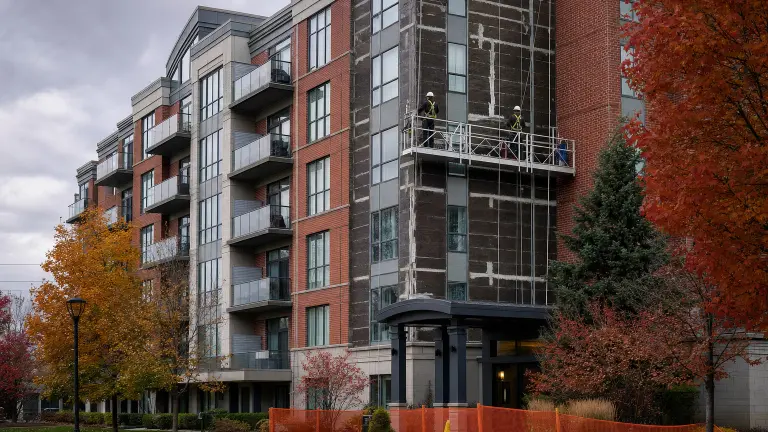
For anything structural, enclosure-related or mechanical, engage an engineer or qualified consultant to investigate and specify before you go to market. Underground parking garage rehabilitation, balcony guard and slab repair, window and curtain wall replacement, roof replacement, boiler and make-up air units, elevator modernization: in every one of these, the gap between a well-spent capital budget and a two-year argument is the quality of investigation done first. Test cuts, roof cores, chloride and delamination surveys, thermal imaging and a proper quantity take-off cost a fraction of the project and remove the largest single source of change orders, which is discovered condition.
Keep design and construction in separate hands where you can. The consultant who writes the specification and reviews the work should not be the party being paid to do it.
What a biddable tender package contains
- Scope, drawings and specifications, with exclusions stated as plainly as inclusions.
- Site conditions and constraints: access, hoisting, parking, staging, elevator protection, permitted working hours, noise rules and resident notification duties.
- Schedule: start window, milestone dates, the seasonal limits that a Canadian roofing, coating or concrete scope actually has, and what happens if the site is not ready.
- Pricing format: a fixed price for the defined scope, unit rates for quantities nobody can know until the work is opened up, hourly labour rates for extra work, and a named cash allowance for anything genuinely undefinable.
- Mandatory submissions: certificate of insurance, workers' compensation clearance, trade certifications, comparable references, the list of subcontractors intended for each portion, and any exceptions taken to the contract form.
- Evaluation criteria and weights, published in the package rather than decided afterwards.
- The contract form, holdback and payment terms you intend to use.
- One point of contact, a question deadline, an addendum process and a submission deadline.
Prequalify so the prices are comparable
Prequalification is where a board's risk is actually managed, and it costs less than the alternative. Before a bidder goes on the list, the property manager should be holding:
- Commercial general liability at a limit set with your insurance broker, with the condominium corporation named as additional insured, and the certificate arriving from the broker rather than forwarded from the contractor.
- Workers' compensation clearance: a WSIB clearance certificate in Ontario, a WorkSafeBC clearance letter in British Columbia, a WCB clearance in Alberta and the prairie provinces, a CNESST attestation in Quebec. Verify it at award and again at every payment, not once at the start.
- Trade authorizations for the specific work: gas work by a certified gas technician, electrical work by a licensed electrical contractor, elevator work by a licensed elevator contractor, refrigerant work by technicians holding current environmental certification. Confirm the equivalent authority in your province.
- Safety program and record: written health and safety policy, working-at-heights training where applicable, a site-specific plan and a named competent supervisor.
- Comparable references: same building type, similar vintage, occupied conditions. Occupied high-rise work is a different discipline from new construction.
- Capacity and subcontracting: who is physically on site, which portions are subcontracted and to whom.
Where the contractor carries any design responsibility, add professional liability to that list.
Write an RFP the board can defend
Publish how you will score before the bids arrive
Publishing criteria and weights up front disciplines the evaluation and protects directors from the charge that the criteria were invented after the envelopes were opened.
Illustrative example (fictional, for shape only): a board scores price at 40 points, comparable experience at 20, schedule and availability at 15, methodology and compliance with the specification at 15, and safety record and references at 10. Weight it to your own risk. Garage waterproofing in an occupied building may deserve more weight on methodology than on price.
One piece of Canadian law worth knowing: a formal call for tenders can create a preliminary contract with every compliant bidder (the Contract A and Contract B framework), carrying duties of fairness and an obligation to reject non-compliant bids. Many boards deliberately run an RFP with clear reservation language instead of a formal tender call for exactly this reason. Have counsel check the wording once, then reuse it.
Make everyone price the same shape
Non-comparable bids usually mean bidders answered different questions. Require the pricing form back as issued. Require unit rates for the quantities that will move. Require exceptions to be listed, not buried in a covering letter. If a bidder wants to propose an alternate system, ask for it as a priced alternative alongside a compliant base bid, never instead of one.
Handle questions and addenda in writing, to everyone
Every clarification goes to all bidders as a numbered addendum, acknowledged in the submission. A verbal answer to one bidder is a competitive advantage today and an evidence problem later.
Award, contract and the first payment
- Conflicts. A director with a material interest in a bidder discloses it and abstains. Minute the disclosure and minute the reasons for the award.
- Lowest is not compulsory. Boards may choose a bid that is not the cheapest, provided they can say why against the published criteria. If you want a feel for why a low bid is low, our sister site constructionarbitrage.com writes about contracting business strategy from the contractor's side (a related site of ours, not an independent review).
- Owner approval. Repair and replacement of existing common elements sits differently from changes, additions and improvements under most provincial legislation and under your declaration or bylaws. Check the threshold before you award, not after.
- Contract form. Use a standard Canadian construction contract form or a short form reviewed by the corporation's counsel. A quotation with the contractor's own terms on the back is not a contract for a capital project.
- Holdback and payment clocks. Your province's construction or builders' lien legislation sets a statutory holdback and the conditions for releasing it, and several provinces, Ontario, Alberta and Saskatchewan among them, now run prompt payment and adjudication regimes with short response deadlines. Diarize those dates.
- Closeout. Deficiency walkthrough with the consultant, a written deficiency list with dates, a defined warranty start, and operation and maintenance manuals plus as-builts handed over before final release.
Where software helps, and what it must not decide
Most of the friction in a condo tender is not judgement, it is chasing: the clearance certificate that expired last month, the quote promised on Tuesday, the same scope retyped into six emails. That is the part worth systematizing.
Plan@Job is AI-powered project and operations management built for operators (the contracting business that manages clients, delivery, subcontractors and its own operatives) and for the property managers and main contractors who commission work from them. Several pieces map onto tendering:
- The job brief is written once and checked. Sophie Bennett, the AI Enquiries Coordinator, reviews an existing brief for missing information and asks for clarification, handing off to a person after two attempts. Vague briefs are the root cause of non-comparable bids.
- Where sharing is eligible, that brief goes to the existing vetted network instead of being retyped into individual emails, and Daniel Reed, the AI Operations Manager, follows up on outstanding quotes and proposed dates and surfaces them in a morning brief. You can read how the AI colleagues work before deciding what to delegate.
- A live job splits into internal stages with their own scope, dates, status and costs, covering both subcontracted and in-house delivery. The client sees the overall agreed scope and price and the evidence shared with them; internal stage costs and subcontractor identity stay internal. That is the shape of stage-based project plans.
- Maya Collins, the AI Finance Coordinator, prepares deposits and overdue payment actions for a person to approve, on fixed finance workflows.
The aim is a set of like-for-like quotes from insured businesses against one brief rather than three PDFs in three formats. The limits matter just as much: the AI staff do not award work, do not set prices and do not guarantee how many quotes a tender attracts. Prequalification decisions, scoring, the award, owner approvals and contract signature stay with the board and its advisers, which is where your legislation puts them anyway. Checks and approvals sit at the appropriate stage of the workflow rather than as one gate at the front. And an operator service is agreed with that supplier; opening a software account does not bundle one.
The United Kingdom is the live market for this launch, so Canadian property managers should join the reserve list for Canada rather than assume UK features and bank connections are available here.
One next step: pull your current reserve fund study or depreciation report, list every component due in the next 36 months, and mark which ones still need a condition assessment before they can be specified. That list is your tender calendar for the next two budget years.
Written September 2026. Reserve fund and lien legislation changes; confirm current requirements for your province before acting.
FAQ
How many quotes does a condo board need for a maintenance contract?
There is no universal legal number in Canadian condominium legislation. Three is a common internal policy, and many corporations adopt a written procurement policy setting quote thresholds by dollar value. Check your declaration, bylaws and any board-adopted policy first. Comparability matters more than count: two bids against a proper specification tell you more than five against a paragraph of email.
Does the board have to accept the lowest bid?
No. Directors owe duties of good faith and reasonable care under provincial condominium legislation, and the lowest price is not automatically the prudent choice. What protects the decision is process: published criteria, consistent scoring, disclosed conflicts, minuted reasons, and reservation language in the RFP that counsel has reviewed. Choosing a higher bid with no recorded rationale is the exposure, not the higher bid itself.
Can the board tender work that is not in the reserve fund study?
Yes. Studies are not exhaustive and components fail early. Before you tender, classify the spend properly: reserve fund expenditure, operating budget item, or an improvement that may need owner approval under your act and governing documents. Then feed the work back to your reserve fund planner so the next study update reflects the new component, its installation date and its revised service life.