
To compare subcontractor quotes properly, you need every sub pricing the same scope, every price landing in one place, and the decision written down against the job. That's it. The cheapest number in your WhatsApp at 10pm isn't a comparison - it's a guess. Here's how I'd do it in Plan@Job, step by step, so three weeks from now you can still tell who priced what, and why you picked who you picked.
Quick note on terms. In Plan@Job, the Operator is you: the contractor business that manages the client, runs the delivery and works with subcontractors and your own operatives. Subcontractors are the external businesses you hand work to. Operatives are your own team members.
Why the thread gets lost in the first place
Most quote comparisons fall apart before the first price comes back. One sub got a photo on WhatsApp. Another got a voice note. The third came to site and saw the damp you forgot to mention to the other two. Now you've got three prices for three different jobs.
When I ran my maintenance company in London, working for housing associations and letting agents through a network of subbies, I ended up living by one rule: I don't compare prices, I compare scopes. If the scope isn't the same, the price means nothing.
So the work starts on the job, not in your inbox.
Step one: lock the scope on the job before anyone prices
This part is all you. The platform holds it, but nobody else can decide what the job actually is.
- Open Jobs and go into the job. If it started as a lead or a site visit, make sure the notes and photos from Site visits are on the job, not sitting in your camera roll.
- Split the work into internal stages. Each stage carries its own scope, dates, status and costs. If you're only subbing out the plastering on a refit, that's one stage. Your own operatives might do the strip-out as another.
- Write the scope for the stage you're sending out as if the sub has never seen the property. Measurements, access, parking, what's included, what's not, who supplies materials, earliest start.
- Say what you need back. A total, a breakdown, a start date, how long it takes. Put it in the brief so everyone answers the same question.
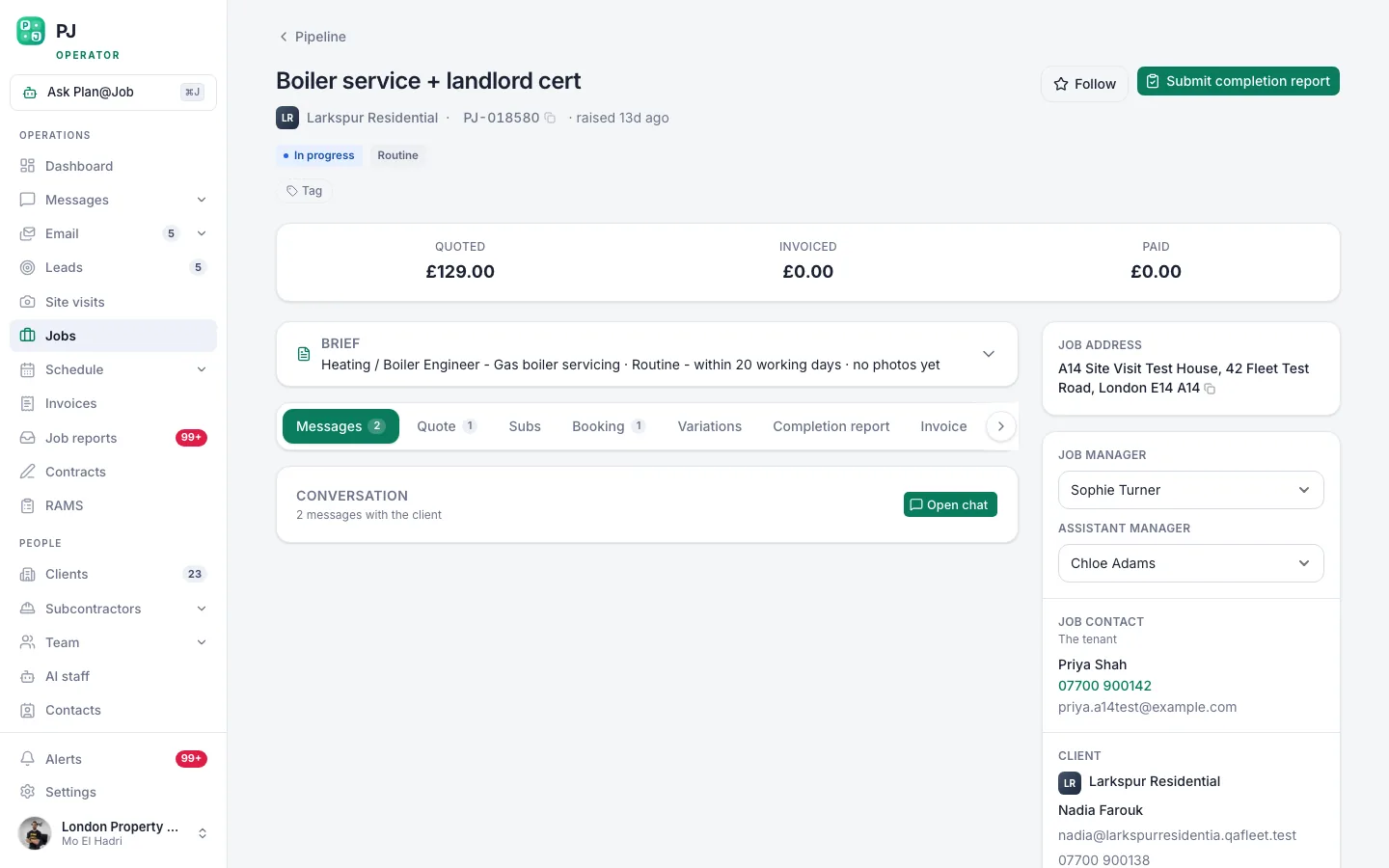 A job page holds the scope, the internal stages, who is doing the work and what it costs you.
Your client never sees this layer. They see the overall agreed scope and price, plus whatever evidence you choose to share. Your internal stage costs and which subbie is doing the work stay internal. That's your margin, and it stays yours.
Step two: send one brief out from the Subcontracting desk
- Open the Subcontracting desk and send the stage brief to the subbies you want pricing. Pick them from your own Subcontractors list. Where the job is eligible, Daniel Reed, our AI Operations Manager, can support sharing it with the existing vetted network too.
- Send the same brief to everyone. Don't add a line for one sub and forget the others. If something changes, update the brief and send it again, so nobody is pricing an old version.
- Keep the questions in Messages. When a sub asks whether the ceiling is included, answer it there. If the answer changes the scope, update the brief for everyone, not just the one who asked.
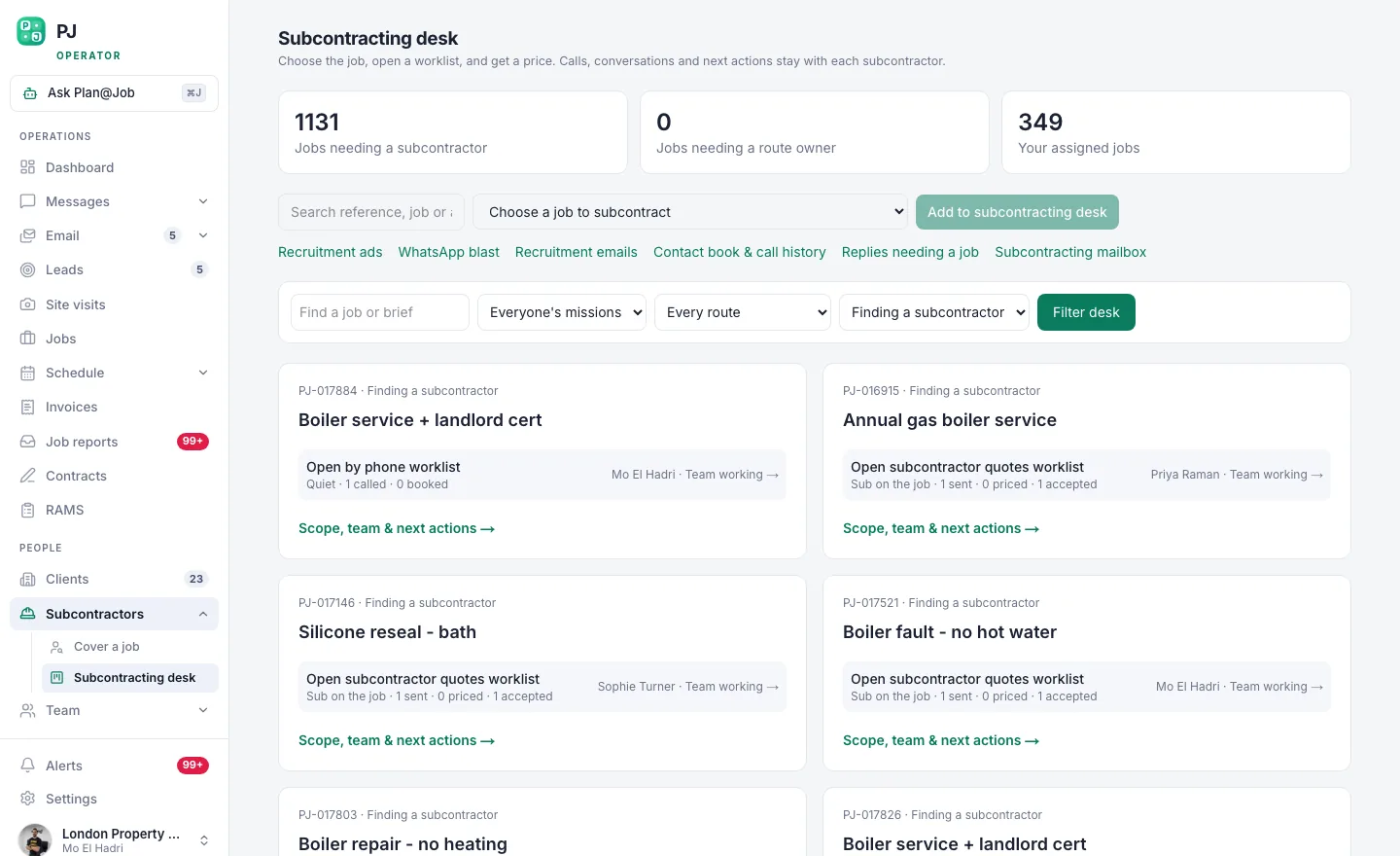 The subcontracting desk: one brief out to many, and every price back in one place.
Then there's the chasing. Every operator knows the sub who says 'I'll send it tonight' and goes quiet for a week. Daniel can follow up quotes that haven't come back and proposed dates that need confirming, and his morning brief shows you what's still outstanding. He chases. He doesn't award work and he doesn't set prices. More on what he does on the AI staff page.
One thing people get wrong here. Some subbies can price before they've been through your checks, in the workflows that support it. That's fine. A price is not an award. Do your checks before anyone gets the job, not before they're allowed to quote.
Step three: compare the prices that come back
Every price lands back on the Subcontracting desk against the brief. Now you compare. Not the totals first. The scopes.
Read each price against the brief
Go through them in this order:
- Exclusions. What has each sub left out? Skip, making good, materials, a second visit. A cheap price with three exclusions is often the expensive one.
- Dates. When can they start, and how long do they say it takes? A sub who can't start for a month might be useless to you even if they're the best on paper.
- Assumptions. Did anyone price something different from what you asked? If so, that's a question in Messages, not a reason to bin them.
- Then the money. Only now, once you know you're looking at the same job.
Ask everyone the same follow-up
If you go back to one sub with 'can you sharpen that?', you've just started a different conversation with one person. Fine if that's what you want, but know you're doing it. If a question is about scope, ask all of them.
Don't let the cheapest win by default
Here's the part people hate hearing. The cheapest price is rarely the one I'd give the work to. The real question is who turns up when they said, does it right first time, and doesn't leave you with a snag list and an angry client on the phone. You're the one who carries that call, not the sub.
Step four: award it and write it on the job
This is a person's decision, every time. Plan@Job doesn't award work on its own, and none of the AI staff pick the winner or agree a price for you.
- Make the call. Check the sub is approved by your own standards before you commit.
- Assign the subcontractor to the stage on the job page and put their agreed cost against it. Now the record sits where the work sits.
- Update the stage dates and status so your Schedule reflects reality.
- Tell the others. One short, polite message in Messages. It costs you nothing and they'll price for you next time.
Who does what
The platform handles the admin side:
- Holding the scope, stages, dates and costs on the job.
- Sending the brief out and bringing the prices back to the Subcontracting desk.
- Through Daniel, following up quotes and proposed dates, and summing up what's outstanding in the morning brief.
You keep the decisions:
- What the scope actually is.
- Who gets asked to price.
- Your checks and approval of the sub.
- Who gets the work and at what price.
- What the client sees and agrees.
What usually goes wrong
Scope drift is the big one. You change something halfway through pricing and only tell the sub you're on the phone with. Fix it by updating the brief and resending it, every time.
The second is prices living off-platform. A number in a text, another in an email, one said out loud on site. If it's not on the desk, it doesn't count. Ask the sub to send it through properly.
The third is awarding on gut at speed because the client is chasing you. Slow down for ten minutes. Read exclusions and dates. That ten minutes is cheaper than a remedial visit.
Last one: ghosting the subs who didn't win. Your network is your business. Treat it like it.
The next move
If your quotes currently live across WhatsApp, email and the back of a notebook, start with one job. Set the stages up, send one brief from the Subcontracting desk and compare what comes back properly. You'll feel the difference on that first job.
Have a look at how project management in Plan@Job handles stages, costs and subcontracted work, then set up your contractor account. And if you want to talk through how other people run their subbies, that's what Contractor Club is for.
FAQ
How many subcontractor quotes should I get for one stage?
Enough to have a real choice, not so many you can't read them properly. For most stages, a few subbies you'd genuinely use beats a long list of strangers. If you get more back than you can compare like for like, your brief was too loose.
Can a subcontractor quote before they've been vetted?
In supported workflows, yes. Some subbies can price before your checks are done. A price isn't an award, so do your checks and approval before you give anyone the work.
Will my client see which subcontractor I picked or what they're charging me?
No. The client sees the overall agreed scope and price, plus the evidence you choose to share. Internal stage costs and the identity of your subcontractor stay internal to you.