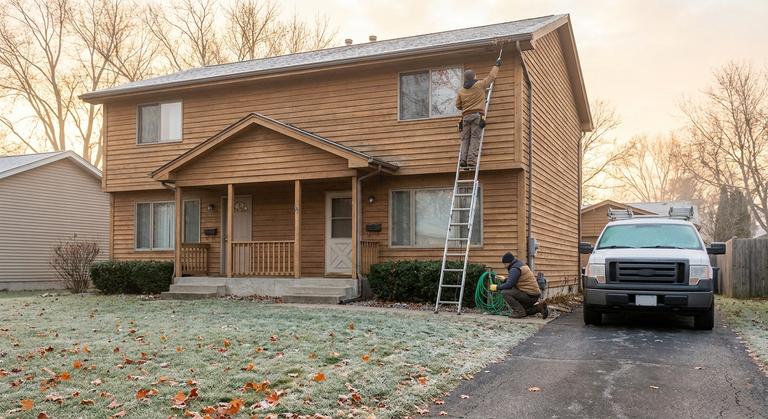
The first hard freeze does not wait for your winterize rental property checklist to be finished. It shows up on a Sunday night, and by Monday you have a split supply line over an occupied unit, a tenant with no heat, and a plumber charging after-hours rates to open a wall. Fall maintenance is the cheapest insurance in this business. Almost everything that fails catastrophically in January was visible and cheap to fix in October. What follows is organized the way work actually gets assigned, by system and by trade, so you can hand it straight to vendors instead of translating it first.
Start Six Weeks Before Your Average First Frost Date
Pull your local average first frost date and count back six weeks. That is the start line for your winterize rental property checklist. It matters because every other manager in your ZIP code calls the same HVAC company the week the temperature drops, and the ones who called in September get the 9 a.m. slot at standard rates.
Book these first, because they are the ones that sell out:
- HVAC tune-ups for every unit, including rooftop units and any electric heat you assume is fine
- Chimney inspection and sweep for any wood-burning appliance (NFPA guidance calls for an annual inspection regardless of use)
- Irrigation blowout and backflow preventer drain-down
- Gutter cleaning scheduled after the last leaves drop, not before, since a September cleaning is wasted money
- Snow and ice removal contract, signed with the per-event or seasonal rate locked in
Trades price by scarcity, and winter demand is the most predictable scarcity on the calendar. If you want a sharper view of how contractors think about seasonal capacity and margin before you negotiate renewal rates, constructionarbitrage.com is worth an hour.
Your Winterize Rental Property Checklist, System by System
Heating and fuel
- Replace every filter and leave labeled spares with the tenant
- Have a technician check the heat exchanger for cracks, test the flame sensor, and verify flue draft
- Bleed hydronic radiators, check boiler pressure and the expansion tank
- Top off oil and propane tanks before the first cold snap pushes delivery windows out a week
- Confirm the thermostat works and clear any vacation schedule left over from summer
- Clear at least three feet around exterior heat pumps and around high-efficiency furnace intake and exhaust terminations, because a snowdrift blocking a sidewall vent will shut a furnace down on the coldest night of the year
Heat is a habitability requirement in effectively every state, and cities including New York and Chicago set formal heat season dates with minimum indoor temperatures. A no-heat call in February is not a routine work order, it is a legal clock running. Know your jurisdiction's response window before you need it.
Plumbing and freeze protection
- Shut off and drain every exterior hose bib from the interior valve, then pull the hoses off. A connected hose is the single most common cause of a burst sill cock
- Insulate supply lines in crawlspaces, attics, garages, and exterior walls, adding heat tape where insulation alone will not hold
- Flush the water heater, test the T and P valve, and check the anode on tanks more than five years old
- Test the sump pump with a bucket of water, clear the discharge line, and confirm the battery backup holds a charge
- Label and photograph the main water shutoff in every unit, then send that photo to the tenant
- Seal penetrations where pipes pass through the rim joist. Most freeze failures happen where cold air gets in, not where the outdoor temperature is lowest
Roof, gutters and drainage
- Walk the roof or fly it: lifted shingles, failed pipe boots, separated flashing at walls and chimneys
- Clear gutters and downspouts, then confirm discharge carries water several feet away from the foundation
- Check attic insulation depth and, just as important, that soffit vents are not buried under it. Ice dams are an attic ventilation problem wearing a roofing costume
- Extend downspouts or re-grade where soil has settled against the foundation over the summer
Envelope, doors and windows
- Replace worn weatherstripping and door sweeps
- Caulk exterior gaps around windows, trim, and utility penetrations
- Hang storm windows and storm doors where the building still uses them
- Insulate crawlspace access hatches and close foundation vents where local practice calls for it
Life safety
- Test every smoke and carbon monoxide alarm and replace any unit past its manufacture date. Most states require CO alarms in dwellings with fuel-burning appliances or an attached garage, so check your state and local placement rules
- Clean dryer vents. Lint plus a closed-up house is a fire pattern, not a coincidence
- Confirm exterior, stairway and walkway lighting works, because you are about to lose several hours of daylight
- Check handrails and exterior stair treads before ice turns a loose tread into a claim
Vacant Units Need a Different Standard
A vacant unit is where a winterize rental property checklist earns its keep, because there is no tenant to notice the cold. You have two defensible options and no third one.
Option A, keep it heated. Set the thermostat no lower than 55 degrees Fahrenheit, keep the utility account in your name, open cabinet doors under sinks on exterior walls, and have someone physically walk the unit weekly and log it.
Option B, fully winterize. Shut off and drain the main, blow the supply lines out with compressed air, drain the water heater, add RV antifreeze to every trap including floor drains and the toilet bowl and tank, then tag the unit so nobody restores water without draining it first.
Read your insurance policy before you choose. Many carriers exclude water damage in vacant or unoccupied buildings unless heat was maintained or the water was shut off and the system drained. That language usually asks exactly what you did, so log the date, the temperature setting, and who performed the work.
Snow, Ice and Liability You Cannot Subcontract Away
Most municipalities require sidewalk clearing within a set number of hours after snowfall stops, and slip-and-fall claims are the most common winter liability in residential portfolios. Sign the snow contract in the fall, collect the certificate of insurance before the first event, and be specific about triggers, since a two-inch trigger is meaningless if your ordinance requires clearing at any accumulation. Stage salt on site in October, because it vanishes from local suppliers within hours of the first forecast, and photograph conditions after each service visit. The timestamp is your defense.
Plan for vendor turnover too. Small trade businesses change hands quietly, often at the end of a season, and finding out in December that your snow contractor sold the route is a bad surprise. Handovers like the ones listed on contractorexit.com are common enough that it is worth asking your key vendors in the fall whether anything is changing.
Tenant Communication Does Half the Work
Tenants are your only on-site staff overnight. Send one clear message in early fall: where the water shutoff is, what to do if a pipe freezes, why the thermostat should never go below 55 when they travel, that drafts and window leaks should be reported now, and the after-hours emergency number. A tenant who reports a cold radiator in November prevents an emergency in January.
Turn the Checklist Into Scheduled Work Orders
A checklist that lives in a spreadsheet gets skipped on the busy properties. Break this winterize rental property checklist into work orders by trade, tie each due date to your frost date, and dispatch across the whole portfolio at once instead of making the same phone call forty times. Platforms like PlanaJob let property managers post each of these jobs and compare quotes from vetted contractors side by side, which matters most in the fall when one HVAC vendor's availability decides your entire schedule. You can set up your portfolio and start scheduling in a few minutes, see how the tools built for property managers handle recurring seasonal work, or browse more maintenance guides on the PlanaJob blog.
Run the same list every year and keep the completion records. By the third season you will know which buildings need the attic work and which ones only need filters.
FAQ
When should I start a winterize rental property checklist?
Six weeks before your area's average first frost date. That leaves room to book HVAC tune-ups and chimney sweeps before schedules fill, order parts that turn out to be back-ordered, and re-inspect anything a vendor flags. In warm-winter markets, still complete the plumbing, dryer vent, and life safety items. The freeze events that cause the worst damage in the South are the ones nobody prepared for.
What temperature should I keep in a vacant rental over winter?
55 degrees Fahrenheit is the widely used floor, because it keeps interior wall cavities above freezing. If you would rather not heat an empty unit, drain the plumbing completely instead, traps included. Do one or the other fully. A unit sitting at 45 degrees with water still in the lines is the combination that produces claims.
Who pays for winterization, the landlord or the tenant?
System maintenance such as heating service, pipe insulation, roof and gutter work, and alarms is the owner's responsibility, and in most states it is tied directly to habitability. Tenants are generally responsible for reporting problems promptly, keeping the heat at a reasonable level, and not blocking vents or registers. Put those expectations in the lease in plain language rather than assuming them.