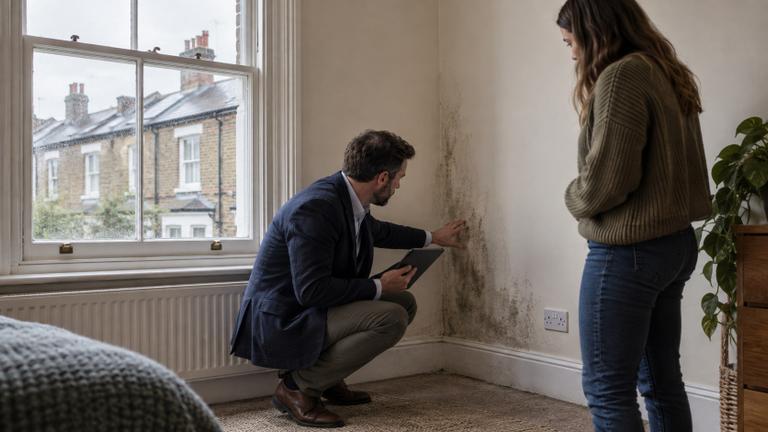
Ask ten letting agents who is responsible for repairs, landlord or tenant, and you will get ten slightly different answers, usually coloured by whichever argument they lost most recently. The UK position is clearer than the day-to-day rows suggest: statute fixes a core set of duties on the landlord that no tenancy agreement can strip away, common law places a much smaller set on the tenant, and nearly every dispute you handle sits in the narrow gap between them. Here is where that line falls, the grey areas that generate the most complaints, and a triage process you can run the moment a repair lands in your inbox.
The legal baseline: who is responsible for repairs, landlord or tenant
The landlord's non-negotiable duties
For most residential tenancies granted for a term of less than seven years, section 11 of the Landlord and Tenant Act 1985 makes the landlord responsible for:
- the structure and exterior of the property, including walls, roof, windows, external doors, guttering and drains
- installations for the supply of water, gas, electricity and sanitation, including basins, sinks, baths and toilets
- installations for space heating and water heating
Sitting on top of that, the Homes (Fitness for Human Habitation) Act 2018 requires the property to be fit to live in at the start of the tenancy and throughout it, judged against the serious hazards used in the housing health and safety rating system: damp and mould, excess cold, fire risk, electrical hazards and the rest. Current gas safety rules require an annual check by a Gas Safe registered engineer, current electrical safety rules require a periodic inspection with a copy of the report for the tenant, and current alarm rules require working smoke and carbon monoxide detection. Reforms under the Renters' Rights Act are phasing in further duties for the private rented sector, including a decent homes style standard and fixed timescales for damp, mould and other serious hazards, so check where commencement has reached before you promise a landlord anything.
None of this can be contracted out of. A clause making the tenant responsible for the boiler, the roof or the drains is void, and leaning on it in a complaint response weakens your position if the matter reaches a tribunal, an ombudsman or environmental health.
What the tenant actually owes
The tenant's side comes mainly from the common law duty to use the property in a 'tenant-like manner', a phrase that has survived since Warren v Keen in 1953 and still describes the job well. In practice the tenant should:
- handle the small jobs any reasonable occupier handles: light bulbs, replaceable alarm batteries, a sink trap, a tripped switch, bleeding a radiator
- look after the place sensibly, which includes ventilating it, keeping the garden from running wild and turning the water off before a long winter absence
- report disrepair promptly and give reasonable access for inspections and works
- put right damage caused by them, their household or their visitors
Fair wear and tear is not damage. A carpet aged by normal use, a hinge worked loose, a seal perished: those are the cost of owning the asset, not a recharge.
The grey areas that cause most disputes
At the extremes, who is responsible for repairs, landlord or tenant, is rarely in doubt. Your time goes on the middle.
- Blocked drains. A trap packed with hair or cooking fat is tenant misuse. Root ingress, collapsed pipework or a shared soil stack is landlord repair.
- Condensation, damp and mould. Never default to lifestyle blame. Treat mould as a hazard, inspect properly, and rule out failed pointing, a bridged damp-proof course, cold bridging, dead extractor fans and leaking pipework before you raise ventilation habits.
- Heating failures. Boiler, radiators, pipework and controls are the landlord's. A thermostat set to 12 degrees or a system that has lost pressure is not a repair job, but it still deserves a visit rather than a dismissive email.
- Appliances. Landlord-supplied white goods on the inventory are normally the landlord's to repair unless the tenancy states clearly that the item comes without a repairing obligation. Anything gifted by a previous tenant needs a decision in writing before it fails.
- Gardens. Tenants keep them tidy. Landlords deal with boundary structures, dangerous trees and retaining walls.
- Lost keys and lockouts. Tenant cost, including the locksmith and any rekeying.
- Infestations. Usually landlord where a defect caused it, such as a gap in the brickwork or a drainage fault, and usually tenant where refuse handling caused it. Get a pest report before you decide.
- Communal areas in a leasehold block. Often neither party in front of you: the freeholder or managing agent holds the obligation through the service charge, so your job is to escalate and chase.
Notice is what starts the landlord's clock
Deciding who is responsible for repairs, landlord or tenant, is only half the question. When the landlord became responsible is the other half. For defects inside the let property, the obligation generally bites once the landlord knows, or ought reasonably to know, about the problem, which makes your reporting record the most valuable document in any dispute. Capture the date and time, who reported it, what they described, photographs, and what you did next. Do the same for access: two properly recorded missed appointments protect a landlord far better than a file note saying the tenant kept messing you about.
Then respond on a timescale that reflects risk, not convenience: same day for anything affecting safety, security, water ingress or loss of heating in winter, a few working days for problems that make the home uncomfortable, planned for cosmetic work. Publish those standards so everyone argues about facts instead of expectations.
The rules are not identical across the UK
Repairing standards are devolved, so confirm the jurisdiction before you quote law. England runs on section 11, the fitness for habitation duty and the phased Renters' Rights Act reforms. Wales runs on the Renting Homes (Wales) Act 2016, with occupation contracts and contract-holders rather than tenants. Scotland applies the Repairing Standard under the Housing (Scotland) Act 2006, enforced by the First-tier Tribunal's Housing and Property Chamber. Northern Ireland works under the Private Tenancies Act (Northern Ireland) 2022. Quoting English terminology at a Scottish landlord costs you credibility with the client and the tribunal at once.
A triage process that stands up later
Run every report through the same six steps and your answer will still be defensible months later.
- Log the report with a timestamp and photographs, before anyone forms a view on fault.
- Classify it as safety, security, habitability or cosmetic, which decides the response time.
- Decide the obligation against section 11 and the tenancy, not against whoever is more persuasive on the phone.
- Where fault is unclear, instruct a contractor to report on cause as well as cost. An invoice reading 'cleared blockage' will not support a recharge. A note reading 'trap solid with cooking fat, photographed before clearing' will.
- Where safety is involved, get the work done first and settle the bill afterwards.
- Confirm the outcome in writing to both sides, including any recharge and the evidence behind it.
Contractors face the same argument from the other end, and scope disputes are a standing topic in trade communities such as Contractor Club. Ask your regular trades to photograph the cause as routine and you will settle more recharges without a phone call.
Raise a repair job on PlanaJob
Most repair complaints escalate because of delay, not because of law. Once you have decided who is responsible for repairs, landlord or tenant, the remaining risk is how long the property sits in disrepair while you chase contractors for availability. Platforms like PlanaJob let property managers post a job once and compare quotes from vetted contractors, which shortens the gap between a report and an attendance date and leaves a dated audit trail. If you are benchmarking what reactive work should cost, the analysis at Construction Arbitrage is a useful counterweight to guesswork.
You can create an account in a couple of minutes, see how it fits a managed portfolio on our property manager pages, or read more maintenance guides on the PlanaJob blog. Raise the job the same day it is reported and the responsibility question becomes an accounting decision rather than a disrepair claim.
FAQ
Is the tenant responsible for a blocked toilet?
It depends on the cause. If wipes, sanitary products or similar items caused the blockage, that is tenant misuse and the cost is normally recoverable. If the drain has collapsed, roots have got in, or the blockage sits in a shared stack serving several flats, it is landlord repair under section 11. Send a contractor who will photograph what they find, because the cause determines the bill.
Can a tenancy agreement make the tenant responsible for major repairs?
No. For tenancies of less than seven years, the landlord's core repairing obligations for structure, exterior and key installations cannot be passed to the tenant, and any clause attempting it is void. A tenancy can cover matters outside those duties, such as garden upkeep, internal decoration or tenant damage, but it cannot move the boiler, the roof or the drains onto the tenant.
What should I do if the tenant refuses access for a repair?
Keep offering reasonable appointments in writing, give proper notice, and record every attempt with dates and responses. Explain what the refusal delays, particularly safety work such as a gas safety check. If access is still refused, escalate in line with the tenancy and take advice before entering, because entering without consent creates a far bigger problem than the original repair.