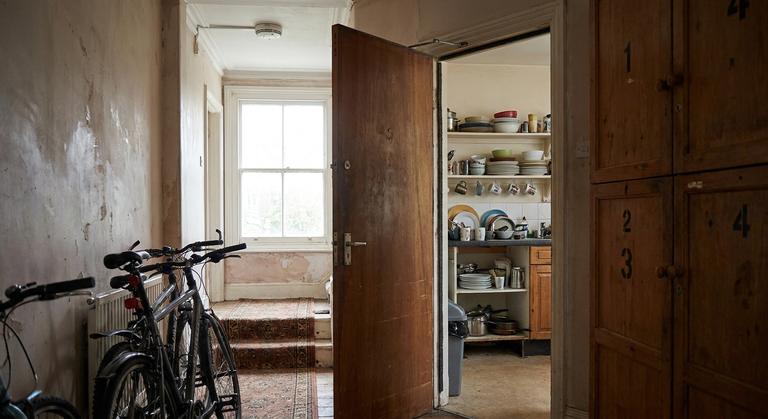
Ask ten property managers what is an HMO and you will get ten different answers, most of them anchored to something half-remembered about three storeys or student houses. That vagueness is expensive. HMO status is not a badge a council hands out - it is a factual test that either applies to a property or it does not, and it can switch on the day one tenant's partner moves out and an unrelated sharer moves in. Get it wrong and your landlord client is exposed to civil penalties, rent repayment orders and, at the far end, a banning order.
What is an HMO? The statutory test
The definition sits in the Housing Act 2004 (sections 254 to 259) for England and Wales. In practical terms, a property is a house in multiple occupation when all three of these are true:
- at least three tenants live there
- they form more than one household
- they share a toilet, bathroom or kitchen
Notice what is not on that list: the number of storeys, the floor area, whether the tenancy is joint or individual, whether the building is a house or a purpose-built flat, whether the occupiers are students or professionals, and whether anyone has applied for a licence. None of those decide HMO status. They decide what you must do about it, which is a different question.
The statutory tests are broader and more technical than that summary, so with a borderline property, ring the council's private sector housing team and get the answer in writing.
Households, not headcount
This is where most errors start. A household means people related by blood or marriage, civil partners, cohabiting couples, and certain carers or domestic staff living with the family. So:
- three friends sharing = three households = HMO
- a couple plus one unrelated sharer = two households, three people = HMO
- a family of six = one household = not an HMO
- two sisters and their two partners = two households, four people = HMO
Children count as occupiers. A single parent with two children plus one lodger is four people in two households, and meets the test.
The converted-flats trap
A building converted entirely into self-contained flats can still be an HMO if the conversion did not meet the building regulations in force at the time and fewer than two thirds of the flats are owner-occupied. This is the section 257 HMO, and it catches a lot of older conversions of Victorian terraces and flats above shops. The units are self-contained, nobody shares a kitchen, and the building is still an HMO. Managers inherit these in portfolio handovers and almost never question them.
Five rules property managers get wrong
Most errors come from answering what is an HMO with a rule of thumb instead of the test.
- "It's only an HMO if it needs a licence." The wrong way round. Every licensable HMO is an HMO, but not every HMO is licensable. The HMO management regulations and the extra fire precautions apply either way.
- "Three storeys or more." The storey condition was stripped out of mandatory licensing years ago. A ground-floor flat with three unrelated sharers can be an HMO.
- "They're on one joint tenancy, so they're one household." Tenancy structure is irrelevant. Household status turns on the relationships between occupiers, not on the paperwork.
- "We have the licence, so we're compliant." A licence is a permission with conditions attached, not a certificate of completion. Breaching a condition is an offence in its own right.
- "Planning and licensing are the same process." Two separate regimes, two teams, two sets of triggers, two sets of penalties.
Licensing: mandatory, additional and selective
Knowing what is an HMO is only half the job. The other half is knowing which licensing regime bites.
Mandatory licensing
Applies across England and Wales where an HMO is occupied by five or more people forming two or more households and sharing amenities. No storey test. The licence must be held by a fit and proper person, and the property must satisfy conditions on amenities, fire safety, waste and national minimum sleeping-room sizes.
Additional licensing
Councils can designate schemes that pull smaller HMOs, usually three or four occupiers, into licensing across all or part of their area. These are local, they lapse and get renewed, and there is no reliable central list. Check the specific authority, by ward if necessary, before taking the instruction.
Selective licensing
Not an HMO scheme at all. Selective licensing covers privately rented homes in a designated area regardless of occupancy, so a portfolio can need selective licences on one street and HMO licences two streets away.
Scotland runs its own regime under the Housing (Scotland) Act 2006, with a lower threshold of three or more unrelated occupiers. Wales layers Rent Smart Wales registration and licensing on top. Northern Ireland has a separate council-run scheme. If you manage across borders, do not assume the England position travels.
Planning permission is the separate trap
What is an HMO for planning purposes is a different question from what is an HMO for licensing. In England, a small shared house for three to six unrelated people is use class C4; a single dwelling is C3. Changing C3 to C4 is normally permitted development, unless the council has made an Article 4 direction removing that right, which many university cities and coastal towns have done. Inside an Article 4 area, turning a family home into a three-person share needs planning permission, and refusals in saturated wards are common.
Above six occupiers the use is sui generis and always needs permission. Plenty of landlords have added a seventh bed to a licensed six-bed HMO and created an unauthorised change of use without going near the licence. Where a conversion is being weighed up commercially, the numbers deserve as much scrutiny as the planning risk, and Construction Arbitrage is worth reading on that side of the decision.
What HMO status changes on the ground
Once a property is an HMO, the operating model changes:
- Fire safety steps up. Interlinked mains-wired alarms, fire doors, protected escape routes, emergency lighting in larger properties, and a risk assessment that reflects sleeping risk in shared accommodation.
- Access gets harder. Gas and electrical safety duties are the same as any rented home, but occupier churn makes failed appointments far more likely. Build access into the schedule rather than around it.
- The management regulations name you. Displaying manager contact details, maintaining common parts, water supply and drainage, and waste provision are all duties on the person managing.
- Inspections rise. Councils prioritise shared housing under the housing health and safety rating system, and serious hazards move to enforcement quickly.
That workload lands on contractors who understand shared housing. A fire door survey in an eight-bed HMO is not the same job as a repair in a single let, and the wrong trade will hang a door that fails on the gaps. Build a bench of people who have done HMO work before; the trades community at Contractor Club is a useful place to see how firms actually talk about compliance work before you brief them. Platforms like PlanaJob let property managers raise the job once and compare quotes from vetted contractors, which matters when a licence condition puts you on a deadline.
Your compliance audit trail
Answering what is an HMO correctly is worth little if you cannot prove what you did next. When an officer asks you to demonstrate compliance, the question is never "did you do the work" - it is "show me". Dates, scope, who attended, what they were qualified to do, what they found, what happened afterwards. Managers lose cases they should win because the evidence is spread across two inboxes, a WhatsApp thread and a folder on the landlord's kitchen table.
That is the practical case for keeping HMO work in one system. In PlanaJob every job carries its own record against the property: the original instruction, the quotes received, the contractor's vetting, photos before and after, sign-off and invoice, all timestamped. At licence renewal, or the first time a tenant complains to environmental health, the audit trail is one export rather than a week of archaeology. If you look after HMO stock, set your properties up in PlanaJob and see what a per-property compliance history looks like. There is more on how the platform handles portfolio work for UK property managers, and further compliance walkthroughs on the PlanaJob blog.
FAQ
Is a house with three friends sharing an HMO?
Almost always yes. Three unrelated people are three households, and if they share a kitchen, bathroom or WC the standard test is met. Whether it needs a licence depends on whether the council runs an additional licensing scheme, and whether it needs planning permission depends on Article 4.
Does every HMO need a licence?
No. Mandatory licensing catches HMOs with five or more occupiers in two or more households. Smaller HMOs need a licence only where the council has designated an additional scheme. Unlicensed is not the same as unregulated: management regulations, fire safety and hazard duties still apply.
Can a property stop being an HMO?
Yes, and it can start again just as easily. A five-person share dropping to a couple plus one sharer may fall out of mandatory licensing; a family let taking in two lodgers may fall into HMO status without anyone applying for anything. Re-test status at every check-in and check-out rather than at renewal.