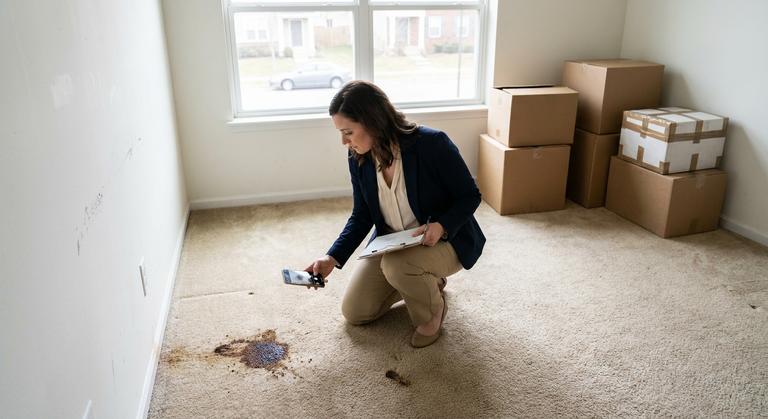
Ask ten property managers to define the line between wear and tear vs tenant damage and you will get ten different answers - which is exactly why security deposit disputes end up in small claims court so often. The distinction is not a judgment call you get to make on gut feel. Every state regulates what can come out of a deposit, and courts consistently side with tenants when a landlord charges for deterioration that would have happened no matter who lived in the unit. Getting this right protects your deposit deductions, your owner relationships, and your reputation.
What Counts as Normal Wear and Tear
Normal wear and tear is the gradual decline in a property's condition that comes from ordinary, everyday use. No tenant behavior caused it, and no tenant behavior could have prevented it. It is the cost of doing business as a rental owner, and in every state it cannot be deducted from a security deposit.
Typical examples include:
- Faded or lightly scuffed paint, especially near light switches and hallways
- Carpet worn thin in walking paths, or matted pile in front of doorways
- Minor nail holes from hanging a reasonable number of pictures
- Loose door handles, worn hinges, and sticking drawers
- Faded curtains or blinds from sun exposure
- Hard water spots on fixtures and slight discoloration of grout
- Small scratches on wood floors from normal foot traffic
The common thread: time and ordinary living did the work. A five-year tenancy will produce dramatically more of this than a nine-month one, and courts expect you to account for that. Charging a long-term tenant for repainting walls that were last painted before they moved in is one of the fastest ways to lose a deposit dispute.
What Crosses the Line Into Tenant Damage
Tenant damage is harm caused by negligence, carelessness, abuse, or accident - anything beyond ordinary use. This is what you can legally deduct, provided you can document it and your charges reflect actual, reasonable repair costs.
Clear examples include:
- Large holes in drywall, whether from anchors, doorknobs, or impacts
- Burns, pet stains, or bleach spots on carpet
- Broken windows, cracked countertops, or shattered tile
- Unauthorized paint colors that require extra coats to cover
- Water damage from an overflowing tub the tenant never reported
- Missing doors, fixtures, or appliances that were present at move-in
- Excessive filth requiring professional remediation beyond routine turnover cleaning
Note that last one carefully. Routine cleaning between tenants is generally your cost. Cleaning a unit left in a condition well below how it was received - trash left behind, grease-caked ovens, smoke residue on every surface - is chargeable in most states, especially where the lease spells out the tenant's cleaning obligations.
Wear and Tear vs Tenant Damage: A Room-by-Room Comparison
When you are standing in an empty unit deciding what to charge, side-by-side comparisons help more than definitions. Here is how the wear and tear vs tenant damage question usually shakes out in practice:
- Walls: Faded paint and a few small nail holes are wear and tear. Crayon murals, dozens of anchor holes, or gouges from moving furniture are damage.
- Flooring: Traffic-pattern wear on carpet is expected. Iron burns, pet urine that has soaked into the pad, and deep gouges in hardwood are damage.
- Kitchen: A worn finish on cabinet fronts is wear and tear. A cracked countertop from a dropped pot, or a missing cabinet door, is damage.
- Bathroom: Dulled fixtures and worn caulk are wear and tear. A cracked sink or a toilet broken by misuse is damage.
- Doors and windows: Sticking doors and loose handles are wear and tear. A hole punched through a hollow-core door or a torn screen from forced entry is damage.
When a specific item genuinely could go either way, the length of tenancy, the move-in condition report, and the severity usually settle it. If you are still unsure, treat it as wear and tear. The downside of under-charging is small; the downside of an improper deduction can include penalties.
Depreciation and Useful Life: Why You Can't Charge Full Replacement
Even when damage is clearly the tenant's fault, most courts will not let you charge the full replacement cost of an item that was already partway through its useful life. Carpet, paint, appliances, and blinds all depreciate. If a tenant destroys carpet that was already old and nearing the end of its serviceable life, a judge will typically only award you the remaining value, not the price of brand-new carpet.
The practical approach is to prorate. Establish a reasonable useful life for the item, work out how much of that life had already been used before the damage, and charge only for the portion the tenant destroyed. Keep records of when flooring was installed and when units were last painted - those dates become your evidence. Judges respond well to landlords who show their math, and poorly to landlords who treat every deposit as a renovation budget.
Building a Paper Trail That Survives Small Claims Court
Deductions live or die on documentation. A judge who sees dated photos, a signed condition report, and a professional invoice will usually uphold reasonable charges. A judge who sees a vague list of round numbers will not.
Move-in and move-out documentation
Complete a written condition report at move-in, walk the unit with the tenant where possible, and have them sign it. Photograph or video every room, including inside appliances and closets, with timestamps. Repeat the identical process at move-out. The comparison between the two is the entire case - without a move-in baseline, a tenant can claim any damage was pre-existing, and you will struggle to prove otherwise.
Itemized statements and real invoices
Nearly every state requires an itemized statement of deductions delivered within a statutory deadline, which varies by state - check yours before every move-out, because missing the deadline can forfeit your right to deduct anything at all. Each line item should tie to a specific repair, and each repair should tie to a real invoice or a defensible materials-plus-labor estimate. Round-number guesses like "walls - $500" invite challenges; a contractor's itemized invoice for patching, priming, and repainting two damaged walls does not. Understanding how professional contractors build and price repair quotes helps here - resources like the construction business strategy articles at Construction Arbitrage offer a useful window into how legitimate trade pricing works, which makes inflated or padded estimates easier to spot.
This is also where using vetted trades pays off twice. Platforms like PlanaJob let property managers compare quotes from vetted contractors, so the price you deduct reflects genuine market cost rather than a number a tenant's lawyer can pick apart. You can see how the process works for portfolios of any size on the PlanaJob property managers page.
The Cost of Getting It Wrong
Improper deductions are not just refunded - in many states, a landlord who withholds a deposit in bad faith can be ordered to pay the tenant a multiple of the amount wrongfully withheld, plus court costs. Bad faith is easier to find than most landlords assume: missed statutory deadlines, deductions for obvious wear and tear, and charges with no supporting invoices all push a judge in that direction.
The fix is procedural, not heroic. Standardize your move-in and move-out inspections, apply the wear and tear vs tenant damage test consistently across every unit, prorate for depreciation, and never deduct a dollar you cannot support with a document. Managers who do this rarely see the inside of a courtroom, and when they do, they win.
When a move-out does reveal genuine tenant damage, the quality of your repair invoice becomes your best evidence. Get itemized repair invoices from PlanaJob pros that hold up in small claims court - every job quoted, scoped, and documented by a vetted contractor, with a paper trail you can hand straight to a judge. Create a free account to raise your first job, and browse more compliance guides on the PlanaJob blog.
FAQ
Can I deduct the cost of repainting after a tenant moves out?
Only if the tenant caused damage beyond normal fading and minor scuffs - think unauthorized colors, smoke staining, or large patched areas. Routine repainting between tenancies is a turnover cost, not a deduction, and the longer the tenancy, the weaker any repainting charge becomes. If you do charge, prorate based on how long ago the unit was last painted.
What if the damage was caused by a tenant's guest or pet?
Tenants are generally responsible for damage caused by their guests, children, and pets, so it is deductible the same way as damage the tenant caused directly. Document it identically: move-in baseline, move-out photos, and an itemized repair invoice. Pet-specific damage like urine-soaked carpet pad is one of the most commonly upheld deductions when the paper trail is solid.
How long do I have to return the security deposit?
Every state sets its own deadline for returning the deposit and delivering the itemized statement of deductions, and the windows differ significantly from state to state. Missing your state's deadline can forfeit your right to make any deductions and may expose you to penalties, so confirm the current rule for your state before each move-out and calendar it the day the tenancy ends.