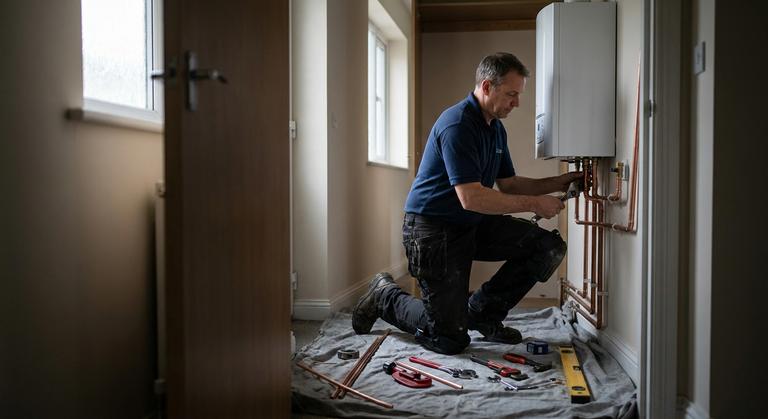
When a tenant reports no hot water, the clock starts immediately. Hot water is a basic habitability requirement in most states, so a failed unit is an emergency repair, not a next-month project. That urgency is exactly why it pays to understand water heater replacement cost before anything fails. The tank vs. tankless question trips up plenty of property managers, because sticker prices tell you very little about what you will actually pay once labor, permits, and code upgrades land on the invoice. This guide breaks down where the money goes, when each option makes sense for a rental, and how to collect quotes you can actually compare.
What Actually Drives Water Heater Replacement Cost
The unit itself is often the smaller half of the invoice. The rest is labor, code compliance, and logistics, and those vary far more between properties than the equipment does. When you read a quote, you are really looking at six variables:
- Fuel type and capacity. Most US rentals run a 40- or 50-gallon gas or electric tank. Electric swaps are mechanically simpler, but confirm the panel and breaker can support the new unit before anyone orders parts.
- Access. A heater in a garage is a quick job. One in an attic, a crawlspace, or a closet that was framed around it adds real labor, and attic installs typically need a drain pan piped to a safe termination point.
- Code upgrades triggered by the swap. Replacements must meet current code, not the code in force when the old unit went in. Common adders include a thermal expansion tank on closed plumbing systems, seismic strapping in parts of the West, venting corrections, and a properly terminated temperature and pressure relief line.
- Permits. Most jurisdictions require a plumbing permit for a water heater swap, with fees set locally. A legitimate contractor lists the permit on the quote instead of suggesting you skip it.
- Timing. An emergency same-day replacement with a tenant standing in a cold shower costs more than a scheduled one. You are paying for the disruption to the plumber's day, not just parts.
- Disposal. Hauling away the old unit is usually its own line item. Confirm it is included.
Two bids for 'replace a 50-gallon gas heater' can land far apart simply because one plumber priced the code corrections up front and the other plans to surprise you with them mid-job.
Tank Water Heaters: The Rental Workhorse
For most rentals, a standard tank is still the default, and for good reason. Every supply house stocks them, every licensed plumber installs them weekly, and a like-for-like swap is usually finished in half a day. That keeps water heater replacement cost predictable and gets tenants back to hot showers fast. Expect a service life of roughly 8 to 12 years, shorter in hard-water areas, and read warranty tiers carefully: the longer-warranty versions of many models are similar hardware with a better anode rod and a higher price.
One spec worth checking beyond tank size is the first-hour rating. A 50-gallon unit with weak recovery generates more tenant complaints than the capacity number suggests.
When a Straight Tank Swap Makes Sense
- The existing unit is a tank and the space, venting, and gas or electrical service already fit the replacement.
- Tenants are in place and you need hot water restored within a day.
- Your hold period is uncertain, so multi-year efficiency payback math is beside the point.
- Your budget rewards predictable, repeatable line items across the portfolio over per-property optimization.
Tankless Water Heaters: Where the Math Gets Interesting
Tankless units earn their fans. Hot water does not run out, service life often reaches 15 to 20 years with maintenance, standby losses drop, and the freed-up closet reads as bonus storage to tenants. In a small apartment where the tank occupies prime floor space, that last point has genuine rentability value.
The catch for rentals is twofold: conversion cost and maintenance discipline.
The Conversion Costs Nobody Puts in the Ad
Swapping a tank for a tankless unit is not a like-for-like job. Depending on the property, the quote may include upsizing the gas line to feed a much larger burner, dedicated venting, a condensate drain for condensing models, an electrical outlet for the controls even on gas units, and scale treatment in hard-water markets.
Then there is descaling. Tankless heat exchangers in hard-water areas need flushing, often annually, to protect flow rates and keep the warranty valid. In an owner-occupied home, that is a homeowner chore. In a rental, it is a recurring work order someone has to remember to raise. If your portfolio already struggles to complete annual furnace filter changes, be honest about whether descaling will happen.
Tank vs. Tankless: A Decision Framework for Rental Properties
Skip the generic pros-and-cons table and run each property through five questions:
- What is already installed? Tank-for-tank or tankless-for-tankless is always the cheaper path. Conversion costs need a specific justification.
- How long will you hold the asset? Tankless pays back through lifespan and efficiency over many years. A short or uncertain hold rarely captures that.
- Who lives there? Long-term single-family tenants benefit most from endless hot water. High-turnover units multiply the maintenance risk.
- How hard is your water? Hard water punishes tankless heat exchangers hardest. Without treatment, the lifespan advantage shrinks.
- Does the space matter? Reclaiming a closet in a small city unit can justify conversion on rentability alone.
If most answers say keep it simple, believe them. The boring tank swap is right for the majority of rentals, and there is nothing wrong with a water heater replacement cost strategy built on predictability.
Getting Quotes That Actually Compare
The fastest way to inflate your water heater replacement cost is to compare a thorough bid against a vague one. Insist that every quote lists the exact model number, capacity or flow rate, the UEF efficiency rating, tank and labor warranties separately, the permit, and each code item: expansion tank, pan, strapping, venting. A quote that just says 'install new water heater' is not cheaper, it is incomplete.
Bids also vary because plumbing businesses differ. A one-truck operator prices work differently from a consolidated regional outfit, and plenty of local plumbing firms have been bought up in recent years - the trade business sale market that ContractorExit covers is part of why the same job gets such different numbers across town. For a deeper look at how trade businesses build their pricing, Construction Arbitrage writes well on the business side of contracting.
Collecting three comparable bids used to mean three phone calls and a week of waiting. Platforms like PlanaJob let property managers post a job once and compare quotes from vetted, insured contractors side by side, which helps most on exactly this kind of urgent, price-variable work. You can see how it fits a maintenance workflow on our property managers page.
Planning Replacements Across a Portfolio
The cheapest replacement is the one you scheduled. Pull the age of every water heater in your portfolio - the manufacture date is encoded in the serial number, and manufacturers publish decoders. Anything past ten years, especially units sitting above finished space where a leak means a ceiling repair and a tenant claim, belongs on a proactive list. Standardizing on one or two models per fuel type makes every future quote directly comparable and every install familiar to your techs.
This is also where pre-negotiated pricing earns its keep. Through PlanaJob you can get same-week water heater swaps at pre-negotiated rates instead of paying the emergency premium that inflates water heater replacement cost every time a unit fails without warning. Setting up an account takes a few minutes at planajob.com/signup, and you will find companion cost guides for the other big-ticket building systems on our US blog.
Frequently Asked Questions
How much does water heater replacement cost for a rental?
It depends on fuel type, capacity, access, local permit fees, and the code upgrades your jurisdiction requires at replacement, which is why national averages are nearly useless for budgeting. Get line-item bids for your specific property, and remember that scheduled work reliably costs less than an emergency call with a tenant waiting.
Is a tankless water heater worth it in a rental property?
Sometimes. It is strongest where tankless infrastructure already exists, where you will hold the property long enough to capture the lifespan and efficiency gains, where water is soft or treated, and where reclaiming the closet adds rentability. If none of those apply, a quality tank with a solid first-hour rating is the better business decision.
Should I replace a water heater before it fails?
For units past roughly ten years, often yes. A planned swap avoids emergency pricing, water damage to the unit below, an insurance claim, and an unhappy tenant, all in one move. Check the manufacture date during turns and inspections, and put aging units above finished space at the top of the proactive list.