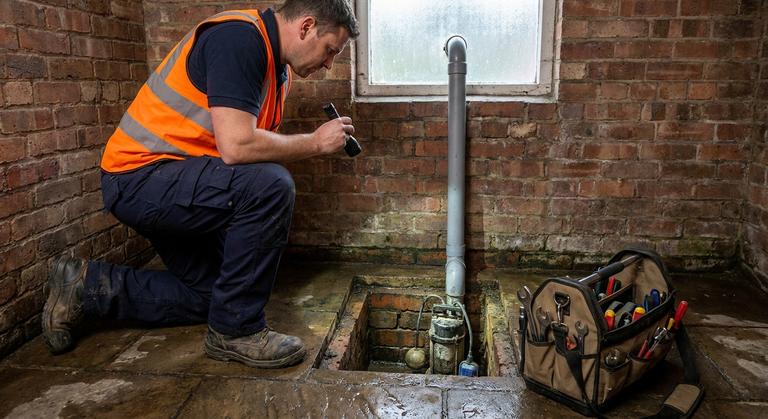
A sump pump is the one appliance in a basement unit that nobody thinks about until the carpet is wet. For property managers, that is exactly the problem. The pump sits in a pit under a lid, runs for a few seconds at a time, and gives almost no warning before it quits. When it does quit, it is usually during the storm it was installed to handle. Good sump pump maintenance is not complicated, but it has to be scheduled, logged, and done by someone who knows what a failing pump sounds like. This guide covers what to check, how often, what to leave to a licensed plumber, and how to keep below-grade units dry through the wettest months.
Why Sump Pump Maintenance Matters More in Rental Units
In an owner-occupied home, the person who hears the pump cycling oddly is the person who pays for the flood. In a rental, the tenant hears it and may not report it, and most tenants have no idea what a normal cycle sounds like anyway.
Water damage in a basement unit rarely stays there. It wicks up drywall, travels into shared mechanical rooms, and creates mold conditions that turn a maintenance ticket into a habitability complaint. Many landlord policies also exclude or limit groundwater and sump overflow unless a specific endorsement is in place, so read your policy before assuming a flood will be covered. Preventive sump pump maintenance costs a fraction of one flooded unit. That is the whole argument.
How Sump Systems Actually Fail
The float switch sticks
The float is the most common failure point. Vertical floats bind against the pit wall, tethered floats tangle, and mineral scale gums up the mechanism so the float rises but never trips the switch. The motor is fine and the basement floods anyway.
The check valve leaks
The check valve stops water from draining back into the pit when the pump shuts off. When it fails, the pump re-pumps the same water, cycles far too often, and wears out early. A hard thump after each cycle often means the valve is on its way out.
The discharge line freezes or clogs
In cold climates the exterior discharge freezes solid during a thaw-and-freeze cycle, and the pump runs against a blocked line until it overheats. In warmer regions the usual culprit is a crushed or root-invaded buried line.
The power goes out
The storms that push the most groundwater also take down the grid. A primary pump with no backup is only as reliable as the utility.
The pump ages out
Bearings wear, seals leak, and impellers erode. A pump that has run hard through several wet seasons is on borrowed time even if it sounds normal.
The Monthly Sump Pump Maintenance Routine
An on-site tech, or the property manager on a smaller portfolio, can do this during a walk-through. Budget fifteen minutes per pit.
- Remove the lid and look. Clear gravel, debris, or anything that could jam the float or impeller. Note the resting water level relative to the float.
- Pour a test bucket. Slowly add roughly five gallons of water. The float should rise, the pump should start, the level should drop fast, and the pump should shut off without short-cycling. If it runs with the pit empty or waits until the pit is nearly full to start, the float needs attention.
- Listen for the check valve. A soft click at shutoff is normal. A slam, or the sound of water rushing back into the pit, is not.
- Check the power. The pump should plug directly into a GFCI-protected outlet, never an extension cord. Look for corrosion, a tripped breaker, or a popped GFCI reset button.
- Walk the discharge. Go outside during the test and confirm water actually exits, lands well away from the foundation, and is not buried under mulch or snow.
- Test the backup. Unplug the primary and repeat the bucket test. Check the battery date and charger light, or the supply valve on a water-powered unit.
- Log it. Date, unit, ran or did not run, cycle time, noises, battery status. A sump pump maintenance log is what turns "it seemed fine" into a defensible record.
While you are down there, photograph the pump label. When it dies, the plumber will want horsepower and model before they roll a truck.
What Belongs to a Licensed Plumber
A bucket test catches obvious failures. It does not catch a motor drawing too many amps, a check valve weeping internally, or a mostly blocked discharge line. Those need instruments and, for anything touching the drainage system, a license.
Book a plumber once a year, ideally in early spring before the rainy season. A thorough visit should include:
- Pulling the pump to inspect the impeller, intake screen, and seals
- Cleaning silt out of the pit
- Measuring motor amperage against the manufacturer's rating
- Testing the check valve and replacing it if it leaks
- Flushing or camera-inspecting the discharge line if flow is restricted
- Load-testing the backup battery and replacing it on schedule
- Confirming the discharge routing meets local code, since many municipalities prohibit sump discharge into the sanitary sewer
- A written condition report with a replacement recommendation if the pump is near end of life
Do not wait for a failure to get quotes. Emergency plumbing during a regional storm is the most expensive plumbing you will ever buy, and every plumber in the county is already booked. If the report recommends replacement, schedule it in the dry season. Platforms like PlanaJob let property managers post the job once and compare quotes from vetted local plumbers instead of calling around.
Upgrades Worth Considering for Basement Rentals
Sump pump maintenance keeps a working system working. For units that have flooded before, or sit in neighborhoods that lose power in storms, a few upgrades change the odds.
Battery or water-powered backup
The single most effective upgrade. Battery units need periodic battery replacement. Water-powered units rely on municipal pressure and are not an option on well water.
High-water alarm with remote alerts
A basic float alarm screams when the pit overfills. A Wi-Fi model texts you and your maintenance lead, which matters when the tenant is at work.
Dual primary pumps
Two pumps at staggered float heights share heavy inflow and cover each other when one fails.
Sealed pit lid
An airtight lid keeps debris out, cuts humidity and odor, and is part of many radon mitigation systems.
Pricing these upgrades against a flood is the same math contractors run when deciding whether to sell preventive contracts or wait for emergency calls. Construction Arbitrage covers that side of the trades business, and it explains why a scheduled spring visit is cheap and a 2 a.m. callout is not.
Get Tenants on Your Side
Tenants are your early warning system if you tell them what to listen for. Add this to the move-in packet or a laminated card near the pit:
- The pump will run briefly during and after rain. That is normal.
- Report right away if it runs constantly, grinds, slams, or if there is water on the floor.
- Do not store anything on or around the pit lid, and never unplug the pump to free up an outlet.
- Tell us immediately if the power goes out during a storm.
Treat any water-related request from a below-grade unit as urgent. "Small puddle by the furnace" has a way of getting worse overnight.
Building the Annual Calendar
A workable sump pump maintenance schedule for a portfolio with basement units:
- Monthly: Bucket test, visual check, log entry.
- Early spring: Licensed plumber inspection and service. Replace the battery if due. Book any replacement.
- Late fall: Confirm discharge routing before freeze, add a freeze-resistant extension if needed, verify the backup is charged.
- After any major storm: Walk every basement unit within 24 hours.
For seasonal checklists covering other building systems, the PlanaJob blog has more, and our property manager page explains how the platform fits into a preventive program.
The simplest version of all this: get every sump pump in your portfolio tested by a plumber each spring before the rainy season. Post the job on PlanaJob, compare quotes from vetted local plumbers, and file the report with the unit records. One afternoon in March is cheaper than one flooded unit in April.
FAQ
How often should a sump pump be tested?
Monthly by on-site staff with a bucket test, plus a full inspection by a licensed plumber every spring. Test more often during the wet season and after any power outage.
How long does a sump pump last?
It depends on how often it runs, water quality, and build quality. A pump that cycles constantly in a high-water-table property wears out far faster than one that runs a few times a year. Have your plumber assess condition rather than age, and budget for replacement once the annual report flags wear.
Who is responsible when a sump pump fails in a rental?
The landlord or property manager is generally responsible for keeping building systems, including the sump pump, in working order. Tenants are typically responsible for reporting problems promptly and not interfering with the equipment. Lease terms and state and local law vary, so check both. Encourage tenants to carry renters insurance, since landlord policies do not cover their belongings.