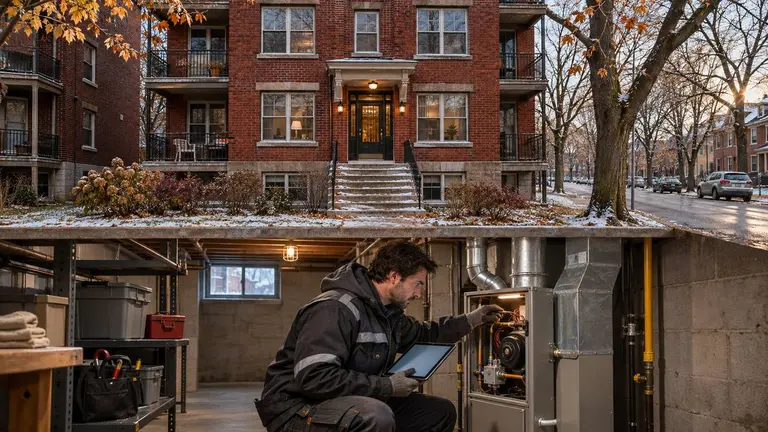
A small rental building maintenance log in Canada should answer one question quickly: what happened in this building, when, who decided it, and what proof exists. For a fourplex, a walk-up with a dozen units or a few apartments over a shop, that means one record per issue, a dated trail of every visit, photos before and after, and a clear note of who approved the work. Keep it in one shared place that the property manager and the maintenance contractor can both see. This guide covers what to record, how to build Canadian seasons into the log, and where a person still has to make the call.
Why a log matters more in a small building
Large portfolios have systems because they have to. Small buildings often run on memory. The owner knows the furnace was serviced "sometime last fall". The part-time superintendent knows which unit has the slow drain. The plumber knows what they found behind the vanity. When any one of those people moves on, the history goes with them.
A written log fixes that. It helps in four practical ways:
- Tenant disputes. If a disagreement about repairs reaches your provincial or territorial tenancy body, such as Ontario's Landlord and Tenant Board, BC's Residential Tenancy Branch or Quebec's Tribunal administratif du logement, dated records and photos are far easier to rely on than recollection. What each body expects differs, so check its current guidance.
- Insurance claims. After a burst pipe or water damage, your insurer will want to know when the problem was reported and what was done. A log that shows prompt action supports your position.
- Handover. When you change managers, sell the building or bring in a new contractor, the log is the building's service history.
- Repeat problems. Three entries for the same leak in a year tell you to stop patching and plan a proper repair.
What every entry should record
One issue, one entry. Do not bury three problems in a single note because they were reported in the same phone call. Each entry should capture:
- Location. Unit number or common area, and the exact spot. "Unit 3, kitchen, under sink" beats "Unit 3 leak".
- How and when it was reported. Date, time, who reported it and through which channel.
- What was reported and what was found. Record the tenant's description, then the trade's findings. They are often different, and both matter.
- Urgency. Use your own simple categories, such as emergency, urgent and routine, and apply them consistently.
- Access. When entry was arranged and how notice was given. Notice rules for entering a rental unit vary by province and territory, so record what you did and check your local rules rather than relying on habit.
- Who was assigned. In-house staff or an outside contractor, by name or business.
- Estimate and approval. The quoted amount in dollars, who approved it and when.
- Each visit. Date, who attended, what was done, parts used, and model or serial numbers for equipment.
- Evidence. Photos before and after, invoices, and any reports from inspections or service calls.
- Outcome. Fixed, temporary fix, or follow-up needed, with a date for the follow-up.
- Who closed it. A named person confirms the job is done.
Write it so a stranger can follow it
The test for a good entry is simple. Could someone who has never seen the building read it in two years and understand what happened?
Illustrative example, not a real job: "Tenant in Unit 2 reported no hot water by phone on a Tuesday evening. Notice of entry given in writing for the next morning. Plumber attended, found failed thermocouple on hot water tank, replaced it. Tank age noted from rating plate. Photos of plate and new part attached. Hot water confirmed by tenant that afternoon. Recommend budgeting for tank replacement. Closed by property manager."
That entry is short, but nothing is missing.
Build Canadian seasons into the same log
Reactive repairs are only half the picture. Planned seasonal work belongs in the same log, so you can see the full history of a system in one place. A small building checklist might look like this:
Fall
- Furnace or boiler service before the heating season
- HRV or air filter changes
- Clear eavestroughs and downspouts
- Shut off and drain exterior hose bibs
- Check weatherstripping on entry doors and windows
- Test smoke alarms and carbon monoxide alarms, and confirm what your provincial fire code and local rules currently require
Winter
- Snow and ice clearing on walkways, steps and exits, with a record of who did it and when
- Watch for ice dams and icicles along the roof edge
- Check pipes in unheated spaces such as crawl spaces and garages
- Check heat in vacant units so pipes do not freeze. Some municipalities set minimum indoor temperature rules for rentals, so check your city's current bylaw
Spring
- Test the sump pump before the thaw
- Inspect the roof, flashing and gutters after snow load
- Look for new foundation cracks and check grading slopes away from the building
Summer
- Exterior repairs, painting and caulking
- Balconies, railings and stairs
- Window screens and air conditioning where provided
Log each completed check as an entry, even when nothing was wrong. "Inspected, no issues" with a date and a name is useful evidence later.
Sharing the log between manager and contractor
Most small buildings rely on a property manager and one or two maintenance contractors. The log works best when both sides write into the same record rather than keeping separate notes and reconciling them later.
What the property manager owns
- Receiving the tenant request and recording it accurately
- Deciding urgency and approving spend
- Giving entry notice to the tenant
- Telling tenants about disruptions such as water shut-offs
- Confirming the job is closed
What the contractor owns
- Recording findings on site, with photos
- Providing a clear estimate before non-urgent work starts
- Logging each visit, parts and equipment details
- Flagging follow-up work rather than quietly leaving it
Decisions that stay with a person
Some steps should never happen on autopilot. Someone needs to decide which contractor gets the job, approve the price, authorise entry, and agree that the work is finished. Write the name of that person into the entry each time. If the log cannot show who decided, it is not doing its job.
How Plan@Job handles the job record
Plan@Job is AI-powered project and operations management for construction and property businesses. Property maintenance is one important use case. Here is how its workflow maps to the log described above.
In Plan@Job, the operator is the contractor business managing clients, project delivery, subcontractors and in-house operatives. Each maintenance issue becomes a job with its own brief, history and evidence, so the one-issue, one-entry habit is built in.
Sophie Bennett, the AI Enquiries Coordinator, checks existing job briefs for missing information, such as an unclear location or no access details, and asks for clarification. If two attempts do not resolve it, the job is handed to a person. Sophie does not automatically turn every incoming email into a job.
Daniel Reed, the AI Operations Manager, supports sharing eligible jobs with the operator's existing vetted network, follows up on quotes and proposed dates, and prepares a morning brief so the team can see what is outstanding. He does not award jobs or set prices. Those decisions stay with people. You can read more about how these AI staff work on the AI staff page.
For larger work, such as a full unit renovation between tenancies, the project plan lets the operator split a job into internal stages with scope, dates, status and costs, covering both subcontracted and in-house work. The client sees the overall agreed scope and price, plus the evidence that has been shared. Internal stage costs and subcontractor identity stay internal.
Plan@Job's live launch market is the UK. For Canada, the regional pages use a reserve and waitlist journey. If you manage rental buildings, start at the Canadian property managers page. If you run a maintenance contracting business, use the Canadian contractors page.
Common mistakes to avoid
- Logging only the problems. Record completed checks too, or your seasonal history has gaps.
- No photos. A photo with a date is worth more than a paragraph.
- Vague closures. "Done" is not an outcome. Say what was fixed and whether follow-up is needed.
- Separate logs. The manager's spreadsheet and the contractor's job sheets drift apart. Use one record.
- Missing approvals. If spend was approved by phone, write down who approved it and when.
FAQ
How long should I keep maintenance records for a rental building in Canada?
It depends on what the record is for. Invoices and receipts have tax record-keeping rules, so check current Canada Revenue Agency guidance and speak with your accountant. For tenancy and insurance purposes, many owners keep the full maintenance history for as long as they own the building, since it also helps at sale.
Is a spreadsheet good enough for a small building?
It can be, if every entry covers the fields above and both the manager and contractor actually update it. Spreadsheets struggle with photos, visit history and approvals, which is where a job-based system helps.
Who should keep the log, the property manager or the contractor?
Both should write into one shared record. The property manager owns requests, approvals and tenant notice. The contractor owns findings, visit details and evidence. One named person should close each entry.