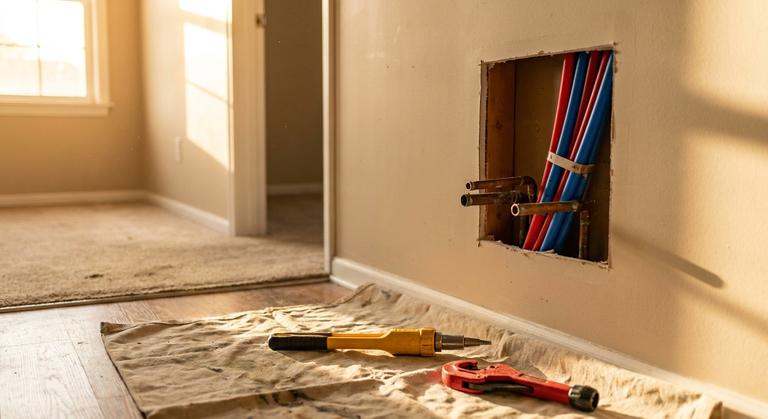
A repipe is one of the few capital projects where waiting costs more than acting. When a supply line lets go inside a wall on a Saturday night, you stop paying for pipe and start paying for emergency plumbing, water mitigation, drywall, flooring, and a tenant in a hotel. That is why repipe house cost is a number worth understanding before the failure rather than after it. The short version: the pipe material itself is usually one of the smaller line items on the bid. Labor, access, permits, and the finish work behind the plumber are what move the total.
What Actually Drives Repipe House Cost
Square footage is the metric most owners reach for, and it is nearly useless here. A 2,400 square foot ranch with two bathrooms is a smaller job than an 1,800 square foot two-story with three baths, a laundry, a wet bar, and hose bibs on three elevations. Four things move the number:
- Fixture count. Every sink, tub, shower, toilet, washer box, hose bib, ice maker, and water heater is a termination point, and terminations are where the labor hours live.
- Access. A house with a full basement or a tall crawlspace is straightforward. Slab-on-grade with finished walls means overhead routing through the attic, cutting ceilings, and dropping down interior walls.
- Stories. Vertical runs, tight chases, and second-floor drops add hours and add patchwork.
- Restoration. Cutting access holes is fast. Patching, texturing, priming, painting, and matching a 1980s knockdown texture is not. Restoration is a serious fraction of repipe house cost, and it is the line item most often left vague.
The unit of comparison that actually works
Ask every bidder for a fixture count and divide their total by it. Cost per fixture normalizes bids from contractors who describe scope differently, and it is the fastest sanity check on any estimate. A plumber who lands well under the others per fixture has usually excluded restoration, permits, or the water heater connections.
Copper vs. PEX for Rental Properties
Where copper still earns its price
Type L copper is rigid, dimensionally stable, rated for high temperature, immune to rodents, and unbothered by UV exposure. It handles recirculation loops without complaint and carries resale credibility in markets where inspectors and buyers still expect it. Press fittings have cut copper labor meaningfully versus torch soldering, which narrows the gap that used to make copper an automatic no on a rental.
The catch: copper is priced on a commodity market and installed by more expensive labor. It is also less forgiving of aggressive water. If your building sits on acidic or high-velocity water, copper develops pinhole leaks, and repiping in the same material without fixing pressure or water chemistry just resets the clock.
Where PEX wins on a rental
For most rental repipes, PEX is the pragmatic choice. Flexible runs mean fewer fittings, fewer joints to fail, and fewer holes cut in finished walls, which quietly cuts restoration. It survives a freeze cycle better than rigid pipe (it expands rather than splitting, though it is not freeze-proof), and it goes in faster, which shortens tenant downtime.
Specifics worth insisting on:
- PEX-A with expansion fittings where budget allows. Full-bore expansion fittings do not choke flow the way insert fittings do, and PEX-A has better kink memory.
- Home-run manifold layout where you want isolation. One shutoff per fixture at a central manifold is a gift to a maintenance tech at 11pm.
- Dezincification-resistant brass or poly fittings if your water chemistry is aggressive.
- Rodent protection and sleeving anywhere lines run through a crawlspace, attic, or garage. Rodents chew PEX; copper they leave alone.
- Attic runs insulated or rerouted into conditioned space in any climate that sees a hard freeze.
One material note that rarely comes up in the sales conversation: high chlorine or chloramine levels combined with sustained high water temperature shorten PEX life, and manufacturer warranties reflect that. If you run a hot recirculation loop, ask which line is rated for it and get the warranty terms in writing.
The Repipe Triggers You Should Not Ignore
Polybutylene
Gray or blue flexible pipe with crimped acetal fittings, common in homes plumbed from the late 1970s into the mid-1990s. It fails from the inside out with little warning, and many carriers now surcharge, exclude water damage, or decline to write a policy on a home that still has it. Treat this as an insurance and liability decision rather than a plumbing preference, because the repipe house cost is trivial next to a denied claim. Call your carrier before you scope the work; some require documentation of full replacement, not partial.
Galvanized steel
Decades of tuberculation narrow the bore. The symptoms are familiar: brown water on first draw, pressure that collapses the moment a second fixture opens, and shower complaints no new fixture fixes. Once you are replacing galvanized branch by branch, you are paying repipe labor twice.
Repeated copper pinholes
Two pinholes in different rooms inside a year is systemic, not bad luck. Test static pressure and check for a failed or missing pressure regulator before you blame the material.
How to Read a Repipe Bid
A comparable bid puts all of this on paper:
- Material, type, and manufacturer (Type L copper, PEX-A, named brand)
- Fixture count and layout: manifold or trunk-and-branch
- Whether water heater connections, expansion tank, and pressure regulator are included or excluded
- New quarter-turn angle stops at every fixture, since old multi-turn stops seize and replacing them later is a second trip
- Hose bibs and exterior lines
- Permit and inspection, named as an included cost
- Pressure test procedure and duration
- Drywall scope: patch only, patch and texture, or patch, texture, and paint to the nearest corner
- Warranty split between material and labor, with the labor term stated in years
- Whether abandoned pipe is removed or capped and left in place
That last one surprises people. Leaving old lines in the wall is normal and usually fine, but it needs to be stated so nobody argues at final inspection. Platforms like PlanaJob let property managers compare quotes from vetted contractors side by side, which is the practical way to spot the bid that is missing three of the items above. Our tools for US property managers exist for exactly that: same scope, same questions, real comparison.
Scheduling a Repipe Around Tenants
Occupied repipes happen every day, but sequencing matters more than the plumbing. Put expectations in writing: water off during work hours, restored each evening, one bathroom prioritized back into service on day one. Restoration crews follow the plumber by a few days, so tell tenants the drywall work is a separate visit. If the unit is vacant between leases, repipe then and accept a slightly higher rate for the schedule flexibility. The turn window is the cheapest time you will ever have.
If you are modeling repipe house cost across a portfolio rather than one address, the capital-planning writing at Construction Arbitrage is a useful read on scoping and sequencing. And if the plumber you have used for fifteen years is winding down, Contractor Exit is where trade businesses change hands, which is worth knowing before you find out mid-project.
Get Bids Before the Pipe Decides for You
Planned work is always cheaper. Emergency repipes carry premium labor, no competitive bidding, and mitigation costs you would never have paid on a scheduled job. Pull bids now, file them, and act when the property tells you it is time. Compare repipe bids from vetted plumbers on PlanaJob before polybutylene fails on you, and find more cost guides for owners and managers on the PlanaJob blog.
FAQ
Is PEX always cheaper than copper for a whole-house repipe?
Usually, but not by as much as owners expect. The material gap is real, and the labor gap narrows when the copper installer uses press fittings. The bigger PEX saving is indirect: fewer wall openings means less restoration, and restoration is a large share of repipe house cost.
Do tenants have to move out during a repipe?
For most single-family rentals, no. Water is typically shut off during work hours and restored overnight, with the job running a few days depending on fixture count and access. Give written notice, confirm which bathroom returns to service first, and warn tenants that drywall repair is a follow-up visit.
Can I repipe one bathroom at a time to spread the cost?
You can, and sometimes you should if a single branch is failing. But phased work means paying mobilization, permits, and access two or three times, and it leaves original pipe carrying the pressure. If the whole system is polybutylene or galvanized, a single-phase whole-house repipe is almost always the lower total cost.