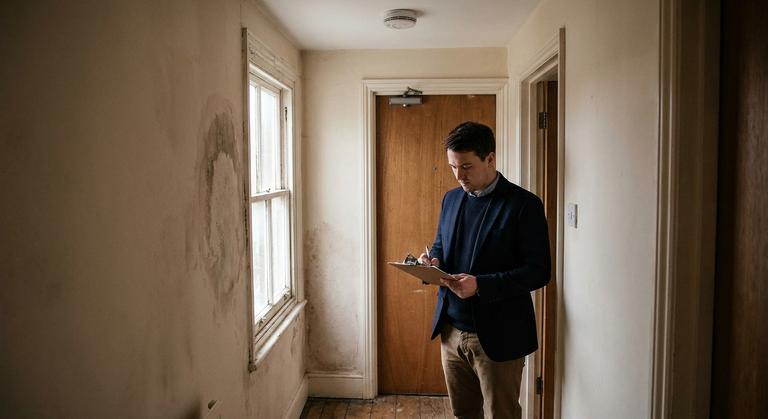
Most landlords who lose a rent repayment order case did not set out to break the law. They inherited a block, missed a licensing designation, or assumed the managing agent had it covered. It is one of the few sanctions in UK housing law where the tenant, not the council, pulls the trigger, and where the money comes straight out of the landlord's pocket rather than into a regulator's penalty account. For property managers that makes it a live risk on every file you hold, because the evidence that decides these cases is usually evidence you were responsible for creating.
What a rent repayment order actually is
An RRO is an order from the First-tier Tribunal (Property Chamber) requiring a landlord to repay rent that has already been paid. Applications come from either the tenant or the local housing authority. Under the Housing and Planning Act 2016 the award has been capped at twelve months of rent, and the offence must have been committed in the twelve months before the application is made. The Renters' Rights Act 2025 widens the regime considerably, including a longer maximum period and a broader group of potential respondents, so check where commencement has actually got to before advising anyone on the old position.
Two features catch people out. First, there does not need to be a conviction. The tribunal decides for itself whether the offence happened, applying the criminal standard of proof, and the landlord walks out with a repayment order rather than a criminal record. Second, where rent was paid through the housing element of universal credit, that share is repaid to the council rather than the tenant, so a tenant on partial benefit still has a live claim worth bringing.
The Supreme Court in Rakusen v Jepsen confirmed that an order could only be made against the immediate landlord under the tenancy, not a superior landlord in a rent-to-rent chain. That protection is precisely what the Renters' Rights Act 2025 was drafted to remove, which is why rent-to-rent structures deserve a fresh look rather than a filed-away opinion from three years ago.
The offences that trigger a rent repayment order
The list is closed. A tenant cannot apply simply because the boiler was cold for six weeks. They need one of the specified offences:
- Using violence to secure entry to the property
- Illegal eviction or harassment of the occupier
- Failure to comply with an improvement notice
- Failure to comply with a prohibition order
- Controlling or managing an unlicensed HMO
- Controlling or managing an unlicensed house where selective licensing applies
- Breach of a banning order
Note what is absent. Breaching the conditions of a licence you do hold is a separate offence exposing the landlord to prosecution or a civil penalty from the council, but it does not by itself support a rent repayment order. Neither does poor repair on its own. Disrepair matters because it is the route to an improvement notice, and a notice you fail to comply with sits squarely on the list.
How landlords and agents get caught out
Licensing status drifts mid-tenancy
Mandatory HMO licensing turns on occupation, not on the tenancy you signed. A four-person let where the tenants invite a partner to move in, a couple who split so one household becomes two, a loft room used informally as a bedroom: each can push a property over a licensing threshold without a single document changing. Nobody sends you an alert. The first you hear is the rent repayment order application landing.
Build an occupancy review into your quarterly cycle. Who actually lives there, how many households, which amenities are shared. If the answer has moved, check the council's scheme before the next rent payment lands.
A new designation lands and nobody reads the consultation
Selective and additional licensing schemes are designated borough by borough, run for a fixed period, then get renewed, expanded or dropped. A portfolio spread across four councils is exposed to four separate designation calendars. Diarise scheme end dates as well as start dates, and record the date you checked. 'We checked the register on 14 March and the property sat outside the designated area' is a defence. 'We assumed' is not.
Where an application has been duly made and the council notified, the landlord has a statutory answer to the unlicensed-property charge, but only if the application was complete and the fee paid. Half-finished applications sitting in a drafts folder have sunk more than one defence.
An improvement notice quietly runs out of time
Improvement notices come with a compliance date. Councils rarely chase on the day it passes, so the file goes quiet and the works slip behind more urgent jobs. Months later a tenant applies, and the question is not whether the damp was fixed eventually but whether the specified works were done by the specified date.
This is where the maintenance function and the compliance function stop being separate things. If you cannot show the date the notice arrived, the date the contractor was instructed, when they attended and what they did, you are arguing from memory against a dated notice. Our guidance for property managers treats notice-driven works as their own job category for exactly this reason.
Access visits turn into harassment claims
Harassment and illegal eviction are the offences most often committed by accident, usually with good intentions. A contractor is sent round with the landlord's spare key to catch a leak. Water or power is switched off for the works and stays off over a weekend. A tenant in arrears is told to be out by the end of the month. None of these look reckless at the time, and all of them are plausible routes to an award.
Set one rule and hold it: no attendance without written notice and a logged tenant response, except in genuine emergency, and record why the emergency was an emergency. Brief your contractors on it too. Trades working across several agents pick this up quickly, and access etiquette is a standing topic in communities like Contractor Club.
Each party assumes the other holds the licence
Rent repayment order defences fail on this more often than on anything technical. The landlord believed the agent applied. The agent believed the licence came with the instruction. Nobody checked the register. Put licensing status, reference number, expiry and conditions into the management agreement itself, and re-verify at renewal rather than trusting the file.
What the tribunal weighs when setting the amount
A rent repayment order is calculated on rent, not on the landlord's profit, less any element genuinely attributable to utilities the landlord paid. From there the tribunal assesses seriousness against the range of cases it sees, then applies the statutory factors: the conduct of both landlord and tenant, the landlord's financial circumstances, and whether there has been a conviction for a relevant offence. Appellate decisions have been clear that the maximum is not automatic and that reasons must be given for the figure chosen.
Conduct is where a well-run file earns its keep. A landlord producing gas safety records, EICRs, dated repair histories and evidence of a prompt licence application is arguing about degree. A landlord with a shoebox of receipts is arguing about existence. Treating compliance works as a budgeted line rather than an emergency spend is a recurring theme on strategy blogs like Construction Arbitrage, and the logic holds just as well on the management side.
Build the audit trail before you need it
For every managed property, you want to produce the following within an hour:
- Current licensing position with the date it was last verified against the council register
- Occupancy record showing number of occupants and households, dated
- Every statutory notice received, with compliance dates and evidence of works completed
- Gas, electrical and fire safety certification with renewal dates
- Repair history per job: reported, instructed, attended, completed, invoiced
- Every access notice served and the tenant's response to it
This is where a job platform earns its place. Running maintenance through PlanaJob gives each job a timestamped record from the moment it is raised through to sign-off, and because property managers can compare quotes from vetted contractors in the same place, the commercial decision and the compliance evidence live in one thread instead of scattered across a mailbox. When a tribunal asks what you did about the damp in flat 4 and when, you export the trail rather than reconstruct it. More on compliance workflows for UK agents sits on the PlanaJob blog.
FAQ
Can a tenant apply after they have moved out?
Yes. What matters is that the offence was committed within the twelve months before the application, and that the applicant was a tenant during the period the rent is claimed for. Moving out does not close the window, and former tenants bring a significant share of applications.
Does the landlord need to be convicted first?
No. The tribunal decides for itself whether the offence was committed, applying the criminal standard of proof. A conviction makes the applicant's job easier and is a factor in the amount awarded, but its absence is not a defence.
Can a managing agent be liable for a rent repayment order?
The order is made against the landlord under the tenancy, so an agent acting purely as agent is not usually the respondent. That is cold comfort. An agent who is the person managing can be prosecuted or issued a civil penalty by the council for the same underlying offence, and will face the client's claim for whatever the tribunal ordered. Where an agent takes a property on a rent-to-rent basis and becomes the immediate landlord, they are squarely in scope.