A tenant sends a photo of a black-speckled bathroom ceiling, and suddenly you need numbers. Mold remediation cost is one of the hardest line items for property managers to budget, because two quotes for what sounds like the same job can differ by thousands of dollars. The spread is not random, though. Remediation pricing follows a predictable logic built on three levers: how many square feet are affected, how severe and deep the growth is, and what the contractor must do to work safely and legally. Understand those levers and you can read any quote critically, challenge padding, and spot corner-cutting before a small problem becomes a building-wide one.
What Drives Mold Remediation Cost
Most US remediation contractors price in one of three ways. Small, well-defined jobs usually get a flat price with a project minimum. Larger open areas are often priced per square foot of affected material. Jobs with unknown scope - a wall cavity nobody has opened, a crawl space nobody has entered in years - may be quoted as an initial phase plus time and materials once the contractor can see what they are dealing with.
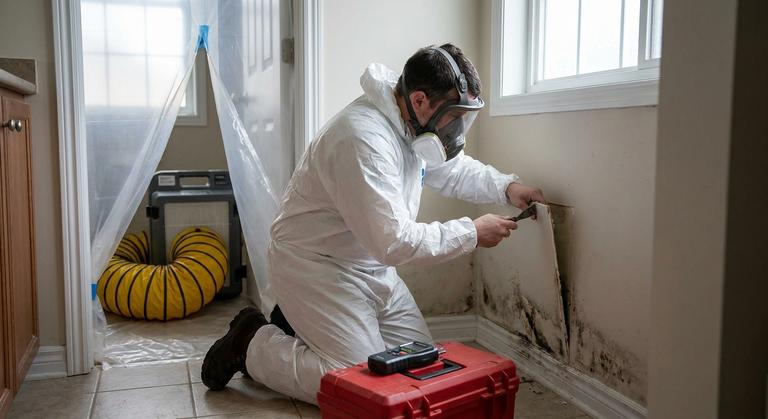
The project minimum is the part that surprises managers most. Containment, negative air machines, HEPA filtration, protective gear, and disposal cost roughly the same to mobilize whether the moldy patch is four square feet or forty. That fixed overhead is why a tiny closet job can carry a per-foot price several times higher than a large basement, and why bundling nearby problem areas into one visit almost always beats calling the contractor back twice.
What a legitimate quote should itemize
- Inspection and moisture mapping that identifies the water source, not just the visible growth
- Containment setup: plastic sheeting, sealed doorways, negative air pressure
- Removal of contaminated porous materials such as drywall, insulation, and carpet
- Cleaning and HEPA vacuuming of surfaces that can be saved
- Drying and dehumidification of the structure
- Bagging and disposal of contaminated debris
- Post-remediation verification, sometimes by a third party
- Rebuild and repairs, usually quoted separately
If a quote is one line - "mold removal, whole job" - you cannot compare it against anything, and that is often the point.
Pricing by Square Footage: The Size Tiers That Matter
Contractors and regulators think in size tiers rather than exact measurements. The EPA's widely used guidance suggests that mold patches smaller than about 10 square feet can generally be cleaned up by in-house maintenance staff with basic precautions, provided the underlying moisture problem is fixed. Above that threshold, professional containment practices come into play, and pricing changes character at each step up.
- Under about 10 square feet. Often an in-house job or a handyman-level fix. If you do hire a pro, expect the project minimum to dominate the price.
- Roughly 10 to 100 square feet. The classic professional job: one room or one wall system, full containment, removal of affected drywall or flooring, HEPA cleaning. Priced per square foot or as a fixed project.
- Over 100 square feet. Multi-room or structural involvement. Expect engineering controls throughout, longer timelines, more demolition, and a rebuild phase that can rival the remediation itself.
- Whole-property contamination. Usually the aftermath of flooding or a long-unnoticed leak in a vacant unit. This is major construction, planned in phases, and the mold remediation cost becomes one line in a much larger restoration budget.
Per-square-foot rates typically fall as jobs get larger, but totals climb fast because bigger jobs touch more building systems - which is where severity takes over.
How Severity Multiplies the Bill
Two 50-square-foot jobs can carry wildly different mold remediation costs. Severity is why.
Surface growth versus embedded growth
Mold sitting on the surface of tile, metal, or sealed wood can usually be cleaned and the material saved. Mold growing through porous materials - drywall, insulation, carpet pad, particleboard - cannot be reliably cleaned, so the material has to come out. A quote for embedded growth is really a demolition-plus-rebuild quote, which is why it dwarfs a cleaning quote for the same square footage.
The water source behind the mold
Remediation standards, including the industry's ANSI/IICRC S520 standard, treat mold that followed clean supply-line water very differently from growth fed by sewage backups or rising floodwater. Contaminated water raises the protective equipment requirements, the disposal handling, and the share of material that must be discarded rather than cleaned. If your quote jumped after the contractor learned the leak was a sewer line, that is standards-driven, not padding.
HVAC involvement
If spores have entered the air handling system, the affected area is no longer one room - it is everywhere the ductwork goes. Duct cleaning or replacement, coil cleaning, and filter protocols add a layer of cost that catches many managers off guard. Always ask whether the assessment covered the HVAC system, because a bid that ignores it can look attractively cheap right up until the mold returns.
US Rules, Licensing, and Insurance Realities
A handful of states, including New York, Florida, and Texas, license mold assessors and remediation contractors, and some state rules require the company assessing the mold to be independent from the company removing it - a sensible guard against firms diagnosing work for themselves. Even in states without licensing, hiring firms whose technicians hold IICRC certifications and work to the S520 standard gives you a defensible paper trail.
On insurance: many US property policies limit or exclude mold damage unless it resulted from a covered event such as a sudden pipe burst, and claims tied to slow leaks or deferred maintenance are routinely denied. Read the policy before assuming coverage, and document the moisture source from day one - the cause of the water often decides who pays.
How Property Managers Keep Mold Remediation Cost Under Control
- Fix the water first. Remediation without moisture control is a subscription, not a repair. No competent contractor will guarantee work over an active leak.
- Get an independent assessment on larger jobs. Paying separately for testing and scoping removes the incentive to inflate the problem.
- Collect at least three itemized quotes. Platforms like PlanaJob let you compare quotes from vetted contractors side by side, which makes scope differences - and padding - visible fast. Our property manager tools are built around exactly this workflow.
- Separate remediation from rebuild. The firm best at containment and removal is not always the best or cheapest at hanging new drywall.
- Require post-remediation verification. Clearance testing or a documented visual standard proves the job is done and protects you in tenant disputes.
- Keep everything in writing. Photos, moisture readings, invoices, and clearance reports are your defense with insurers, owners, and tenants alike.
Understanding the contractor's side helps too. Remediation firms carry real overhead - specialized insurance, equipment, trained crews - and the strategy blog Construction Arbitrage is a worthwhile read on how specialty trades price risk into their bids, which is exactly what a mold quote is.
Red Flags in Mold Remediation Quotes
- Scare language about "toxic black mold" used to rush your signature - species identification rarely changes the remediation method
- Fogging or spraying offered as the primary treatment instead of removing affected materials
- No containment or negative air line item on a job over 10 square feet
- The same company insisting on doing both the testing and the remediation where your state separates those roles
- Refusal to itemize, or a verbal-only price
- No mention of post-remediation verification at all
None of these alone proves bad faith, but two or more together should send you back to the market for another bid.
When you are ready to hire, get certified remediation quotes through PlanaJob. Every quote, scope, and completion document stays attached to the job record, so your files are audit-ready when an owner, insurer, or tenant's attorney asks what you did and when. For more cost guides like this one, browse the PlanaJob blog.
FAQ
Does insurance cover mold remediation cost?
Sometimes. Many US property policies cover mold only when it results from a sudden, covered water event, and exclude damage from long-term leaks or neglect. Check the specific policy language, report water events promptly, and keep dated photos and moisture documentation - the cause of the water usually determines the outcome.
Can my maintenance team handle a small mold patch in-house?
Generally yes, for surface growth under about 10 square feet, following EPA guidance: fix the moisture source, protect the worker, clean or remove the affected material, and dry the area thoroughly. Anything larger, anything recurring, or anything involving HVAC or sewage merits a professional.
How do I know the remediation actually worked?
Require post-remediation verification before final payment. The area should be visibly free of growth and debris, moisture readings should be back to normal, and on larger jobs an independent clearance test should confirm conditions. Get the results in writing and file them with the job record.