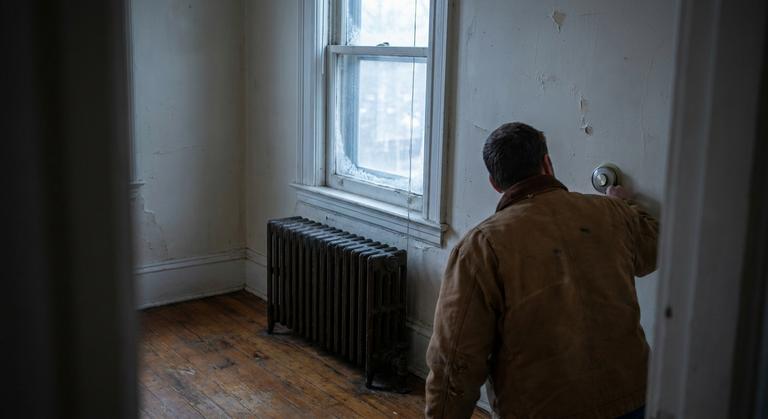
Every fall the same call lands: a tenant on the top floor says the radiators are cold, the overnight low just dipped into the 30s, and someone needs an answer today. Landlord heating requirements law in the US does not live in one document, which is exactly why so many otherwise-competent operators get caught out. There is no single federal thermostat number. Instead you are working through a stack of obligations: your state's implied warranty of habitability, your state housing or sanitary code, and the layer that actually bites, your city's heat ordinance, which names specific degrees and specific calendar dates. Get the local layer wrong and you are exposed to code citations, rent abatement, and repair-and-deduct claims before the first hard freeze.
What Landlord Heating Requirements Law Actually Regulates
Across US jurisdictions, the rules break into three separate duties. Operators tend to focus on the second one and get burned by the first and third.
- Equipment. Every habitable room needs a permanent, safe, code-compliant heat source. Portable space heaters almost never satisfy this obligation, and unvented fuel-burning heaters are prohibited outright in many jurisdictions. Handing a tenant a plug-in heater is functionally an admission that the permanent system does not meet code.
- Temperature. A minimum indoor reading, often split into daytime and nighttime thresholds, and sometimes triggered only when the outdoor temperature falls below a stated point.
- Timing. A defined heat season with hard start and end dates, plus a response window once a no-heat complaint is logged.
For subsidized and voucher-assisted units, HUD's inspection standards add a fourth layer. Inoperable heat in cold weather is treated as a top-severity deficiency with a very short correction window, and it will show up on your inspection score long before a tenant files anything.
The dates bind you as tightly as the degrees
Under most landlord heating requirements law, the duty switches on by calendar date regardless of how mild the season feels. A 60-degree October week does not suspend your obligation to have the boiler commissioned and running on day one of heat season. Plan your annual service so the system is proved out before that date, not during it.
Minimum Rental Temperatures in Major US Markets
This is where landlord heating requirements law gets specific, and where you cannot generalize across a portfolio that spans state lines. The examples below reflect widely published local standards, but ordinances get amended. Confirm the current text with your local housing agency or code enforcement office before you rely on any of it.
- New York City. Heat season runs October 1 through May 31. Between 6am and 10pm, if the outdoor temperature is below 55°F, apartments must be at least 68°F. Between 10pm and 6am, apartments must be at least 62°F regardless of the outdoor reading.
- Chicago. Heat season runs September 15 through June 1, with a daytime minimum of 68°F from 8:30am to 10:30pm and 66°F overnight.
- Massachusetts, including Boston. The state sanitary code sets a heating season from mid-September to mid-June, with roughly 68°F during daytime hours and a lower overnight minimum. Massachusetts also caps the upper end, which surprises operators who habitually overheat buildings to suppress complaints.
- California. The state standard is framed around capability rather than a clock: heating facilities must be able to maintain around 70°F in habitable rooms, measured about three feet above the floor. Individual cities layer their own requirements on top.
- Cold-climate cities. Minneapolis, Denver, Detroit, Milwaukee and similar markets set their own minimums and inspect aggressively during winter. Assume a defined season and an enforced number.
- Everywhere else. Even without a named heat ordinance, the implied warranty of habitability applies in nearly every state. A unit without functioning heat in January is not habitable, and courts do not need an ordinance to say so.
Who Controls the Thermostat Changes Your Exposure
Metering arrangement is the single biggest driver of risk, and landlord heating requirements law generally treats the obligation as following control of the equipment rather than control of the bill.
In a master-metered building with central heat, the duty is entirely yours. Balancing problems, a failed circulator pump, air-locked risers or a miscalibrated outdoor reset curve are all your compliance failures even when the boiler is technically running.
Where the tenant pays their own gas or electric, you still owe working, correctly sized, safely connected equipment. Your defense when a tenant shuts off their own utility service is documentation: a dated service record showing the system worked, and a written record of the shutoff. Without both, "the tenant turned it off" is just an assertion.
Thermostat lockboxes and limiters are permitted in some jurisdictions and restricted in others, but nowhere can you legally cap a unit below the required minimum. If you use them, set the floor above the legal threshold and keep the configuration documented.
How to Measure So Your Record Holds Up
Inspectors and housing court judges weigh contemporaneous records far more heavily than recollection. Build the habit before you need it.
- Take readings in a habitable room, near the center, roughly three feet above the floor, away from exterior walls, windows, supply vents and appliances.
- Record the outdoor temperature at the same timestamp. Half of all disputes turn on whether the outdoor trigger was met.
- In a contested case, place a logging thermometer in the unit for 24 to 48 hours rather than relying on spot checks.
- Log every complaint with date, time, unit, reported condition, dispatch time, arrival time and technician notes.
- Retain annual combustion tests, boiler and furnace service tickets, and carbon monoxide alarm verification records for the full statutory period.
What Non-Compliance Actually Costs
Enforcement of landlord heating requirements law is overwhelmingly complaint-driven, so a single motivated tenant can open the whole file. Typical consequences include code citations assessed per unit and per day, rent abatement or escrow, repair-and-deduct where the state authorizes it, and in serious cases a municipality performing emergency repairs and placing a lien on the property. Extended outages invite constructive eviction claims and tenant relocation costs.
The uninsured tail is worse. A no-heat call at 3am in a vacant stack becomes a burst-pipe claim by 7am, and carriers scrutinize whether reasonable care was taken to maintain heat before they pay. One weekend of slow dispatch can cost more than a decade of preventive maintenance.
Line Up Emergency HVAC Before the First Cold Snap
Compliance in winter is a procurement problem disguised as a legal one. The rules are knowable; contractor availability at 11pm on the first freezing night is not, unless you arranged it in September.
- Complete boiler and furnace service with a combustion test before heat season opens, not after.
- Proactively replace known-weak igniters, thermocouples, zone valves and circulator pumps, and stock spares for standardized equipment across the portfolio.
- Bleed radiators, verify zone control, and check outdoor reset settings on hydronic systems.
- Test and date every carbon monoxide and smoke alarm.
- Insulate exposed piping, enable freeze protection, and set vacant unit thermostats to a safe minimum with a documented check schedule.
- Get after-hours coverage and a response window agreed in writing, not assumed.
- Publish an internal no-heat script so site staff know what qualifies as an emergency, who to call and what timeline applies.
That last point is where most portfolios fail. Emergency HVAC capacity is finite and gets rationed by relationship and rate the moment temperatures drop, a dynamic covered well on Construction Arbitrage if you want to understand how trades actually price peak-season work. Vendor churn compounds it: a lot of independent HVAC shops have changed hands in recent years as regional platforms and private buyers consolidate the trade, a market tracked on ContractorExit. If your trusted mechanical contractor was acquired last spring, verify that your after-hours arrangement survived the sale.
Build the bench now. Post your winter scope, from seasonal boiler service to standby emergency coverage, and get it priced while contractors still have calendar space. Platforms like PlanaJob let property managers compare quotes from vetted contractors side by side instead of cold-calling at midnight. You can create an account in a few minutes, see how we work with US property managers, and find more compliance guides on the PlanaJob blog.
FAQ
Is there a federal minimum temperature for rental heat?
No. There is no federal thermostat number for private rental housing. Landlord heating requirements law is written at the state and city level, layered on top of the implied warranty of habitability. Federally subsidized units are the exception in practice, since HUD inspection standards treat inoperable heat as a top-severity deficiency with a short correction deadline.
If the tenant pays for their own heat, am I off the hook?
No. Paying the utility bill is not the same as controlling the equipment. You remain responsible for supplying safe, properly sized, code-compliant heating and for repairing it promptly. If a tenant disconnects their own service, your protection is documentary: a recent service record proving the system functioned, plus written evidence of the shutoff.
How fast do I have to respond to a no-heat complaint?
Most jurisdictions treat loss of heat during heat season as an emergency requiring same-day or 24-hour response, and some name a specific window in the housing code. Check your local ordinance and lease language, then set your internal standard tighter than both. Speed of dispatch, not perfection of repair, is usually what determines whether a complaint becomes a citation.