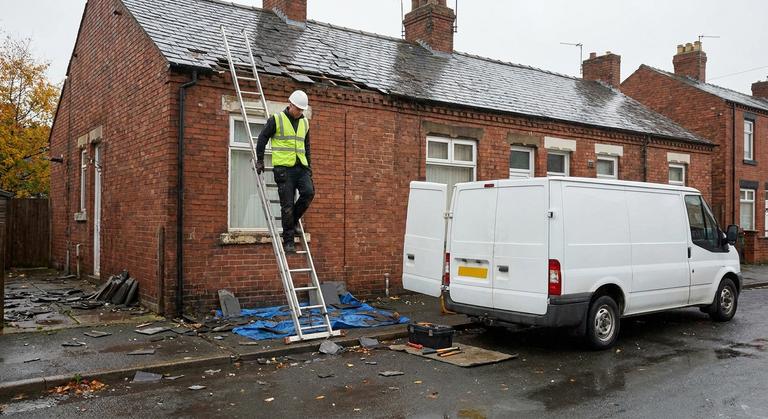
Storm season can fill a restoration contractor's schedule for six straight weeks, then leave it empty for six months. The firms that stay busy year-round are almost always plugged into managed repair networks - the pipelines insurance carriers use to route property claims to pre-approved contractors. If you have been researching how to get insurance work as a contractor in the US, three names dominate that world: Contractor Connection, Sedgwick, and Alacrity. Each runs its own application, its own credentialing process, and its own performance scorecard once you are inside. This guide compares all three, lists what you need ready before you apply, and covers the trade-offs the recruitment pages leave out.
How Insurance Restoration Work Actually Reaches You
When a homeowner files a property claim, the carrier has two ways to get the repair done. It can pay the settlement and let the policyholder find their own contractor, or it can offer a managed repair option, where the claim is handed to a network that assigns it to a credentialed local firm. Contractor Connection, Sedgwick, and Alacrity all sit in that second lane.
The practical consequence: you are not selling to the homeowner, and you are not really selling to the carrier either. You are selling to the network - proving you can hit their response times, estimate in their required format, and keep customer satisfaction high enough to stay in the assignment rotation. Territory matters too. A network with three strong roofers in your county may sit on your application for months, then approve you overnight after a hail event.
What Every Application Asks For
Whichever network you target first, the opening stage of how to get insurance work as a contractor is unglamorous: assembling a clean credentialing file. The specifics vary, but all three applications probe the same areas:
- Time in business. Networks want an established company with a track record, not a firm founded the week after a hurricane. Expect to state your founding date and describe past restoration or reconstruction projects.
- State and local licensing. You must hold whatever license your state requires for your trade, and for general contracting if you will quote full rebuilds. Networks verify this, and a lapsed license is an instant decline.
- Insurance. Certificates for general liability and workers' compensation at the minimums the network specifies, with the network often named as certificate holder.
- Xactimate proficiency. Estimates must be produced in Xactimate, the Verisk estimating platform carriers treat as the industry standard, using the approved price list for your region. If nobody on your team can drive it, fix that before you apply.
- Background checks. Expect checks on owners and often on field staff who enter homes. Some networks also want a drug-testing policy in place.
- Financial and reference checks. Trade references, supplier references, sometimes financial statements - they are underwriting your ability to float payroll and materials until the claim pays.
- Service commitments. You agree to contact the policyholder within a set window, inspect promptly, and hit cycle-time targets. Read these before you sign, not after your first scorecard review.
Contractor Connection, Sedgwick, and Alacrity Compared
All three networks are legitimate answers to how to get insurance work as a contractor, but they feel different to apply to and to work for.
Contractor Connection
Contractor Connection is operated by Crawford & Company, one of the biggest names in claims management, and it is the network most US restoration contractors apply to first. The application is submitted online and moves into a credentialing review covering licensing, insurance, financials, background checks, and workmanship warranty commitments. Approval is territory-driven: you apply for specific trades in specific areas, and if the panel there is full, you wait. Once in, work arrives as assignments with defined response and estimate deadlines, and your scorecard - cycle times, estimate accuracy, customer satisfaction - decides how much volume you see.
Sedgwick
Sedgwick is one of the largest third-party administrators in the world, handling claims on behalf of carriers and self-insured businesses. Its repair network assigns property work that flows through the claims it administers, which means the mix skews with Sedgwick's client base - you may see more commercial and specialty losses than with a purely residential network. The credentialing themes are the same: licensing, insurance minimums, background screening, Xactimate estimates, and agreed service levels. Contractors who can document commercial experience and larger project management tend to stand out here.
Alacrity Solutions
Alacrity runs a national managed repair network covering both daily claims and catastrophe response. If your plan for how to get insurance work as a contractor includes chasing CAT events - hurricanes, hail, wildfire seasons - Alacrity's deployment model deserves a close look, because it mobilizes network contractors into affected regions when carriers surge. The application covers familiar ground: licensing, insurance, background checks, and estimating capability. Daily-claims territories work much like the other two networks: prove capacity, hit service levels, earn rotation.
Which one first?
Apply to all three. Membership is not exclusive, the credentialing documents overlap almost entirely, and territory demand - which you cannot see from the outside - determines who approves you first. Build one complete credentialing pack and submit it three times.
The Trade-Offs the Recruitment Pages Skip
Managed repair work is real revenue, but it is discounted revenue. Networks typically charge a referral fee or take a percentage of the completed job, and you estimate against a controlled price list rather than what your local market bears. Add mandated warranty terms, tight cycle-time targets, and payment that often waits on completion certificates and homeowner sign-off, and margins get thin if you run a loose operation. Before committing, model the numbers honestly - the strategy pieces at Construction Arbitrage are a useful lens on when volume-at-a-discount builds a business and when it quietly hollows one out.
The other risk is concentration. A network can slow your assignments without warning - a new competitor in your territory, a dip in your scorecard, a carrier switching TPAs. Contractors who treat network volume as their entire pipeline learn how fast "how to get insurance work as a contractor" turns back into "how to get any work at all."
How to Get Insurance Work as a Contractor Without Living on Storm Cycles
The strongest restoration firms pair insurance volume with a steady base of planned maintenance and repair work, because that base carries payroll between storm cycles and keeps crews sharp. Property managers are the natural source: they raise jobs all year, in every weather. Platforms like PlanaJob let property managers post those jobs and compare quotes from vetted contractors, which for you means a stream of local, non-catastrophe work you price yourself rather than against a network's list. You can create a contractor account and start quoting on jobs raised by the property managers using the platform.
There is a longer-term payoff too. If you ever plan to step back or sell, a contracting business with recurring maintenance revenue alongside insurance work is far easier to value than one that lives and dies by CAT season - a point the listings at Contractor Exit make obvious. A diversified pipeline is not just this quarter's cash flow; it is the asset you are building.
For more guides on winning work and pricing it properly, browse the PlanaJob blog.
FAQ
Do I need Xactimate before applying to these networks?
Practically, yes. All three expect estimates in Xactimate using approved price lists, and an application that cannot demonstrate estimating capability will stall. Train someone in-house, hire an estimator who already knows the platform, or contract the estimating out while you build the skill internally.
Can I join more than one managed repair network at the same time?
Yes, and most established restoration contractors do. The networks are not exclusive, your credentialing documents are nearly identical across all three, and multiple memberships smooth out the assignment droughts any single network will eventually put you through. Just make sure you can honor every network's response-time commitments simultaneously.
How long does approval take?
It varies more by territory than by paperwork. A complete application in an under-served area can move quickly, while the same application where the panel is full may sit until demand changes, such as after a major storm. Submit a complete, accurate package the first time - chasing missing certificates is the most common self-inflicted delay - and follow up periodically rather than waiting in silence.