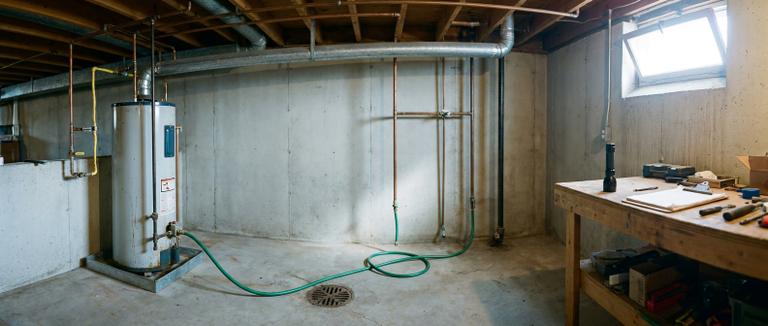
Most water heaters do not die of old age. They die buried under a hardened layer of mineral sediment that nobody ever drained out. Learning how to flush a water heater takes under an hour, costs nothing but a garden hose, and is the difference between a tank that quietly runs twelve years and one that splits open in year seven over a finished ceiling. For property managers running scattered single-family rentals or a mid-size apartment building, it is one of the highest-return items on the maintenance calendar, and one of the most consistently skipped.
What Sediment Actually Does to Your Tanks
Municipal water carries dissolved calcium and magnesium. Heat it, and those minerals drop out of solution and settle on the bottom of the tank as scale. It never leaves on its own. Over a few years it builds into a crusted layer that behaves less like grit and more like concrete.
What that layer does depends on the fuel:
- Gas tanks fire a burner directly under the tank floor. Sediment insulates the water from the flame, so the burner runs longer and the steel above it overheats. That heat crazes the glass lining, and once the lining cracks, bare steel starts corroding from the inside. The rumbling or popping you hear on an older gas unit is water flashing to steam underneath the sediment bed. It is a countdown, not a quirk.
- Electric tanks have a lower heating element sitting right in the sediment zone. Scale bakes onto the element until it burns out, and the tenant calls to say the hot water "only lasts ten minutes now." You pay for the element, the labor, and the complaint.
Either way, the end state is a failed tank, and tanks rarely fail politely. A seam lets go and you get the full contents plus whatever the supply line keeps feeding until someone finds the shutoff.
Why the arithmetic favors the flush
The replacement tank is the cheapest line on that day's bill. Add water mitigation, drywall and flooring in the unit below, the tenant's damaged belongings, a hotel night if the unit is not habitable, your deductible, and the premium rate for an after-hours emergency plumber. Then add the part nobody prices: the tenant who decides not to renew. A skipped annual flush is not a saving, it is a bet on nothing going wrong.
How to Flush a Water Heater, Step by Step
The procedure for how to flush a water heater is nearly identical for gas and electric, except at the first step, where the difference matters a great deal.
- Kill the heat source. On a gas unit, turn the thermostat dial to Pilot or Vacation. On an electric unit, switch the dedicated breaker OFF at the panel. Energizing an electric element in an empty tank destroys it in seconds, so this is not optional.
- Shut the cold water inlet. That is the valve on the cold line at the top of the tank, usually marked with a blue collar or ring.
- Let it cool. Pushing scalding water through a vinyl hose is a burn risk and a hose risk. Give it an hour or two, or run a hot faucet in the unit to speed it up.
- Hook up the hose. Thread a garden hose onto the drain valve at the base and run it to a floor drain, a sump, or outside. Gravity does the work, so the discharge end has to sit below the valve. In a slab-on-grade home with no floor drain, you will need a utility pump.
- Break the vacuum. Open a hot-water faucet at the highest fixture in the unit, or lift the lever on the temperature and pressure relief valve. Without air coming in, the tank drains at a trickle.
- Open the drain valve and let it run. Expect cloudy water and grit. Watch the stream. If it slows suddenly, sediment has choked the valve opening.
- Blast the bottom clean. Once the tank is empty, briefly open the cold inlet for twenty to thirty seconds at a time with the drain still open. The inrush stirs up what the gravity drain left behind. Repeat until the discharge runs clear.
- Refill before you re-energize. Close the drain, pull the hose, open the cold inlet, and leave that hot faucet running until the water is steady with no spitting air. Only then turn the gas dial back up or flip the breaker on.
- Log it. Photograph the data plate, note the tank's date code, and record the flush in the unit's file. Tank age is the single best predictor of your next capital expense.
While the tank is empty, check these
Most guides on how to flush a water heater stop at closing the drain valve. Do not. You already have the unit down, so use the access:
- Anode rod. This sacrificial rod corrodes so the tank does not. If it is chewed down to the core wire, replacing it can add years. Bring a breaker bar, because they seize.
- T and P relief valve. Lift the test lever, confirm it discharges and reseats, and confirm the discharge pipe terminates near the floor and is not capped, plugged, or threaded. That last one is a common and dangerous "fix."
- Drain pan and line. Jurisdictions following the International Residential Code generally require a pan and drain where a leak would damage the structure. Check the pan is not cracked and the line is not blocked.
- Expansion tank. On a closed system with a backflow preventer, tap the expansion tank. One that thuds instead of ringing is waterlogged and needs replacing.
Mistakes That Turn a Flush Into a Callback
Knowing how to flush a water heater is only half the job. The other half is not creating a new problem.
- The plastic drain valve that will not reseal. Factory valves are often plastic, and grit gets under the seat so it drips forever after. Swap it for a three-quarter-inch full-port brass ball valve while the tank is empty. It also drains faster next year.
- Flushing a badly neglected tank without a plan B. On a tank pushing ten years with no service history, disturbing the sediment bed and working a corroded valve can trigger the failure you were trying to prevent. If the unit is already near end of life, the honest call is to schedule replacement instead.
- Skipping the vacuum break and assuming a slow drain means an empty tank.
- Restoring power to a partly filled electric tank. A dry-fired element means a second visit the same day.
- Doing it during a tenant's morning. Schedule flushes midday and give proper notice. Your state's notice-to-enter rules apply here the same as any other maintenance visit.
How Often, and What About Tankless
Learning how to flush a water heater is a one-time skill. Setting the right interval is the ongoing judgment call. Once a year is the working default. Move to every six months where the local supply is classified as hard or very hard, which your water utility publishes in its annual water quality report, and on well-supplied properties without a softener.
Tankless units do not collect sediment the same way, but they scale internally and need an annual descale: close the isolation valves, circulate a descaling solution or white vinegar through the service ports with a small pump, flush with clean water, then clean the inlet screen. If service valves were never installed, budget to add them. It turns a long job into a short one every year afterward.
Make It a Program, Not a Memory
Teaching a tech how to flush a water heater takes one visit. Getting fifty of them done on schedule across a portfolio is the actual work. Batch flushes by building or ZIP code so nobody is driving between one-off calls. Write a single scope sheet covering the flush, anode inspection, T and P test, pan and expansion tank check, and photos of the data plate, so every quote you receive prices the same work. Require the date code in the report so replacements get forecast rather than discovered at 2 a.m.
This is where a marketplace earns its keep: platforms like PlanaJob let property managers post one defined scope and compare quotes from vetted contractors side by side, instead of waiting three weeks on the one plumber they always call. Add water heater flushes to your PlanaJob preventive maintenance plan and they get raised, quoted, and closed out on a schedule. You can set that up when you create an account, see how the workflow fits your portfolio on our page for property managers, or read more maintenance how-tos on the PlanaJob blog.
If you want the other side of that negotiation, the strategy writing at Construction Arbitrage is a useful look at how contractors price recurring service work versus emergency calls, which is worth understanding before you set an annual rate.
FAQ
How often should I flush a water heater in a rental?
Once a year for most properties, and every six months where the water is hard or the property is on a well without a softener. If you inherit a unit with no service history, flush it early in your ownership so you know what you are dealing with, then set the interval based on how much sediment came out.
Can flushing an old water heater cause it to leak?
It can, and that is the main reason technicians hesitate. On a tank that has gone years without service, sediment may be resting against a lining that is already compromised, and the old drain valve may not reseal once opened. That is not an argument for skipping maintenance forever. It is an argument that a tank deep into its second decade with no service record is usually a replacement, not a first flush.
Do tankless water heaters need flushing too?
Yes, though the process is descaling rather than draining. A pump circulates descaling solution through the heat exchanger via the isolation valves, followed by a clean-water rinse and an inlet screen cleaning. Neglected tankless units lose efficiency and eventually throw error codes, and manufacturers commonly tie warranty coverage to documented annual service, so keep the paperwork.