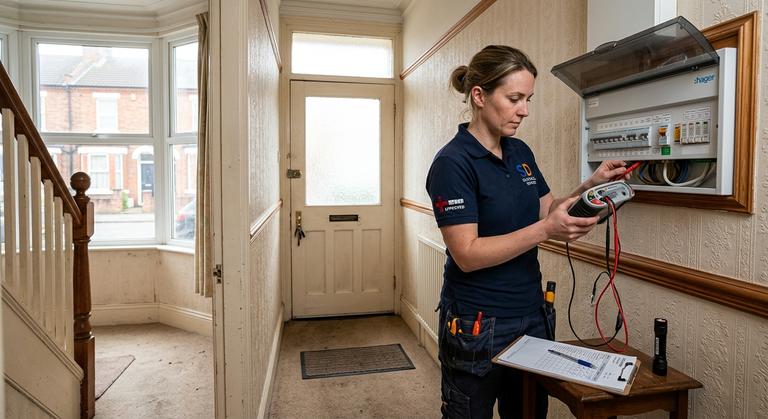
If you manage rental property in the UK, "how often is an EICR required" is one of those questions you need to answer correctly the first time. Get it wrong and your landlords face enforcement action, your agency's reputation takes a knock, and tenants are left living with electrics nobody has properly checked. The short answer for England is at least every five years, but the full picture involves change-of-tenancy rules, remedial deadlines, HMO quirks and real differences between England, Scotland and Wales. This guide covers what the rules actually require, what the report codes mean, and how to keep a whole portfolio compliant without drowning in spreadsheets.
What an EICR Actually Is
An Electrical Installation Condition Report (EICR) is a formal inspection of a property's fixed electrical installation - the consumer unit, circuits, wiring, sockets, switches, light fittings and earthing and bonding arrangements. A qualified electrician tests the installation against BS 7671 (the IET Wiring Regulations) and records every observed defect, coding each one by severity.
Two things it is not. It is not an appliance test - a kettle, or a landlord-supplied washing machine, falls under separate portable appliance testing, which is good practice but not part of the EICR. And it is not the same as the certificate issued after new electrical work, which we cover in the FAQ below.
The report's headline outcome is a single word: satisfactory or unsatisfactory. That word matters enormously, because an unsatisfactory result starts a legal clock for remedial work.
How Often Is an EICR Required in Each UK Nation?
England
Under the Electrical Safety Standards in the Private Rented Sector (England) Regulations 2020, landlords must have the fixed electrical installation inspected and tested by a qualified and competent person at least every five years. There is a practical wrinkle worth knowing: the inspecting electrician can recommend a shorter interval on the report itself. If the certificate says the next inspection is due in three years because of the installation's age or condition, that earlier date is the one to diarise.
So when a landlord asks how often is an EICR required in England, the honest answer is: every five years as an absolute maximum, sooner if the last report says so, and a valid report must be in place before any new tenancy begins.
Scotland
Scotland got there first. Private landlords north of the border have needed an EICR at least every five years since rules made under the Housing (Scotland) Act 2014 came into force, and the Scottish regime also expects checks on electrical appliances the landlord provides. If you manage a cross-border portfolio, treat the requirements as broadly parallel but check the detail, because the paperwork and enforcement routes differ.
Wales
Wales introduced its own requirement through the Renting Homes (Wales) Act 2022 framework. Rented homes in Wales now need electrical safety testing at least every five years, with the report provided to the contract holder. The Welsh rules arrived later than England's, but the five-year rhythm is the same.
Northern Ireland
Northern Ireland has been moving towards mandatory periodic electrical checks more recently under its private tenancies legislation. If you manage stock in NI, check the current commencement position with official guidance rather than assuming the rules mirror the rest of the UK.
HMOs
Houses in multiple occupation have faced periodic electrical inspection expectations for longer than mainstream single lets, typically baked into licensing conditions. If a property converts to HMO use, do not assume the existing certificate simply carries over - check the licence conditions and, if in doubt, commission a fresh inspection.
Decoding the Report: C1, C2, C3 and FI
Every defect the electrician finds is coded. Learn these four codes and you can read any EICR in under a minute:
- C1 - danger present. Risk of injury exists right now. The electrician should make the immediate danger safe before leaving site, and permanent remedial work follows urgently.
- C2 - potentially dangerous. Not an immediate hazard, but one fault or wrong condition away from becoming one. Urgent remedial work is required.
- C3 - improvement recommended. The installation does not meet current standards but is not dangerous. This is the only code that does not make the report unsatisfactory.
- FI - further investigation required. The electrician found something they could not fully assess during the inspection. Treat it with the same urgency as a C2.
Any C1, C2 or FI on the report means the overall outcome is unsatisfactory, and in England that triggers the 28-day remedial deadline described below. A report carrying only C3 observations is still satisfactory - the recommendations are worth costing up, but there is no legal compulsion to act on them immediately.
The Deadlines Property Managers Must Diarise
The five-year cycle is only half the compliance job. In England, the 2020 regulations also set out who gets the report and when:
- New tenants - a copy of the current report before they occupy the property.
- Existing tenants - a copy within 28 days of each inspection.
- Prospective tenants - a copy within 28 days of a written request.
- The local authority - a copy within 7 days of a written request.
- Remedial work - where the report is unsatisfactory, complete the remedial work or further investigation within 28 days, or sooner if the report specifies, then supply written confirmation from the electrician to the tenant and the local authority within 28 days of completion.
Local authorities in England can impose financial penalties of up to £30,000 per breach, and they can arrange remedial work themselves and recover the cost from the landlord. For an agency managing hundreds of tenancies, the exposure compounds fast - which is why the best-run portfolios track EICR due dates the same way they track gas safety renewals, with reminders set well before expiry rather than at it.
When You Need an EICR Sooner Than Five Years
Asking how often is an EICR required gets you the legal maximum, but plenty of situations justify booking one early:
- The previous report specified a shorter retest interval.
- The property has had a significant refurbishment, extension or rewiring of individual circuits.
- The property is changing use, for example converting a single let into an HMO.
- There has been flood damage, fire damage or evidence of rodent activity around cabling.
- You have taken on a property with no report on file and no reliable history.
- A tenant reports warning signs: frequent tripping, buzzing sockets, scorch marks or a burning smell.
That last point deserves emphasis. A satisfactory EICR describes the installation on the day of inspection, not for the next five years regardless of what happens. Treat tenant reports of electrical symptoms as maintenance emergencies first and compliance questions second.
Getting the Inspection Done Without the Headache
The regulations require a qualified and competent person, so vet before you book. Sensible checks: membership of a recognised competent person scheme such as NICEIC or NAPIT, proof of insurance, a sample report so you can see how thoroughly they record observations, and clarity on what the quoted price includes - EICR pricing typically scales with the number of circuits, so a four-bed HMO is a very different job from a one-bed flat. It is also worth asking whether they can quote for remedial work on the spot, because an unsatisfactory report with a 28-day clock running is not the moment to start a second procurement exercise. Trade communities like Contractor Club are full of electricians comparing notes on exactly this kind of work, which tells you how much variation exists between inspectors - choosing carefully matters.
For property managers juggling dozens of due dates, platforms like PlanaJob help by letting you post the inspection once and compare quotes from vetted, registered electricians rather than ringing round. You can see how it fits an agency workflow on our property managers page, and there are more compliance guides like this one on the PlanaJob blog.
When the next EICR on your list falls due - or a tenant flags something that will not wait - you can book a registered electrician through PlanaJob and have the report, and any remedial quotes, back in one place.
FAQ
Does every new tenancy need a fresh EICR?
No. A valid, satisfactory report covers new tenancies within its five-year window - you just need to give the incoming tenant a copy before they move in. You only need a new inspection if the current report has expired, specified an earlier retest date, or the installation has materially changed.
Is an EICR the same as an Electrical Installation Certificate?
No. An Electrical Installation Certificate (EIC) is issued when new electrical work is carried out, such as a full rewire or a new consumer unit. For a newly installed or fully rewired installation, the EIC can serve as evidence of electrical safety, with the first EICR then due within five years of that certificate. An EICR, by contrast, is a periodic condition report on an existing installation.
What happens if the report comes back unsatisfactory?
In England, the landlord must complete the remedial work or further investigation within 28 days, or sooner if the report specifies, then obtain written confirmation from the electrician that the work is done and supply it to the tenant and the local authority within 28 days of completion. Missing those deadlines is a breach in its own right, even if the work eventually gets done.