Gutters are the cheapest part of a building envelope and the most expensive thing to ignore. One overflowing run across two wet seasons can rot fascia, soak a foundation, stain siding, and turn a routine service call into a framing repair. That is why gutter replacement cost belongs in every property manager's mental price book: not to the dollar, but to the right order of magnitude, so you can spot a padded bid in a minute and know when a cheap one is cheap for a reason. Here is how contractors in the US actually build these numbers, what separates seamless from vinyl, what guards really add, and how to keep cleaning off your emergency list.
How contractors build a gutter replacement cost
Nearly every gutter quote in the US is priced by the linear foot. The installer measures the eave runs where gutter will hang, counts corners and downspout drops, applies a per-foot rate for the material and profile you specified, then layers on modifiers for anything that makes the job slower or riskier. Downspouts are usually priced separately by the foot or bundled as a fixed number of drops.
This is why two bids on the same building can read like they are for different properties. Often they are. One contractor measured the full perimeter and included tear-off and haul-away; the other measured the front and rear elevations only and quietly assumed your existing hangers and downspouts get reused.
What sits inside the per-foot rate
- Material and gauge. Aluminum coil comes in different thicknesses, commonly .027 and .032. The heavier coil costs more per foot and dents far less when a ladder leans on it.
- Profile and size. Five-inch K-style is the residential default. Six-inch K-style paired with 3x4 downspouts moves substantially more water and costs more per foot, but it is the right call in heavy-rain regions and under steep roofs.
- Story count and access. Second and third floor work adds staging time, and anything a ladder cannot safely reach means a lift, which changes the bid structure entirely.
- Tear-off and disposal. Removing and dumping the old system is real labor and real landfill fees.
- Fabricated pieces. Inside and outside corners, miters, end caps and outlets take time that straight run does not.
- Hangers. Hidden hangers screwed through the fascia at regular spacing outperform old spike-and-ferrule systems and cost more to install.
- Fascia condition. The great unknown. Rotted board has to come off before anything new gets hung, and nobody knows how much until the old gutter is down.
Seamless versus vinyl: what the price gap actually buys
Vinyl
Vinyl gutter ships in sections, usually ten feet, that snap or glue into connectors. It is the cheapest option, the lightest, and the only system a maintenance tech can install with hand tools. The trade-offs are structural: every joint is a future leak, PVC expands and contracts hard through temperature swings, and UV plus repeated freezes make it brittle. On a single-story rental in a mild climate it is a defensible choice. On a building you plan to hold for a decade in Minnesota or Arizona, you will pay for it twice.
Seamless aluminum
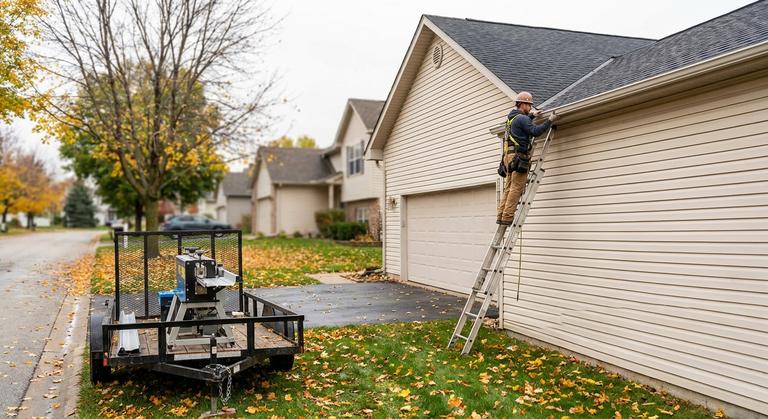
Seamless is not a brand, it is a process. The contractor brings a roll-forming machine on a trailer, feeds a coil of aluminum, and extrudes gutter cut to the exact length of each run on site. The result has no joints except at corners, outlets and end caps, which is precisely where nearly all gutter leaks begin. Baked enamel finish, no rust, decades of service life with maintenance. For most US rental housing this is the benchmark you should be pricing gutter replacement cost against.
Steel, copper and half-round
Galvanized or galvalume steel is stronger and holds up better where snow slides off a roof, though cut edges eventually rust. Copper and half-round profiles are architectural decisions common in historic districts and high-end single-family rentals, and they cost a large multiple of aluminum per foot plus an installer who can solder. Copper also gets stolen off vacant properties, which is worth weighing before you spec it on a unit between tenants.
Gutter guard pricing and whether it pays back
Guards are quoted per linear foot and span a wide range, from less than the gutter to considerably more:
- Foam inserts. Cheapest, drop straight in, and they clog with shingle grit and break down under UV.
- Brush inserts. Inexpensive and simple, but pine needles and seed pods hang up on the bristles.
- Perforated aluminum screens. Mid-range and durable. Good against leaves, less effective against needles and roof grit.
- Micro-mesh. Stainless mesh on an aluminum frame, the premium tier. Keeps almost everything out, but the mesh can blind over from above with pollen and shingle granules and then shed water straight past the trough.
- Reverse-curve helmets. Often sold as lifetime systems and frequently installed under the first shingle course, which can complicate a roofing warranty and any future reroof.
The honest framing: guards reduce cleaning frequency, they do not eliminate inspection. Any product sold on the promise you will never clean again is being sold to you, not specified for you. Before approving guards across a portfolio, price them per building against five years of your actual cleaning spend including access. On a three-story walk-up that needs a lift, guards pay back quickly. On a single-story ranch with no overhanging trees, they may never. Ask in writing whether the warranty transfers on sale and whether it applies to rental or commercial use, because plenty of lifetime warranties quietly do neither. If you want to understand how the margin gets built on the other side of that quote, Construction Arbitrage is a useful read on how contractors price and package work.
Cleaning: how it is priced and how often you need it
Cleaning is priced per visit, driven by footage, story count, roof pitch and access. Put these in the scope so they never show up as a surprise line item:
- Downspout flushing and snaking, which is separate work from scooping the trough
- Debris haul-off versus bagging and leaving it on site
- Blowing out roof valleys while the crew is up there
- Time-stamped photos of each elevation before and after
- Resealing end caps and outlets, and re-securing loose hangers
Frequency should follow the trees, not the calendar. No overhanging canopy means once a year plus a post-storm check. Deciduous trees mean twice, once in late spring after seed and flower drop and once in late fall after the leaves finish. Pines and other evergreens shed year-round and usually need three or more visits. Anywhere with a real freeze, get the troughs empty before the first hard one, because a full gutter that freezes is how ice dams start tearing fascia off.
That photo documentation is worth more than it sounds. It is the difference between telling an owner the gutters are fine and proving it when a tenant reports water in a bedroom ceiling.
Getting bids you can actually compare
- State the measured linear footage yourself, or require the contractor to write theirs on the quote.
- Specify material, gauge, profile, size and color.
- Specify hanger type and spacing.
- Specify downspout size and count, plus where each one discharges. Check local code for required distance from the foundation and whether tying into a storm or sanitary line is allowed.
- Require tear-off and disposal to be included or explicitly excluded, never left ambiguous.
- Agree a fascia repair allowance with a per-foot unit price before anyone starts.
- Split the warranty into labor years and material years, and name who honors each.
- Collect a certificate of insurance naming your entity as additional insured, and confirm workers' comp coverage for anyone working above the first floor.
- Require lien waivers with final payment.
Once the scope is identical across bidders, comparison stops being guesswork. Platforms like PlanaJob let property managers compare quotes from vetted contractors side by side instead of chasing three voicemails for a week. It also helps to keep a second qualified vendor on file, since local trade businesses change hands more often than most PMs expect, as marketplaces like Contractor Exit make clear.
Put gutter cleaning on a recurring schedule
The cheapest gutter replacement cost is the one you defer by five years because the troughs stayed clear. Rather than raising a work order every fall and hoping someone is available, set the visits once and let them repeat: schedule each building on its own cadence based on tree cover, attach the photo requirement to the job, and let the same vetted crew build familiarity with your roofs. You can set up recurring maintenance in a few minutes and see how other portfolio owners structure it on our page for US property managers. More breakdowns like this one live on the PlanaJob blog.
FAQ
Is seamless gutter worth the upgrade over vinyl on a rental?
On almost anything you intend to hold more than a few years, yes. Vinyl's failure mode is its joints, and joints multiply with every ten-foot section. Seamless aluminum removes them everywhere except corners and outlets, which cuts both leak risk and the callbacks that come with it. Vinyl still makes sense on a low-slung single-story unit in a mild climate or as a short-term patch before a planned sale.
How often should gutters be cleaned on a multifamily property?
Twice a year is the working default: once after spring seed drop, once after fall leaf drop. Raise it to three or four visits if pines overhang the roof, and always add a cleaning before the first hard freeze in cold regions. Post-storm checks are cheap insurance after high winds.
Do gutter guards actually reduce gutter replacement cost over time?
Indirectly, and only sometimes. Guards do not make gutters last longer by themselves, but they reduce the standing debris and overflow that rot fascia and pull hangers loose, which is what usually forces early replacement. Run the numbers building by building against your real cleaning spend, and be skeptical of any lifetime claim that does not survive a change of ownership.