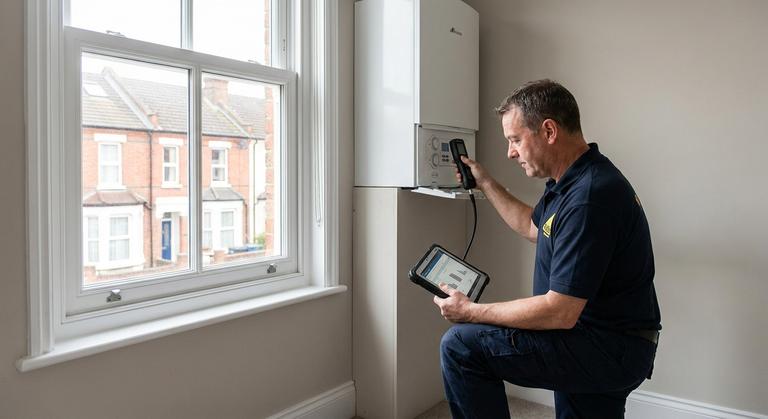
If you manage rented property in the UK, the gas safety certificate is one of the few compliance documents with no wriggle room at all. Formally called the Landlord Gas Safety Record and still widely known by its old name, the CP12, it proves that every gas appliance, fitting and flue in a let property has been checked by a Gas Safe registered engineer within the last 12 months. Miss the deadline and you are not just risking enforcement action - you may also lose the ability to serve valid possession notices, and in the worst case you are gambling with tenants' lives. This guide covers what the rules actually require, what drives the cost, and how to run renewals so nothing slips through.
What a Gas Safety Certificate (CP12) Actually Is
The legal duty comes from the Gas Safety (Installation and Use) Regulations 1998. Anyone letting residential property with gas appliances - landlords, and by extension the agents and property managers acting for them - must arrange an annual gas safety check and keep a record of it.
The name CP12 is a leftover from the CORGI era (it stood for CORGI Proforma 12). CORGI was replaced by the Gas Safe Register in 2009, so the correct modern term is Landlord Gas Safety Record, but engineers, agents and landlords still say CP12 and everyone knows what is meant.
A valid record must be completed by an engineer who is on the Gas Safe Register for the type of work involved. It typically covers:
- Every gas appliance the landlord owns and provides - boilers, gas fires, hobs, water heaters
- The flues serving those appliances, including flues for appliances the landlord does not own if they are connected to the landlord's installation
- Relevant checks on pipework, ventilation and safety devices
- A defect list and any action taken, plus the engineer's name, registration number and signature
One point that catches new property managers out: appliances owned by the tenant (a gas cooker the tenant brought with them, for example) do not have to be checked, but any flue or installation pipework they connect to does. Most engineers will include tenant appliances anyway if asked, and it is usually worth the small extra time on site.
Who is responsible in a managed portfolio?
The duty sits with the landlord, but where a management agreement passes maintenance responsibilities to an agent, the agent can carry the duty in practice. If you are a letting agent or block manager, check what your terms of business actually say - vague wording about "arranging compliance" has caused real disputes when a certificate lapsed. Your management agreement should state clearly who books the check, who holds the record and who chases access.
Rules, Deadlines and Tenant Copies
The core requirements are simple to state and easy to fumble across a large portfolio:
- Annual check. Every let property with gas must have a safety check at intervals of no more than 12 months.
- The MOT-style renewal window. Since a 2018 change to the regulations, you can have the check done in the final two months before the current record expires and keep the original expiry date. So a certificate dated 15 September can be renewed any time from 15 July without shortening the cycle. This is the single most useful scheduling rule in gas compliance - it means you can book early without "losing" weeks of validity.
- Copies to tenants. Existing tenants must receive a copy of the new record within 28 days of the check. New tenants must be given a copy before they move in.
- Record keeping. Keep records for at least two years, or longer if you are using the MOT-style window, where you need to retain the previous two records to demonstrate the unbroken cycle.
In England, failing to give the tenant a gas safety record also has a nasty side effect for landlords using assured shorthold tenancies: it can invalidate a Section 21 notice. Housing law is changing, so take current advice on possession specifics, but the principle stands - poor gas paperwork can cost you far more than the check itself.
What happens if the tenant refuses access?
You cannot force entry, but you are expected to show you took all reasonable steps. In practice that means a written trail: at least three attempts to arrange the check, letters or emails explaining that the check is a legal requirement for the tenant's safety, and records of every response. Keep that trail with the property file. If access is still refused, escalate to the landlord and consider legal advice - do not simply let the date pass silently.
Gas Safety Certificate Costs: What You Are Actually Paying For
Prices vary by region, portfolio size and what is on site, so treat any single national figure with suspicion. What actually moves the price:
- Number of appliances. A flat with one combi boiler is a quicker job than a house with a boiler, gas fire and hob.
- Location and travel. Urban engineers with dense rounds can price keener than someone driving between rural villages.
- Bundling. Many engineers offer a combined gas safety check plus boiler service. Since the engineer is already at the appliance, the marginal cost is low and a serviced boiler is less likely to generate mid-winter emergency call-outs.
- Portfolio rates. If you manage twenty properties in one town, an engineer will usually quote a better per-property rate for a block booking than for one-off visits.
- Failed access charges. Most engineers charge for a wasted visit. Tight tenant communication before the appointment protects your margin.
The cheapest quote is not automatically the right one. What you need is a Gas Safe registered engineer whose registration covers the appliance types in your properties, who issues records promptly in a format you can store and forward, and who flags defects clearly rather than burying them. Platforms like PlanaJob let property managers compare quotes from vetted contractors side by side, which makes it much easier to judge whether a low price comes with the reliability you need. You can see how the process works for agents and portfolio landlords on the PlanaJob property managers page.
If you are an engineer reading this from the other side of the fence, portfolio gas work is some of the most dependable recurring revenue in the trade - communities like Contractor Club are full of discussion on pricing landlord rounds and winning agent contracts.
Running Renewals Across a Portfolio Without Drama
One property is easy. Fifty is where certificates lapse. A workable system looks like this:
- Hold a single compliance register with each property's certificate expiry date, appliance list and engineer details. A spreadsheet works at small scale; software earns its keep beyond that.
- Trigger the renewal at the start of the two-month window, not two weeks before expiry. That leaves room for failed access, engineer holidays and defects that need remedial work.
- Notify tenants early and offer choices. Two proposed dates in the first letter cuts failed visits dramatically.
- Chase the paperwork, not just the visit. The job is not done when the engineer leaves - it is done when the record is in your system and a copy has gone to the tenant within 28 days.
- Log defects as jobs immediately. An "at risk" or "immediately dangerous" classification needs remedial work raised the same day, with the appliance left safe in the meantime.
Raising the check as a proper job with a clear scope - address, appliance count, access notes, deadline - gets you better quotes and fewer surprises. That is exactly the workflow PlanaJob is built for: post the job, receive quotes from Gas Safe registered engineers, book, and keep the record against the property. If you are still juggling this by phone and inbox, create a free PlanaJob account and book your next round of gas safety checks through the platform instead.
For more on staying ahead of EICRs, EPCs and the rest of the compliance calendar, the PlanaJob blog covers each requirement in the same practical detail.
FAQ
How long is a gas safety certificate valid?
Twelve months from the date of the check. If you use the MOT-style renewal window and have the new check done within two months of the expiry date, the new record keeps the original anniversary date, so you never lose validity by booking early.
Do I need a gas safety certificate if the property has no gas appliances?
If the property has no gas supply at all, no certificate is needed. If there is a capped supply but no appliances, current guidance is worth checking for your exact situation, and many managers arrange a check anyway for the avoidance of doubt. Any live installation pipework remains the landlord's responsibility.
Can any plumber issue a CP12?
No. Only an engineer on the Gas Safe Register can legally carry out the check and issue the Landlord Gas Safety Record, and their registration must cover the specific appliance types being checked. Always verify the engineer's Gas Safe ID number - a vetted marketplace does this checking for you before the engineer ever quotes.