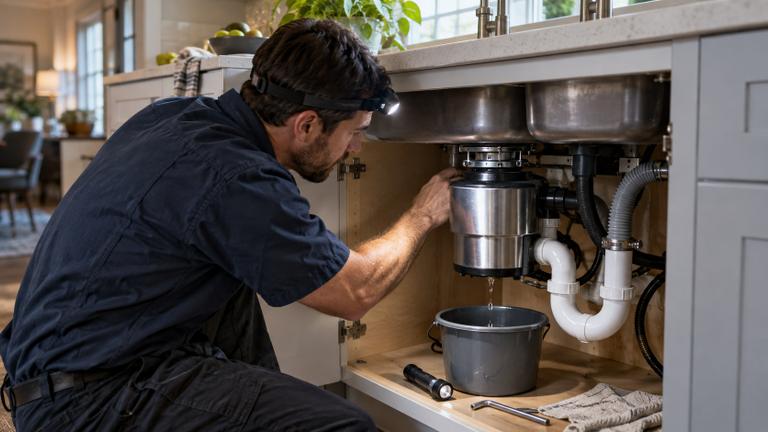
A humming sink at 7 p.m. is one of the most common after-hours maintenance calls in residential property management, and it is also one of the most over-serviced. Half the time the unit is not broken at all, it is jammed, tripped, or clogged somewhere else entirely. The rest of the time, the garbage disposal repair or replace question has a clear answer you can reach in five minutes on the phone, before you dispatch anybody. Here is what tenants actually break, what is worth fixing, what means the unit is finished, and how to spec a replacement that survives the next three tenancies.
What Tenants Actually Break
A disposal is a small motor spinning a plate with blunt impellers against a shredder ring. It is a grinder, not a trash can, and nearly every real failure traces back to being used as the latter. The repeat offenders:
- Fibrous scraps - celery, corn husks, artichoke leaves, onion skins. Strings wrap the impellers and bind the flywheel instead of shredding.
- Starch - potato peels, rice, pasta. It turns to paste, coats the chamber, and sets up in the trap arm downstream.
- Grease and oil - liquid going in, solid sitting in the branch line ten feet away. This is behind most of the calls where the disposal is blamed and the drain is the actual problem.
- Hard non-food items - bottle caps, twist ties, produce stickers, bones, and the classic spoon that slid off a plate into an open continuous-feed drain.
- Hot water while grinding - it melts fat so it flows past the unit and re-solidifies in cooler pipe. Cold water only, running a few seconds after the noise stops.
What only looks broken
Rule out the four non-failures before you send anyone. A dead-silent unit is usually a tripped reset button, a tripped GFCI, or a breaker. A humming unit is jammed, not burned out, because the motor is energized and stalled. A unit that runs fine but drains slowly has a clog in the P-trap or branch line, which is a drain job. And on a recent swap, a dishwasher that suddenly will not drain usually means somebody left the dishwasher inlet knockout plug in place.
The Five-Minute Phone Triage
Walk the tenant through this while you have them on the line. It closes a real share of calls with no truck roll.
- Kill the power. Wall switch off, and for anything past pressing buttons, the breaker off too. Nobody puts a hand in the chamber, ever, for any reason.
- Listen. Silence means no power. A hum means jammed. A rattle with nothing visible inside means hardware is loose or broken internally.
- Press the reset. Small red button on the underside. If it pops again within a minute of running, stop and schedule service.
- Check the GFCI and breaker. Under-sink outlets often share a circuit with the counter receptacles.
- Free the jam. Most units ship with a 1/4-inch hex wrench that fits a socket in the center of the base. Work it back and forth until it turns freely, fish out the debris with tongs, restore power, run cold water, test.
- Find the water. Dry paper towel under the unit, run it, check the towel. Where it gets wet decides the next section.
Garbage Disposal Repair or Replace: The Decision Rules
Once you know the symptom, the garbage disposal repair or replace call is mostly mechanical.
Worth fixing
- Leak at the sink flange, meaning water at the top rim. The putty seal failed or the mount loosened. Re-seat it. The unit itself is fine.
- Leak at the dishwasher inlet or discharge tube. A hose clamp or a new gasket, fifteen minutes.
- A jam you cannot free with the wrench. Sometimes an object is wedged against the shredder ring and the unit has to come down. Still a repair.
- Torn splash guard. A replaceable part on most models, and the thing that keeps silverware out in the first place.
- No power at the unit. Switch, outlet, or connection. That is electrical work, not a dead disposal.
Time to replace
- Water from the bottom of the housing or a body seam. The shell has corroded through. There is no gasket to fix and no repair worth doing.
- It still hums after the jam is cleared. Seized bearings or a failed start winding.
- Repeated reset trips under a normal load. The motor is pulling too much current and is on its way out.
- Rattling or heavy vibration with an empty, unjammed chamber. Broken impeller or a chewed shredder ring.
- Age plus grade. The builder-grade 1/3 HP units in most rentals are consumables. Once one is pushing a decade and acting up, buy new rather than rebuild.
The economics behind every garbage disposal repair or replace decision come down to one line: if the quoted repair approaches the installed price of a new mid-grade unit, replace. You are not only buying the fix, you are buying out the risk of a repeat call in the same quarter. Trades run this same replacement-cost math on their own equipment constantly, and Construction Arbitrage is a good read if you want the business-side version of that thinking.
Spec the Replacement for a Rental, Not a Showroom
The garbage disposal repair or replace call you avoid in two years is decided by what you install today. Anything that cuts future callbacks is worth the upcharge:
- Go up a tier in horsepower. Make 1/2 HP your floor in a rental and 3/4 HP in units with families or heavy cooking. More torque means fewer jams, and fewer jams means fewer after-hours calls.
- Stainless grind components over galvanized. Corrosion is what eventually punches through the housing.
- Match the existing mount. Mounting assemblies are not universal across brands, so a like-for-like swap lets the tech reuse the mount and the drain geometry and cuts labor time.
- Consider batch feed anywhere you have already fished out silverware. It only runs with the stopper seated, so nothing falls in while it is spinning.
- Check the drainage system and local rules. Properties on septic need a septic-rated unit or none at all, and a small number of jurisdictions restrict disposals in certain buildings. Verify before you spec.
Log the make, model, and install date in the unit record while the tech is still on site. That one habit turns the next call into a two-minute decision.
Cut the Call Volume at Turnover
Most garbage disposal repair or replace calls start with something nobody ever explained to the tenant.
- Put a short do-not-grind list in the move-in packet and stick a version of it inside the cabinet door under the sink.
- Test the disposal at every move-in and move-out: thirty seconds of cold water, listen, dry-check underneath.
- Photograph whatever comes out of the chamber. If you intend to charge for damage, the photo and the work order are your case, and what you can actually deduct depends on your lease language and your state's security deposit rules.
Who Should Take the Call
A garbage disposal repair or replace job is handyman work. Swapping a unit, re-seating a flange, clamping a dishwasher hose - that is an hour with a bucket and a hex wrench, and paying a licensed plumber's call-out rate for it is money you never get back. Save the plumber for what is behind the wall.
That is the gap PlanaJob handymen fill: disposal repairs and swaps on flat-rate pricing, so you know the number before the van leaves, and the platform lets you compare quotes from vetted contractors side by side instead of calling around. You can create an account or see how PlanaJob works for property managers. Keep two or three names on the bench either way, because trade businesses change hands more often than most owners expect, which is why marketplaces like ContractorExit exist. More maintenance playbooks are on the PlanaJob blog.
FAQ
Is a broken garbage disposal an emergency repair?
Usually not. A disposal that will not run is an inconvenience, since the sink still drains and the kitchen still works. It becomes urgent when it is leaking into the cabinet, when the sink will not drain at all, or when water is reaching the unit below. Those go same-day. A dead motor can wait for the next business day, as long as you actually schedule it and tell the tenant when.
Can I charge a tenant for garbage disposal damage?
Sometimes. A unit that wore out is normal wear and tear and it is on you. A unit with a bottle cap or a spoon in it is tenant damage, and in most states you can charge for it if your lease covers it and you document the cause. Keep the work order, the tech's notes, and a photo of the debris. Deposit deduction rules vary by state, so confirm yours before withholding anything.
How long should a garbage disposal last in a rental?
A builder-grade unit in a busy rental often does not make a decade, and less with rough use. A better-grade stainless unit with a briefed tenant will go noticeably longer. Track install dates by unit, and when several units in one building hit the same age and start failing, batch the replacements into a single visit rather than answering them one at a time.