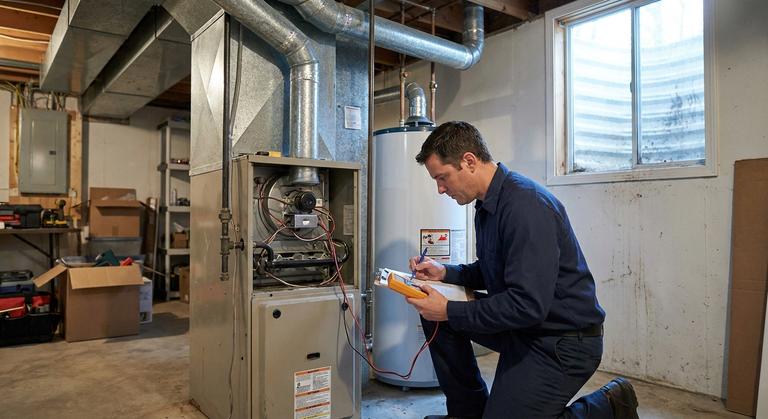
Every fall the same call lands: no heat, a cold tenant, and someone needs a number before they will approve the work. Furnace repair cost is one of the hardest line items to forecast across a rental portfolio, because two identical units in the same building can fail in completely different ways. One needs a sensor cleaned and forty minutes of labor. The other needs a sealed combustion part that has to be ordered, which means a second trip, space heaters in the meantime, and a tenant who is done being patient. Knowing how a furnace invoice is actually assembled is what separates managers who approve work confidently from the ones who get surprised in January.
What Actually Drives Furnace Repair Cost
Almost every furnace invoice in the US is built from the same three inputs, plus a timing multiplier.
The diagnostic or trip fee
Most HVAC companies charge to show up and diagnose. The question that matters is not the size of that fee but whether it is credited toward the repair if you approve the work, and whether it is billed per visit or per unit. If you own a fourplex with four furnaces and one tech makes one trip, you should not be paying four trip charges. Settle that in writing before the season starts.
Parts, markup, and warranty
Contractors mark up parts, and that is normal: it covers stocking, warranty handling, and the return trip if the part fails early. What is not normal is paying full price for a part that is already covered. Most furnaces carry a manufacturer parts warranty for the first several years, and heat exchangers usually carry a far longer one. That warranty typically covers the part only, not the labor to install it. So ask two questions on every quote: is this part still covered by the manufacturer, and is it OEM or aftermarket?
Labor, and when you call
Most residential HVAC shops price from a flat rate book rather than by the hour, so the labor figure reflects a standard time for that repair, not what the tech actually spent. That works in your favor on hard jobs and against you on easy ones. Timing moves the number most: evenings, weekends, holidays, and the first hard freeze all carry premiums, and during a cold snap you are competing with every other landlord in the metro for the same trucks.
Common Furnace Repairs, Roughly Ordered by Cost
Actual furnace repair cost swings wildly by market, so treat this as a ranking rather than a price list. Pull two years of your own invoices and build a local price book from them; after that, an outlier quote is obvious in seconds.
- Flame sensor - cleaning or replacement. Usually the cheapest real fix, and a classic cause of a furnace that lights then shuts down seconds later.
- Hot surface ignitor - a brittle consumable on most modern furnaces and one of the most common no-heat causes.
- Thermocouple - only on older standing pilot units, similarly inexpensive.
- Capacitor - cheap part, fast swap, often why a blower hums but will not spin.
- Condensate drain or pump - on high-efficiency condensing furnaces a clogged drain trips a safety switch and kills the heat. Cheap to clear, easy to prevent.
- Pressure, limit, or rollout switch - moderate part cost, but the real work is finding why the safety tripped.
- Draft inducer motor - meaningful part cost plus an hour or two of labor.
- Blower motor - the range here is enormous. A standard PSC motor is a mid-range repair; a variable speed ECM motor with its module can approach the cost of a budget furnace.
- Gas valve - a significant part, and the tech should be verifying gas pressure rather than just swapping it.
- Control board - expensive, frequently misdiagnosed, and sometimes killed by a voltage or grounding fault that will take out the new one too.
- Heat exchanger - top of the list. On most units the labor to get it in and out means you are really choosing between this repair and a new furnace.
The repairs that quietly cost the most
Repeat visits are where furnace repair cost gets out of hand, not big parts. An ignitor that fails twice in one season usually means something upstream is wrong: a restricted flue, a filter nobody changed, a return that is choked off. The furnace overheats and cycles on the limit until the part gives up again. If you are buying the same part twice, stop approving parts and start paying for a real diagnosis, including combustion analysis and a static pressure reading. That one visit is cheaper than a third ignitor.
Repair or Replace on a Rental
The math differs from an owner-occupied home. You are not buying comfort, you are buying reliability and fewer 9pm phone calls. A workable decision line:
- Cracked heat exchanger: replace the furnace in nearly every case. The gas utility can red tag and shut the unit down, and operating it risks carbon monoxide exposure for your tenant. This is not the place to get creative.
- Repair approaching half the cost of replacement on a unit past its expected service life: replace. You will spend the difference on emergency calls anyway.
- Two or more no-heat calls in a single heating season: replace, and schedule it for spring when you are not paying emergency rates.
- Under ten years old with one failure: repair. These units are worth keeping and the parts warranty may still be live.
Keep the habitability clock in mind. In most US jurisdictions a no-heat rental in winter is not a routine work order, and many cities set minimum indoor temperature requirements during heating season with short response windows. That is exactly why a planned April replacement beats a forced January one.
How to Read a Furnace Quote Before You Approve It
Insist on these line items. A contractor who will not itemize is a contractor whose furnace repair cost you cannot compare to anyone else's.
- Equipment make, model, and serial number, so you can check warranty status yourself
- The symptom, the diagnosis, and how it was verified
- Part number, plus OEM or aftermarket
- Labor, and whether the diagnostic fee is credited back
- Warranty terms on both the part and the labor
- Permit and disposal, if your jurisdiction requires them on a replacement
- Whether a second trip is needed and whether it carries another charge
Getting three itemized quotes used to mean three phone calls and two days of chasing. Platforms like PlanaJob let property managers post the job once and compare quotes from vetted contractors side by side, which takes most of the guesswork out of judging whether a number is fair. Our tools for US property managers are built around that comparison step.
Cutting Next Winter's Furnace Repair Cost
- Book fall tune-ups in September, before the first cold call. Off-season rates are better and techs have time to actually inspect.
- Standardize equipment across the portfolio where you can. One brand means predictable parts and a tech who already knows the unit.
- Run a filter program instead of relying on tenants. Mailed filters with a reminder cost less than one blower motor.
- Test CO alarms at every turnover. Cheap insurance, and required in many states.
- Negotiate after-hours terms in writing before the season, not at 9pm on a Sunday.
- Track spend per furnace per year. Two repairs in eighteen months is a replacement decision you have not made yet.
It also helps to understand the business on the other side of the invoice. Flat rate pricing, labor scarcity, and how trade firms set margins are covered well at Construction Arbitrage. And if your longtime HVAC contractor suddenly repriced everything, an ownership change may be why: the trade services acquisition market tracked at Contractor Exit has been busy, and new owners almost always bring new price books.
When you post that winter no-heat job, PlanaJob's upfront pricing means no surprise line items on the invoice. You see the quote before the truck rolls, and the number you approved is the number you pay. You can create an account in a few minutes, or read more cost guides on the PlanaJob blog before heating season starts.
FAQ
Is it worth repairing a 15-year-old furnace?
Only if the repair is minor and the unit has been reliable. At that age the parts warranty is gone and remaining service life is short, so a major repair such as a blower motor, gas valve, control board, or heat exchanger is money spent on equipment you will replace within a few seasons. A flame sensor or ignitor is different: make that fix and start budgeting the replacement for spring.
Should I pay for an annual furnace tune-up on a rental?
Yes on gas equipment. A genuine tune-up includes combustion testing and a heat exchanger inspection, which is the safety check that matters most in a tenanted property. It also builds a documented maintenance record, which helps with warranty claims and if habitability is ever disputed. Skip it and you simply move that spend into emergency calls.
Does a home warranty cover furnace repairs on a rental?
Sometimes, but read the terms closely. Many policies exclude equipment without documented maintenance, cap payouts well below real replacement cost, and dispatch whichever contractor is available rather than one you have vetted. For a single scattered-site rental it can pencil out. Across a portfolio, most managers find negotiated rates with their own contractors are faster and cheaper.