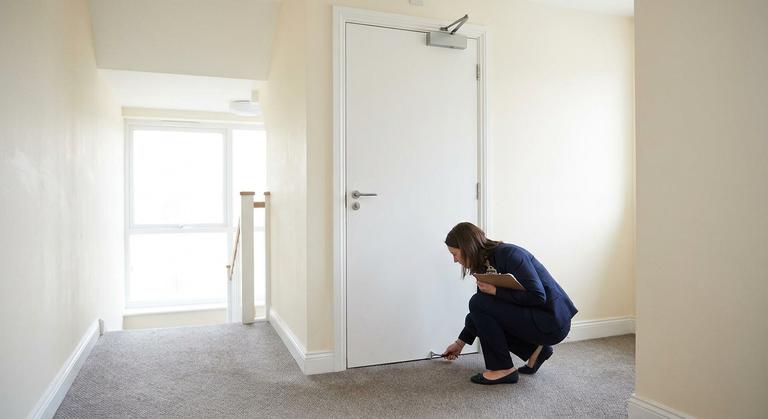
Fire doors are the part of a block's fire strategy that fails quietly. A propped-open corridor door, a disconnected self-closer, a flat entrance door swapped by a leaseholder for something ornamental - each one punches a hole in the compartmentation the whole building depends on. Fire door regulations in flats tightened significantly after the Grenfell Tower Inquiry, and block managers in England now carry explicit, scheduled legal duties to check doors, record findings and put defects right. This guide sets out what the rules require, who is responsible for which doors, and what a proper check actually involves.
What Fire Door Regulations in Flats Actually Require
The foundation is the Regulatory Reform (Fire Safety) Order 2005, which places duties on the 'responsible person' - typically the freeholder, the resident management company, or the managing agent acting for them - to manage fire risk in the common parts. The Fire Safety Act 2021 clarified that this responsibility extends to flat entrance doors and the building's structure, not just corridors and stairwells. The Fire Safety (England) Regulations 2022 then added specific, scheduled fire door duties.
One caveat before the detail: the 2022 Regulations apply in England only. Scotland runs its own fire safety regime and Welsh requirements differ, so if your portfolio crosses borders, check the rules that apply where each block actually stands.
Buildings over 11 metres
If your building is over 11 metres tall - and it is worth having the height confirmed properly rather than estimating from storey counts - the 2022 Regulations require the responsible person to:
- Check fire doors in communal areas at least every three months.
- Check flat entrance doors at least every twelve months, on a 'best endeavours' basis.
'Best endeavours' matters. You cannot force entry to a flat, but you must be able to evidence that you tried: letters sent, doors knocked, appointments rebooked. A single unanswered letter a year will not look like best endeavours if it is ever tested.
All multi-occupied residential buildings
Whatever the height, if a building contains two or more sets of domestic premises, residents must be given information about fire doors: keep them shut when not in use, do not tamper with self-closing devices, and report faults straight away. This part of the fire door regulations for flats applies to low-rise conversions just as much as tower blocks. Reissue the information periodically and to every new resident, and keep a record that you did.
Who Is Responsible for Which Doors
Fire door regulations in flats draw a practical line between two categories of door.
Communal fire doors - those on corridors, stairwells, riser cupboards, bin stores and plant rooms - sit squarely with the responsible person. You control them, you check them, you fix them.
Flat entrance doors are messier. In most leases the front door is demised to the leaseholder, which means the leaseholder owns it and may be liable for its replacement. But ownership does not shift the responsible person's duty to check the door and to act if it is inadequate. If a leaseholder has fitted a non-compliant door, you cannot simply note it and move on: notify them in writing, point to the lease and the fire risk assessment, and escalate if nothing changes. Read the lease before assuming who pays - service charge recoverability for door replacement varies from block to block.
What a Fire Door Check Actually Involves
A quarterly communal check is not a glance down the corridor. Work through each door methodically:
- Certification - look for a label or coloured plug on the top edge or hinge side of the leaf. No marking does not automatically mean the door fails, but it should be flagged for assessment.
- Gaps - the gap between leaf and frame should be small and consistent; the widely used industry rule of thumb is around 2-4mm at the sides and top. Daylight visible around the door is a defect.
- Seals - intumescent strips and smoke seals should be continuous, undamaged and not painted over.
- Self-closer - the door should close fully onto the latch from any opening angle, including from just a few centimetres ajar. A door that stops on the frame or needs a shove is a fail.
- Hinges - normally three, firmly fixed, with no missing or damaged screws and no oil leaking from the closer.
- Glazing - fire-rated glass intact, beading secure, no evidence of replacement with standard glass.
- Leaf and frame condition - no holes, deep gouges, warping or unauthorised alterations such as cat flaps or additional letterplates.
- Wedges and hold-opens - doors held open are only acceptable on devices that release when the alarm sounds. A fire extinguisher propping a stairwell door open remains one of the most common findings there is.
Photograph defects as you go. A dated photo log is worth far more than a ticked box if the fire and rescue authority ever asks how you discharged your duties.
Recording Defects and Getting Them Fixed
Checks only count if they lead somewhere - and if you can prove they happened. Keep a door-by-door register: location, date, findings, action raised, action closed. Treat it as part of the building's golden thread of safety information rather than an internal memo.
Be proportionate on remediation. Many defects - a slow closer, a missing smoke seal, loose hinge screws - are adjustments or minor repairs, not replacements. But repairs must not compromise the doorset's fire rating, which is why fire door regulations for flats push managers towards competent, ideally third-party certificated installers rather than general handymen. A perfectly good FD30 door refitted badly can perform like no fire door at all.
Finding Competent Contractors for Fire Door Work
Fire door installation and maintenance is specialist joinery with a compliance overlay. When you tender the work, ask:
- Are you third-party certificated for fire door installation or maintenance, for example under schemes such as FIRAS or BM TRADA Q-Mark?
- Will you supply certification and a door-by-door report on completion?
- Are replacement doorsets supplied with test evidence for the exact configuration being fitted?
Serious fire door contractors tend to invest in their trade - many are active in communities like Contractor Club, where UK trades share standards and workmanship expectations. On the procurement side, platforms like PlanaJob let block managers compare quotes from vetted contractors against a like-for-like scope, which matters when the cheapest quote may quietly be for a door blank rather than a certificated doorset. There is more on how it works for block and estate managers at planajob.com/uk/property-managers.
Raise Your Fire Door Jobs on PlanaJob
The rhythm of fire door regulations in flats - quarterly communal checks, annual flat entrance checks, remedial works in between - suits a job-by-job audit trail. Raising each inspection round and each repair as a clearly scoped job gives you dated evidence of what was found, who was instructed and when the defect was closed out. You can create a free account and raise your first fire safety job in minutes, and there are more compliance guides for managers on the PlanaJob blog.
Frequently Asked Questions
How often must fire doors in flats be checked?
Under the fire door regulations for flats in England, buildings over 11 metres need communal fire doors checked at least quarterly and flat entrance doors checked at least annually on a best endeavours basis. In lower-rise blocks there is no prescribed frequency, but the fire risk assessment still requires doors to be maintained, so most managers run a regular cycle anyway - often mirroring the taller-building regime.
Who pays to replace a defective flat entrance door?
It depends on the lease. Entrance doors are usually demised to the leaseholder, but some leases place doors within the landlord's repairing covenant or allow recovery through the service charge. Establish the lease position before instructing work, and take advice if it is ambiguous - but do not let a cost dispute delay dealing with a door the fire risk assessment says is inadequate.
What if a resident refuses access for a fire door check?
You cannot force entry. Record every attempt - letters, visits, rebooked appointments - so you can demonstrate best endeavours. If refusals persist and you have genuine concerns about the door, raise it with your fire risk assessor and consider the escalation routes available under the lease and, in serious cases, through the fire and rescue authority.