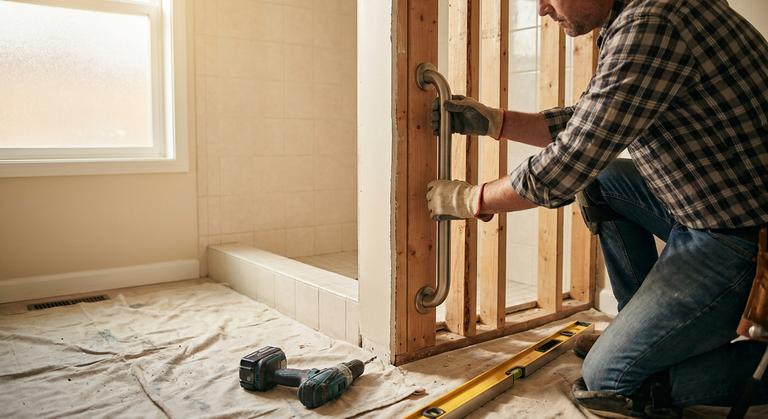
A tenant emails on a Friday afternoon asking to install grab bars in the tub surround and a ramp at the back door. Is that a repair request, a lease violation, or a federal civil rights obligation? It is the third one. Under the Fair Housing Act, a request for reasonable modifications to a rental property is protected, and how you respond in the first week matters more than almost anything you do later. This guide covers what you have to allow, who pays, what documentation you can legally ask for, and how to get accessibility work built to a standard that will not come back on you.
Modification or Accommodation: The Line That Decides Who Pays
Fair housing law gives tenants with disabilities two distinct rights, and property managers mix them up constantly. Getting the category right tells you who writes the check.
Reasonable modifications are physical changes
A reasonable modification is a structural or physical change to the unit, the common areas, or the exterior: grab bars, a ramp, a widened doorway, lever handles, a roll-in shower, a flashing smoke alarm. In private, unassisted housing, the tenant generally pays. Your job is to permit the work, not to fund it.
Reasonable accommodations are changes to rules
A reasonable accommodation is a change to a rule, policy, practice, or service: waiving a no-pets policy for an assistance animal, assigning a parking space near the entrance, allowing a live-in aide in a one-bedroom, or shifting the rent due date to line up with a benefits payment. Those cost you administrative effort rather than construction dollars, and you absorb that cost unless it is an undue financial and administrative burden or a fundamental alteration of your operations.
One request often contains both. "I need a designated space next to the new ramp" is an accommodation (the space) plus a modification (the ramp). Split them in your written response so the payment question stays clean.
What Counts as Reasonable Modifications on a Rental Property
A modification is reasonable when it relates to the tenant's disability and is necessary for full use and enjoyment of the housing. That is a low bar, deliberately. Requests you should expect to approve:
- Grab bars, plus the blocking needed behind tile or drywall to carry them
- Threshold ramps at entry doors, and full exterior ramps with code-compliant landings
- Doorway widening, offset hinges, and removing a swing-in bathroom door in a tight plan
- Lever handles, rocker switches, and lowered thermostats or peepholes
- Curbless or low-threshold showers, handheld shower heads, comfort-height toilets
- Visual and vibrating alerts for doorbells, smoke alarms, and intercoms
- Stair lifts and vertical platform lifts where the structure allows
- Common area work: a curb cut in the lot, a lever on the mail room door, a ramp at the leasing office
You can deny a request that is genuinely unreasonable, but the category is narrow. Removing a load-bearing wall, or an install that violates code or a real safety requirement, is a legitimate conversation. "It will look odd from the street" is not. If you deny, say why in writing and offer to discuss an alternative that meets the same need.
Who Pays, and When That Flips
In conventional private rentals, the tenant funds reasonable modifications. Three situations change the answer:
- Federally assisted housing. Under Section 504 of the Rehabilitation Act, providers receiving federal financial assistance generally pay for structural modifications unless doing so is an undue burden or fundamental alteration.
- Covered multifamily built for first occupancy after March 13, 1991. The Fair Housing Act's design and construction requirements applied from that date to buildings with four or more units. If the feature being requested should have been there from the start (an accessible route, usable doors, reinforced bathroom walls), fixing it is your cost, not a tenant-funded modification.
- State and local law. Several states and cities go past the federal floor, including rules that make owners of larger buildings pay for modifications outright. Check your state civil rights agency before sending a "tenant pays" letter.
Separately, your leasing office is likely a place of public accommodation under Title III of the ADA. That obligation exists whether or not any tenant asks.
A Request Workflow That Holds Up
Delay is the most common way property managers lose these cases. An unanswered request reads as a denial. Build a process:
- Accept requests in any form. Verbal, email, or text, from the tenant or someone acting for them. You can offer a form; you cannot require one.
- Date stamp and log it. One log across every property, recording the request, the response, and each touchpoint.
- Acknowledge within a few business days, even if the message is only "we are reviewing this, here is who owns it."
- Run the interactive process. If the proposed method is a problem, propose an alternative that meets the same need instead of issuing a flat no.
- Put the decision in writing. Approvals state scope, contractor requirements, who pulls permits, and any restoration terms. Denials state the specific reason.
- Close the loop after the work. Inspect, file the permit and the certificate of insurance, and note the condition in the unit file.
Tenants have a year to file a complaint with HUD, and state agencies and private suits stretch the window further. Your log is the defense.
Verification: What You Can Ask and What You Cannot
If the disability and the need are obvious, such as a tenant who uses a wheelchair asking for a ramp, ask for nothing. If they are not obvious, you may request reliable third-party verification that the person has a disability and that the request is connected to it. A letter from a physician, therapist, social worker, or peer support group is sufficient.
You cannot ask for a diagnosis, medical records, the severity of the condition, or how the person became disabled. Do not request verification twice, do not charge a processing fee, and do not raise the security deposit because a request was made.
Restoration, Escrow, and Move-Out
Reasonable modifications made to a rental property do not automatically have to be undone. You can require the tenant to restore the interior at move-out only where restoration is reasonable, and the test is whether the change would interfere with the next tenant's use and enjoyment.
- Usually restorable: a stair lift, a wall-mounted lift track, a lowered countertop that no longer works for a standing user
- Usually not restorable: widened doorways, lowered thresholds, lever handles, a rear-yard ramp the next tenant will barely register
Grab bars sit in the middle. Pulling the bar is trivial; patching, priming, and re-tiling is not, so name who handles that up front. Where restoration cost is real, you can negotiate payments into an interest-bearing escrow account, but the figure must track the actual cost rather than functioning as a second deposit. You can also require workmanlike installation, pulled permits, and a licensed, insured contractor.
Getting the Work Built to Standard
Approving the request is the legal part. Building it correctly decides whether a complaint lands eighteen months later. Even where a private rental is not itself a public accommodation, ADA and ICC A117.1 dimensions are the right build specification, because that is what an inspector, an occupational therapist, and an expert witness will all measure against.
- Ramp slope and landings. The ADA standard allows no more than one inch of rise per twelve inches of run, with level landings at the top, the bottom, and every change of direction. A ramp squeezed onto a short run to save concrete is worse than none.
- Grab bar blocking. A bar in drywall anchors is a liability. The referenced standards expect the assembly to carry a substantial load, which means solid blocking or a backing plate installed before the tile goes on.
- Permits and zoning. Exterior ramps often trigger a building permit and sometimes setback or historic district review. Confirm before the crew shows up, not after a stop-work notice.
Scope these jobs in writing with dimensions, finishes, and the restoration clause rather than a one-line "install grab bars." Vague scopes are where accessibility retrofits blow their budget, and the scoping discipline covered on Construction Arbitrage applies as much to the PM writing the spec as to the contractor bidding it.
Finding trades who have actually done this work is the real bottleneck. A remodeler who has never set a curbless pan will learn on your unit. Ask for two recent accessibility jobs, a certificate of insurance, and confirmation of who pulls the permit. Platforms like PlanaJob let property managers put a scoped job in front of vetted contractors and compare quotes side by side instead of chasing three callbacks. You can source grab bar, ramp, and accessibility installers by creating an account, see how it fits a managed portfolio on our property managers page, or read more compliance guides on the PlanaJob blog.
FAQ
Can I deny a modification request because of how it will look?
No. Aesthetics are not a lawful basis for denial under the Fair Housing Act. You can discuss placement, materials, and finishes, and you can insist on a professional installation. You cannot refuse a ramp or grab bar over curb appeal. If your objection is structural, code-based, or a genuine safety issue, document it and propose an alternative that meets the same need.
Does the tenant have to use my contractor?
You can require licensed, insured, permitted, workmanlike work. You generally cannot mandate one specific company, since that lets you set the price on work the tenant is funding. A practical middle ground: offer a short list of installers you have vetted, accept the tenant's own contractor if they clear the same licensing and insurance bar, and reserve the right to inspect.
What if the tenant is already behind on rent?
Run the two matters on separate tracks. A pending fair housing request does not pause a legitimate nonpayment action, but moving against a tenant immediately after they ask for a modification looks like retaliation, which is separately prohibited. Answer the request on its merits, in writing, on your normal timeline, and keep the payment file documented independently.