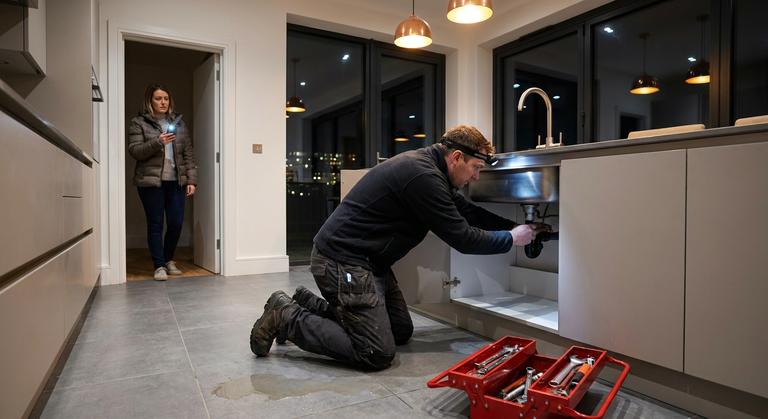
The phone rings at 11:40 p.m. A tenant in 4B has water coming through the ceiling from the unit above, and nobody upstairs is answering. Within the hour you will have authorized a plumber you may never have used, at a rate you did not negotiate, for work you cannot inspect until morning. That is the moment emergency plumber cost gets away from property managers - not because plumbers are dishonest, but because every lever you normally use to control maintenance spend is gone. This guide breaks down what you are paying for after hours, which calls genuinely need a night visit, and the operational habits that keep most "emergencies" off the overtime clock.
What Drives Emergency Plumber Cost After Hours
Daytime plumbing pricing is fairly transparent: an hourly or flat rate per task, plus parts. After-hours pricing stacks several extra charges on top, and knowing each one by name makes it much easier to push back.
The after-hours premium
Most plumbing companies define a standard weekday service window and charge a premium outside it, either as a higher hourly rate, a flat surcharge, or both. Nights, weekends, and federal holidays are usually tiered separately, with holidays at the top. Ask for the written rate card. A company that can't produce one is telling you the number gets decided on the spot.
Trip or dispatch fees
Nearly every emergency call carries a trip fee, sometimes labeled a dispatch, service, or diagnostic fee. It covers getting a technician out of bed and to your property, and it's typically billed whether or not any repair happens. Some companies credit it against the repair if you approve the work; many don't. Clarify this before the truck rolls.
Minimum billable hours
Emergency calls often come with a minimum charge, usually expressed as a set number of billable hours. A fifteen-minute angle stop replacement can be invoiced as if it took far longer. This is one of the biggest hidden drivers of emergency plumber cost, and one of the easiest to negotiate down with a vendor who values your daytime volume.
Parts and markup at 2 a.m.
The supply house is closed. The plumber is working from whatever is on the truck, which means limited selection, higher markup, and sometimes a temporary fix followed by a second visit and a second invoice for the permanent part. Ask whether the job can be stabilized now and finished at daytime rates. A technician standing in an inch of water may recommend a new water heater or a full set of supply lines when a cap and a morning reassessment would do - you don't have to approve anything beyond stopping the damage tonight.
What Actually Counts as a Plumbing Emergency
A large share of emergency plumber cost comes from calls that never needed to be after-hours calls. The test is simple: is the property being actively damaged, or is a tenant without an essential service, and will either get materially worse by morning?
Dispatch tonight:
- Active leak that can't be isolated at a fixture shutoff or the main
- Sewage backing up into a tub, shower, or floor drain
- Burst or frozen pipe during a hard freeze
- Water heater leaking onto a finished floor or near electrical
- No water to an entire building, especially with elderly or medically vulnerable residents
- Gas odor near a water heater (call the gas utility first, then the plumber)
First daytime slot:
- Single clogged toilet in a unit with a second bathroom
- Dripping faucet or running toilet
- Slow drain or jammed disposal
- No hot water but no leak (uncomfortable, not destructive)
- Low pressure at one fixture
Most states treat loss of running water, sewage backups, and extended loss of hot water as habitability issues that require a prompt response, so "can wait" never means "ignore." It means booking the first daytime appointment and telling the tenant exactly when to expect someone.
How to Avoid Paying Emergency Rates
The goal isn't to never call a plumber at night. It's to make sure that when you do, the price was set in daylight.
1. Negotiate an after-hours rate schedule before you need it
In a quiet month, ask your top two or three plumbing vendors for a written after-hours schedule: premium hours, trip fee, minimum billable time, and whether the trip fee credits against work. Property managers with steady volume have real leverage here, because a vendor would rather give you a fair overtime rate than lose your daytime work. Put it in the vendor agreement and review it annually.
2. Keep a two-deep bench
One emergency vendor is no emergency vendor. If they're already on a call when your pipe bursts, you're back to cold-calling whoever answers. Keep at least two plumbers on agreed rates, and know where the third call goes. Platforms like PlanaJob let you compare quotes from vetted contractors ahead of time, so that third call isn't a stranger; the property manager tools are built around exactly this kind of pre-approved vendor list.
3. Teach tenants to stop the water
The cheapest emergency plumber is the one you don't need until 8 a.m. At move-in, show every tenant the fixture shutoffs under sinks and behind toilets and where the unit or building main is, and leave a laminated card inside the kitchen cabinet. A tenant who can close a valve turns a midnight flood into a morning work order.
4. Fix the usual suspects on a schedule
A short list of components causes a disproportionate share of after-hours calls:
- Braided supply lines and angle stops under sinks and toilets (replace on rotation, not on failure)
- Water heaters past their expected service life, especially in upstairs closets
- Rubber washing machine hoses (swap for braided stainless)
- Exposed pipes in unheated spaces before the first freeze
- Sump pumps and check valves before the wet season
- Sewer mains with known root intrusion (camera and jet them before the backup)
Building these into the preventive maintenance calendar is the single most effective way to lower emergency plumber cost across a year.
5. Triage with a script
Whoever answers your after-hours line should work from three questions: Is water actively flowing, and can you find and close a shutoff? Is there sewage? Is anyone without water entirely? Those sort most calls into "dispatch now" or "first slot tomorrow," and they give the plumber a clearer picture before leaving the house, which shortens the visit.
When You Can't Avoid the Call
Some nights the water wins. When you have to dispatch, control what you still can. Confirm the rate on the phone before the truck leaves and ask the dispatcher to note it on the work order. Ask for stabilization only - stop the leak, cap the line, clear the backup - and push permanent repairs to daytime rates unless the plumber can show you why waiting costs more. Have the tenant photograph the damage and the work before and after; those photos matter for the insurance claim, for any tenant chargeback, and for the morning conversation with the owner.
It also helps to understand how service companies price overtime from their side of the invoice. The strategy writing at Construction Arbitrage on truck utilization and callback risk will make you a sharper negotiator.
One more thing to watch: plumbing companies change hands more often than you'd think, and the listings on Contractor Exit show how routine it is. A rate schedule negotiated with the old owner may not survive the sale, so re-confirm terms whenever a vendor's name, ownership, or billing details change.
Budgeting for After-Hours Plumbing
Rather than absorbing emergency plumber cost as a surprise, give it a line item. Pull the last twelve months of after-hours invoices across the portfolio, note which buildings and components generated them, and fund both the preventive work and a reserve for the calls you can't prevent. Owners respond far better to "here's our emergency plumbing reserve and here's why it's shrinking" than to an unexplained overtime invoice in the monthly statement.
This is also where a dispatch platform earns its keep. PlanaJob's 24/7 dispatch gets emergency plumbers on-site at rates agreed in advance, so the number on the invoice is the number you already approved. You can create a free account and load your vendor list and rate schedules before the next freeze, and the PlanaJob blog has more cost guides covering the other trades that tend to call at midnight.
FAQ
Is it cheaper to call my regular plumber after hours or a dedicated 24/7 company?
Usually your regular plumber, if they staff nights and you've negotiated the rate, because they know your buildings and value your daytime volume. Dedicated 24/7 outfits are built around emergency pricing and rarely discount it. The exception is a regular plumber who quietly subcontracts night calls, in which case you're paying two margins.
Can I bill the tenant for an emergency plumber?
Only if the lease allows it and the problem came from tenant negligence or misuse - a toy flushed down the toilet, a hose left running. Aging components, normal wear, and freeze events are the owner's responsibility. Rules on deductions vary by state, so check the lease language and local counsel before charging anything back.
Does landlord insurance cover emergency plumber costs?
Typical landlord policies cover sudden water damage and the resulting repairs, but often exclude the cost of fixing the failed pipe or component itself, and usually exclude damage from long-term leaks or deferred maintenance. Whether the plumber's invoice is recoverable depends on the policy, so document everything and ask your carrier rather than assuming.