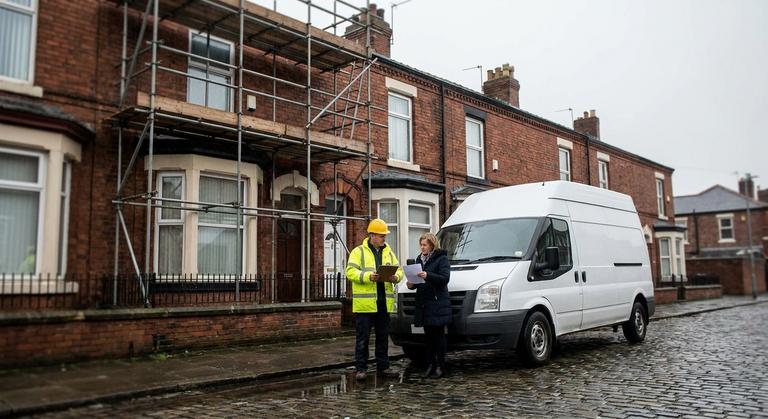
Ask ten landlords 'do I need a permit for rental repairs' and you will get ten confident, contradictory answers. That is because the honest answer is: it depends on the repair, and even more on where the property sits. Permits in the United States are not federal, and in practice they are not really state-level either - they are issued and enforced by your city or county building department. This guide covers which repairs typically trigger a permit, why the rules shift from state to state, and how to keep a multi-property portfolio compliant without slowing every work order to a crawl.
Do I Need a Permit for Rental Repairs? The Short Answer
One general rule holds across the country: like-for-like maintenance usually does not need a permit, while anything that alters the structure, footprint, or major systems of a building usually does. Between those two poles sits a gray zone - water heaters, re-roofing, window replacement - where the answer genuinely varies from one jurisdiction to the next. So when a work order lands and you are asking yourself, do I need a permit for rental repairs, start by placing the job in one of those three buckets.
Two other principles apply almost everywhere:
- The permit attaches to the property, not the person. Whether the house is your home or a rental makes no difference to the building department, although rentals often draw extra scrutiny in cities that run rental registration or periodic inspection programs.
- The licensed contractor normally pulls the permit as part of the job. If a contractor asks you to pull an owner's permit for work they are performing, treat it as a red flag. It frequently means they are not licensed for that trade in that jurisdiction, which becomes your problem the moment something goes wrong.
Repairs That Usually Do Not Need a Permit
Most building departments publish a list of work that is exempt from permitting. The exact list is local, but these items appear on exemption lists in the majority of US jurisdictions:
- Painting, wallpapering, and other cosmetic finishes
- Carpet, laminate, and vinyl plank flooring
- Replacing cabinets and countertops without moving plumbing
- Swapping a faucet, toilet, or garbage disposal like for like
- Patching drywall and minor interior trim work
- Replacing plug-in appliances such as a fridge or range
- Changing door hardware and locks
- Routine maintenance such as gutter cleaning or caulking
Treat this as a starting point, not a green light. Some cities are stricter than the norm, and a few regulate items that would surprise you elsewhere. The exemption page on your local building department's website is a five-minute read that can save a five-figure headache.
Work That Almost Always Needs a Permit
At the other end, some categories require a permit in nearly every US jurisdiction that enforces a residential code:
- Structural work - removing or altering load-bearing walls, foundation repairs, and roof framing changes.
- Electrical beyond simple swaps - new circuits, panel upgrades, and rewiring. Replacing a light fixture on an existing box is often exempt; adding an outlet where none existed usually is not.
- Plumbing that moves pipes - relocating a sink or shower, replacing drain lines, or repiping a unit.
- HVAC replacement - furnaces, condensers, and ductwork changes commonly require mechanical permits.
- Water heater replacement - one of the most commonly skipped permits in rental maintenance, and one of the most commonly required.
- Re-roofing - many jurisdictions require a permit for full replacement even where minor repairs are exempt.
- Windows and doors that change the opening size - especially anything affecting bedroom egress.
- Conversions and additions - garage conversions, basement units, and any change of use. This one matters enormously for landlords, because an unpermitted dwelling unit can be an uninsurable, unrentable liability.
- Decks, fences, and retaining walls above locally set height limits.
Why 'Do I Need a Permit for Rental Repairs' Is a State-by-State Question
Nearly every state builds its rules on the model codes published by the International Code Council, but adoption and enforcement follow three broad patterns:
- Statewide mandatory codes. Some states adopt a uniform code that applies everywhere, with limited local amendment. The what-needs-a-permit list is fairly consistent across the state, though process and fees still vary by city.
- State minimum, local amendment. Other states set a floor and let municipalities amend upward. Large cities in these states often layer stricter requirements on top of what their suburbs enforce.
- Local option. A number of states leave residential code enforcement largely to local governments. In some rural counties there is little or no residential permitting at all, while the nearest city runs a full plan-review process.
On top of the building code, landlords face overlays that owner-occupants do not: rental registration, periodic rental inspections, and in some cities a certificate requirement when a unit turns over. Those programs are exactly where unpermitted work tends to get discovered.
The practical takeaway: the question 'do I need a permit for rental repairs' has a different answer in every city where you hold doors, so never generalize from one market to another. For each jurisdiction, bookmark the building department's when-is-a-permit-required page, and when a job sits in the gray zone, call the permit desk. Permit technicians answer this question all day and will usually settle it in two minutes.
What Happens If You Skip the Permit
Unpermitted work rarely blows up on day one. It blows up later, at the worst possible moment:
- Stop-work orders and after-the-fact permits. If an inspector or a neighbor's complaint catches the job mid-flight, work halts, and many jurisdictions charge increased fees to permit it retroactively - sometimes after opening up finished walls so the inspector can see what was done.
- Insurance complications. If unpermitted electrical or plumbing work is implicated in a loss, expect the claim to get harder.
- Tenant leverage. In a habitability dispute, unpermitted work hands the tenant's attorney an easy exhibit.
- The resale trap. This is the big one. Seller disclosure forms in many states ask about work done without permits. Buyers' inspectors flag it, appraisers question it, and lenders can balk at it. The landlord who never stopped to ask 'do I need a permit for rental repairs' finds out during escrow, when the answer costs a price reduction or a retroactive permitting scramble.
How Property Managers Handle Permits at Scale
If you manage across multiple jurisdictions, you cannot re-research the rules for every work order. Build a system instead:
- Classify at intake. Tag each work order as exempt, permit-required, or gray zone using the categories above.
- Keep a per-jurisdiction cheat sheet. One page per city: exemption list link, permit desk phone number, and the quirks you have learned the hard way.
- Put permitting in the contract. Your contractor agreement should make the contractor responsible for pulling required permits and scheduling inspections.
- Verify before final payment. Collect the permit number and the final inspection sign-off before you release the last check.
- File everything with the property. When you sell, a folder of closed permits is a selling point instead of a liability.
Permit discipline is also one of the best vetting filters you have. A contractor who handles permits cleanly is running a real business, with the systems and margins to do things properly - the kind of operational maturity that construction strategy writers at Construction Arbitrage argue separates durable trade businesses from the truck-and-a-ladder crowd.
This is where using a marketplace helps. Platforms like PlanaJob let you compare quotes from vetted contractors side by side, so you are choosing between professionals rather than gambling on a classified ad. PlanaJob contractors handle the permit pull as part of the job, so unpermitted work never comes back to haunt your resale. You can see how it works for property managers, and when you are ready to raise your first job, signing up is free. For more compliance guides like this one, the PlanaJob blog covers the topics that keep landlords up at night.
FAQ
Can I do the repair work myself on a rental without a permit?
Doing the work yourself does not remove the permit requirement - it only changes who pulls it. Many jurisdictions offer homeowner or owner-builder permits, but some restrict them to owner-occupied homes, which means a rental may not qualify, particularly for electrical and plumbing work. Check the owner-builder rules for your jurisdiction before picking up tools.
What if I buy a rental that already has unpermitted work?
You inherit the problem along with the property. Your options are generally to legalize the work through a retroactive permit, remove it, or price the risk into your offer. Ask the seller for permit history, pull the property's permit record from the building department, and have your inspector flag anything that looks newer than the paperwork supports.
How long does getting a permit take?
Anywhere from minutes to months. Simple trade permits - a water heater swap, a re-roof - are often issued over the counter or online the same day in many jurisdictions. Anything requiring plan review, such as structural changes or a conversion, can take weeks. Ask the permit desk for current turnaround times and build them into your maintenance schedule, especially for habitability-critical repairs where delays affect your tenants.