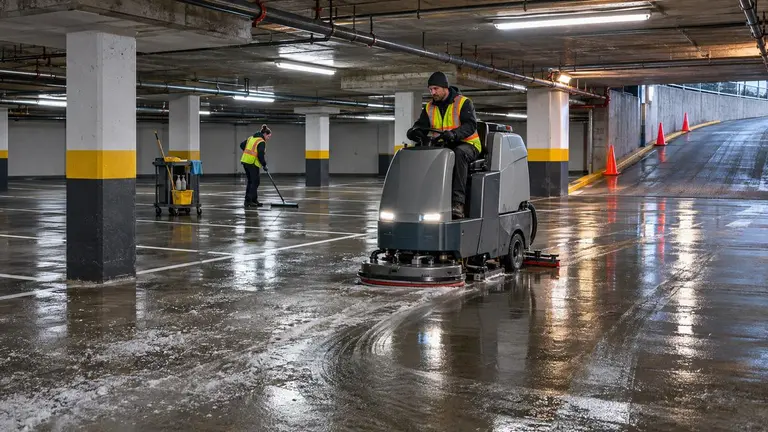
A condo parkade cleaning scope of work is a written list of what gets cleaned, where, how, when and to what standard. It also covers what the condo corporation must do before the crew arrives. Get it right and every bidder prices the same job. Leave it vague and you get three quotes for three different jobs, then a week of resident complaints about wet cars, blocked drains and stalls that were skipped.
This guide is for property managers writing the scope and for maintenance contractors pricing it. It covers what to include level by level, how to protect the building, how to handle residents, and which calls need a person's decision.
What the scope should cover
The short answer: describe the site, the method, the standard and the logistics in enough detail that a contractor who has never seen the building could price it. At minimum, include:
- Areas in scope. Each level (P1, P2, P3), ramps, the top deck if exposed, drive aisles, stalls, bike rooms, storage locker corridors, stairwells, elevator vestibules and garbage or recycling rooms.
- Areas out of scope. Say it plainly. Electrical rooms, mechanical rooms and locker interiors are common exclusions.
- Method by area. Sweeping, scrubbing, pressure washing, flushing or spot treatment.
- Drains. Trench drains, floor drains, catch basins, sumps and any oil-grit or oil-water separator.
- Standard of finish. What "clean" means, with photos required before and after.
- Schedule. Dates, working hours and the order levels will be closed.
- Resident logistics. Notices, vehicle moves and what happens to cars left behind.
- Access and site rules. Fobs, contacts, clearance heights, water and power points.
- Waste and wash water. Who collects sediment and how wash water is handled.
- Insurance and paperwork. What the corporation requires before work starts.
Write the scope level by level
Give bidders the site facts
Most pricing errors come from missing site facts. Include the number of levels, approximate stall count, ramp layout and the lowest clearance height. A ride-on scrubber or sweeper that will not clear the entrance changes the whole method and price.
List where crews can connect to water and power, and whether there is a floor sink or designated area for emptying equipment. Note any recent or planned work such as membrane repairs, line painting or concrete restoration.
Specify the method, not just the outcome
"Clean the parkade" invites guessing. Be specific by area:
- Drive aisles and stalls: dry sweep to remove sand and grit first, then mechanical scrub or pressure wash.
- Ramps: pressure wash with attention to the grooves and the joints at the top and bottom of each ramp, where salt and sand collect.
- Oil stains: spot treatment with a degreaser in heavy stalls. Say whether full stain removal is expected or just treatment, because old stains rarely disappear completely.
- Walls, columns and curbs: state the height to be washed, if any.
- Stairwells and vestibules: sweep and mop, not pressure wash.
If the contractor wants to propose a different method, ask them to state it in their quote so you can compare like with like.
Treat drains as their own line item
In Canadian parkades the main job after winter is removing road salt and sand. Much of it ends up in the drainage system. Ask for:
- Removal of grates and clearing of trench drains and floor drains.
- Cleaning out catch basins and sumps, with sediment removed from site.
- A note of any drain that is broken, slow or blocked beyond normal cleaning.
If the building has an oil-grit or oil-water separator, check its maintenance records and who usually services it. That work may need a specialist and its own disposal arrangements, so list it separately rather than folding it into the general clean.
Define the standard of finish
Describe what an acceptable result looks like. For example: no visible sand or grit in aisles or stalls, drains flowing freely, no standing water left on any level at handover, and treated oil stains noted by stall number. Require dated before and after photos for each level and each drain cluster. Photos settle most disputes before they start.
List exclusions clearly
Exclusions protect both sides. Common examples are line painting, crack repair, membrane work, light fixture cleaning and anything inside storage lockers. If you want any of these priced, add them as optional items so they do not distort the main comparison.
Protect the building while you clean
A parkade is structure first and floor second. The scope should flag the risks so the contractor plans for them.
- Water over occupied space. Suspended slabs can leak through cracks into the level below, retail units or storage. Ask for controlled water use on those levels and someone checking below during the wash.
- Traffic membranes and coatings. Pressure, heat and some chemicals can damage them. Ask your engineer or the membrane supplier what is safe, and put their guidance in the scope.
- Electrical equipment. Identify outlets, EV chargers, panels and fixtures that must not be sprayed directly.
- Air quality. Fuel-powered equipment in an enclosed parkade raises carbon monoxide and ventilation questions. Ask the contractor to describe how they will manage this and confirm they follow current provincial occupational health and safety requirements.
- Cold weather. Washing when temperatures are near or below freezing can leave ice on ramps and aisles. Most buildings book a spring wash once overnight lows are consistently above freezing, with an optional fall sweep before the first snow.
- Wash water and sediment. Rules on what can go to the sanitary or storm sewer vary by municipality. Check your local sewer-use bylaw and ask the contractor how they will comply, rather than assuming.
Plan the resident side
The cleaning itself is often easier than clearing the cars. Put the logistics in the scope so the contractor and the corporation know who does what.
- Notice. Send notice well ahead, with a reminder a few days before. Follow your declaration, bylaws and rules, or strata bylaws in British Columbia, on notice and vehicle removal.
- Order of levels. Publish which level closes on which day and where residents can park meanwhile.
- Vehicles left behind. Decide in advance whether crews clean around them or whether the corporation will arrange removal under its own rules. Contractors should never move a vehicle.
- Accessible stalls and EVs. Plan alternatives for residents who need accessible parking or are mid-charge.
- Access. Fobs, a site contact phone number and who opens and locks gates each day.
Decisions that need a person
Some calls cannot be delegated to a checklist or software. A property manager, the board or strata council, and the contractor need to agree on:
- Which contractor is awarded the job, and at what price.
- Whether optional items such as stain treatment or separator servicing go ahead.
- What to do when a drain or slab issue is found mid-job.
- Whether work stops because of weather, leaks or resident complaints.
- Sign-off at handover and approval of any deposit or final payment.
Write who holds each decision into the scope. It saves a lot of phone calls on wash day.
How the workflow runs in Plan@Job
Plan@Job is AI-powered project and operations management for construction and property businesses. For a parkade clean, the property manager creates the job with the scope attached. Sophie Bennett, the AI Enquiries Coordinator, checks the job brief for missing information, such as clearance height or drain details, and asks for clarification. If two attempts do not resolve it, the job is handed to a person.
On the contractor side, the work is managed by an operator: the contractor business that manages its clients, project delivery, subcontractors and in-house operatives. Daniel Reed, the AI Operations Manager, supports eligible sharing with the existing vetted network and follows up on quotes and proposed dates. He does not award the job or set prices.
The operator can split the job into internal stages, such as P1 wash, P2 wash, ramps and drains, each with its own scope, dates, status and costs, using the project plan. Stages can be done in-house or subcontracted. The client sees the overall agreed scope, price and shared photo evidence. Internal stage costs and subcontractor identity stay internal. Maya Collins, the AI Finance Coordinator, prepares deposit and overdue payment actions for a person to approve.
Plan@Job is live in the UK. Canadian readers can register interest through the existing availability pages.
Illustrative example
This is a fictional scenario for illustration only.
A property manager for a three-level condo parkade writes a spring scope. It splits the work into four items: sweep and scrub P1 to P3, pressure wash both ramps, clear all trench drains and catch basins, and optional oil stain treatment. The scope notes a low entrance clearance, a suspended slab over storage on P1 and a request for no standing water at handover. Two contractors price the same method, so the board can compare them line by line and approve the optional stain work separately.
Next step
If you manage condo or strata buildings in Canada, see what is available for your market and join the list on the Plan@Job Canada property managers page. Maintenance contractors can check the Canada contractors page.
FAQ
How often should a condo parkade be cleaned?
Most buildings do a full wash each spring to remove winter salt and sand, with regular sweeping through the year. Some add a fall sweep and drain check. The right frequency depends on traffic, climate and your engineer's or reserve fund study's advice.
Should parkade cleaning include drain and catch basin cleaning?
Yes, list it as its own line item. Salt and sand settle in drains and catch basins, and blocked drains cause standing water and ice. Separator servicing may need a specialist, so price it separately.
Can contractors move resident vehicles during a parkade clean?
No. Crews should clean around vehicles left in place or skip those stalls. Any removal must be arranged by the corporation under its own declaration, bylaws and rules.