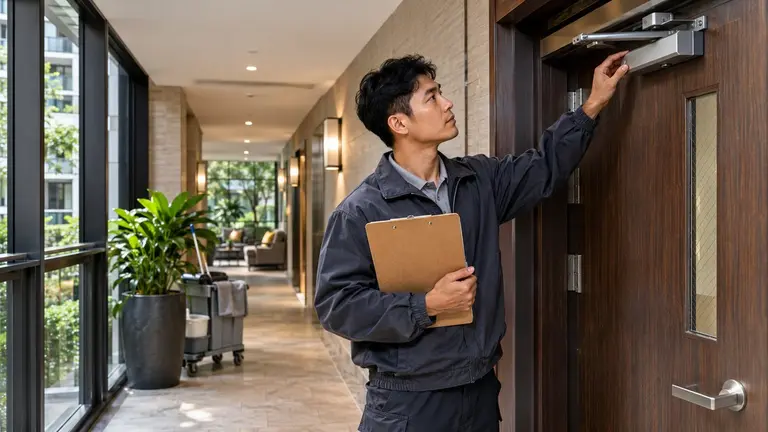
A condo caretaker daily rounds checklist is a fixed route and a short list of checks that a caretaker or superintendent walks every day, so small faults are found and reported before they turn into water damage, security problems or complaints to the board. The short answer to what belongs on it: entrances, life safety equipment you can see, corridors and stairwells, elevators, service rooms, the parkade, garbage rooms, amenities and the exterior, plus a clear way to record and report what you find. This guide is for property managers who set the standard and maintenance contractors who supply caretaking to condo corporations (strata corporations in British Columbia).
What a daily round is for
A daily round is about observation. The caretaker looks, listens and smells, fixes the small things they are allowed to fix, and reports the rest.
It does not replace scheduled inspections and testing by qualified trades. Fire alarm systems, sprinklers, elevators, boilers and backflow devices are inspected and tested under the requirements that apply in your province and the building's service contracts. The caretaker's job is to notice when something looks wrong between those visits and say so quickly.
Write that boundary into the checklist. A caretaker who resets a fire panel or bypasses a pump without authority creates a bigger problem than the one they found.
Plan the route before the checklist
The order matters as much as the items. Walk the building the same way every day so nothing is skipped and changes stand out.
- Start where the risk is highest. Many caretakers start at the fire panel and main entrance, then move to service rooms where leaks do the most damage.
- Go top down or bottom up, not both. Pick one direction for corridors and stairwells and stick to it.
- Set a time window. A morning round catches overnight problems. Larger buildings may add a shorter evening check. Agree this with the board and the property manager in the service scope.
- Carry the right kit. Keys and fobs for every room on the route, a flashlight, gloves, a phone or tablet for photos, absorbent pads and caution signs.
- Keep a copy of the emergency contact list. Include after-hours contractors, the property manager and the board's emergency contact.
The condo caretaker daily rounds checklist
Adapt this to the building. A 40-unit low-rise and a 300-unit tower need different lists, but the categories hold.
Entrances, lobby and mail room
- Front and side doors close, latch and lock. Door closers are not slamming or sticking.
- Enterphone or intercom works. Fob readers respond.
- Lobby lighting is on. No burnt-out fixtures.
- Floors are clean and dry. Entrance mats are in place and not curling.
- Mail room and parcel room are secure. No signs of tampering on mailboxes.
- Notice boards are current. Remove expired notices.
Life safety equipment (look, do not test)
- Fire alarm panel shows normal. Record any trouble or supervisory signal and report it straight away.
- Exit signs are lit and visible.
- Exit doors are not blocked, chained or propped open.
- Fire doors in corridors and stairwells close fully and latch on their own.
- Fire extinguishers are in their cabinets or on their brackets, with tags visible and pins in place.
- Pull stations and hose cabinets are not blocked by furniture or storage.
- Sprinkler heads are not obstructed, damaged or painted over.
- Emergency lighting shows no obvious damage or fault lights.
Corridors, stairwells and elevators
- Corridors are clear of storage, shoes, bikes and garbage.
- Carpet and flooring have no trip hazards, stains or wet patches.
- Ceilings show no new water staining.
- Stairwells are clean, lit and free of stored items.
- Each elevator arrives level with the floor, doors open and close smoothly, and the emergency phone light or indicator looks normal. Report unusual noise or levelling problems to the elevator contractor through the property manager.
Mechanical, electrical and service rooms
- Doors are locked and signed.
- No water on the floor, no drips from pipes or tanks.
- No unusual noise, vibration, smell of burning or smell of gas. If you smell gas, follow the building's emergency procedure and call the utility's emergency line.
- Sump pits are not overflowing and pumps are not running continuously.
- Gauges and panels you have been trained to read show normal readings. Note anything outside the normal range.
- Nothing is stored in electrical or mechanical rooms.
Parkade and storage lockers
- Lighting works on every level.
- Overhead door opens and closes fully and the safety sensors work.
- Floor drains are clear. No pooling water or ice.
- No oil leaks, abandoned vehicles or items left in drive aisles.
- Gas detection panel, if the building has one, shows normal.
- Storage locker area is secure, with no forced locks.
Garbage, recycling and organics rooms
- Chutes are clear and chute doors close.
- Bins are not overflowing. Swap bins as needed before collection.
- No bulky items dumped. Photograph and report so the manager can follow up.
- No pests, strong odours or leaking bins.
Amenity rooms
- Gym, party room, guest suite and pool area are clean and secure.
- Equipment is not damaged. Tag anything unsafe out of use and report it.
- Pool and hot tub follow the building's operating log and the requirements of your local public health unit, recorded by the trained person responsible.
Exterior and grounds
- Walkways, ramps and steps are clear and safe.
- Exterior lighting works.
- Downspouts discharge away from the building.
- Catch basins near entrances are clear.
- No graffiti, broken glass or damage to fencing and gates.
Seasonal additions for Canadian buildings
Weather drives a lot of condo maintenance. Add these to the daily list as the season changes.
- Winter: snow and ice on walkways and ramps, salt or sand levels, icicles over entrances, frozen pipes in the parkade and unheated areas, vestibule heaters working, garage door seals.
- Spring thaw: water entering the parkade, sump pumps keeping up, drains blocked with grit, cracks or heaving in walkways.
- Summer: cooling equipment and condensate lines, irrigation leaks, pool operation, balcony debris reported by residents.
- Fall: leaves in catch basins and roof drains reported, exterior lighting timers adjusted, winter supplies stocked.
How to record and report what you find
A checklist only works if the record is useful to the next person. For every item, mark one of three results: OK, issue found, or action taken.
When something is wrong, capture:
- Exact location, such as floor, unit number, room name or parking level.
- What you saw, in plain words.
- A photo, taken wide enough to show where it is.
- Time found and anything you did, such as placing a caution sign or shutting an isolation valve you are authorised to close.
- Your view of urgency: act now, needs a trade, or monitor.
Agree the urgency rules in advance. Active water, a fire panel trouble signal, a stuck elevator or a security breach should go to the property manager by phone, not just in a report. Entry to units should follow the declaration, bylaws, rules and the notice requirements that apply in your province.
Turning findings into jobs
Most findings need a decision from the property manager, and some need a contractor. This is where a structured workflow helps.
Illustrative example: a caretaker finds fresh water staining on the P2 ceiling under a podium planter, photographs it and notes the location. The property manager raises a job brief from that report.
In Plan@Job, the job brief is the starting point. Sophie Bennett, the AI Enquiries Coordinator, checks existing job briefs for missing information, such as access details or photos, and asks for clarification. If there is no useful answer after two attempts, she hands it to a person. Daniel Reed, the AI Operations Manager, can support sharing eligible jobs with the existing vetted network and follow up on quotes and proposed dates, and he prepares a morning brief.
The decisions stay with people. The property manager chooses who does the work, checks spending against the board's approved authority, and approves the first contact with a client where that is required. Plan@Job does not award jobs, set prices or move money on its own.
If you are a maintenance contractor supplying caretaking, you are the operator: the contractor business managing clients, project delivery, subcontractors and in-house operatives. The same reports can feed your own job planning. The contractor availability page for Canada explains where things stand for operators.
Where Plan@Job is available
Plan@Job is live in the UK. In Canada, property managers can register interest through the existing availability page rather than sign up for a live service today. If your caretaking reports keep turning into lost emails and unclear follow-ups, the next step is to check Plan@Job availability for Canadian property managers.
FAQ
How long should a daily caretaker round take?
It depends on the building size, the number of service rooms and the season. Time the route over a few normal days, then set a realistic window in the service scope so the caretaker is not rushing the checks that matter.
Should caretakers test fire alarms or sprinklers on their rounds?
No, unless they are qualified and authorised. Testing and inspection follow the fire code that applies in your province and are done by qualified service providers. The caretaker checks that equipment looks normal and reports anything that does not.
Who owns the daily rounds checklist?
The property manager usually sets it with the board's agreement, and the caretaker or caretaking contractor carries it out. Review it at least when the seasons change and after any incident, so it reflects how the building actually behaves.