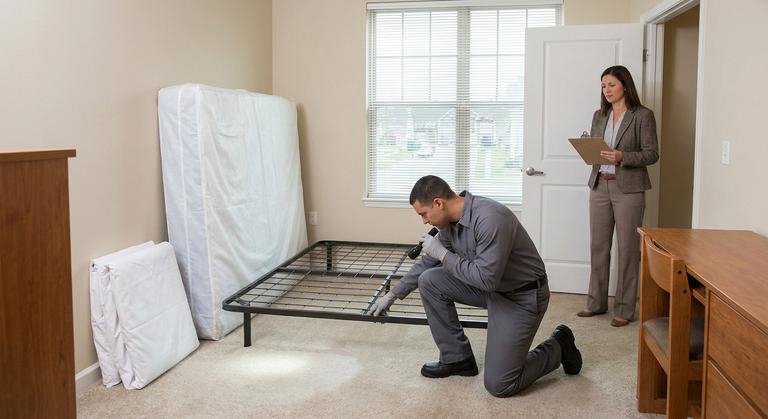
A tenant texts you at 9pm with a photo of three bites in a line on their forearm and a blurry shot of a mattress seam. What you do in the next few days decides whether this ends as a routine treatment invoice or a habitability complaint with rent abatement attached. There is no federal statute on the issue, so bed bug laws landlord responsibility is set state by state, and in a few big cities block by block. Some states give you a clock measured in hours. Others say nothing specific and let the implied warranty of habitability do all the work. Knowing which bucket your property sits in is the difference between a contained problem and a claim.
How bed bug laws landlord responsibility is actually decided
Three layers of law stack on top of each other, and the most tenant-protective one usually wins.
The implied warranty of habitability. Almost every state requires rental housing to be fit to live in. Arkansas is the outlier commonly cited as having no implied warranty for residential leases. Courts have generally treated an infestation as a habitability defect, which puts the remediation duty on the owner by default even in states where no statute mentions bed bugs by name.
Bed bug specific statutes. A minority of states wrote dedicated law. These are the states with real deadlines, disclosure obligations, and rules barring you from renting a unit you know is infested.
Local ordinances and health codes. Cities regularly go further than the state. New York City and Chicago are the two most cited examples, and both add duties that state law does not contain.
If you manage across state lines, build a one-page matrix of bed bug laws landlord responsibility by jurisdiction and keep it with your maintenance SOPs. Statutes and ordinances get amended, so confirm the current text with local counsel or your housing department rather than relying on a summary.
States that put an explicit clock on your response
These are the jurisdictions where a slow reply is itself the violation.
- Maine. Widely cited as the strictest framework in the country: after written notice from a tenant, the landlord must inspect within roughly five days and contract with a licensed pest control agent within about ten. Maine also bars renting a unit known to be infested and puts the cost on the landlord.
- Colorado. After a tenant reports bed bugs, the landlord must obtain an inspection by a qualified inspector within 96 hours, with treatment required promptly if the inspector finds evidence. Colorado law also assigns the cost of inspection and treatment to the landlord.
- California. Landlords must give bed bug information to tenants, cannot show or rent a unit with a known current infestation, and must notify affected tenants of the pest control operator's findings within two business days of receiving the report.
- Arizona. A dedicated bed bug statute prohibits renting a unit with a known infestation, requires landlords to give tenants bed bug educational materials, and obliges tenants to notify the landlord promptly and cooperate with treatment.
States where the general repair duty does the heavy lifting
Most of the country falls here. No bed bug statute, but a repair or fitness duty that a court will read to cover infestation.
- Florida. The landlord-tenant statute lists bedbugs by name among the pests a landlord must make reasonable provisions to exterminate, for dwelling units other than single-family homes and duplexes. For a single-family rental, a written lease can allocate the duty differently.
- Texas. No bed bug specific law. The duty falls under the general obligation to repair conditions that materially affect health and safety, which carries three conditions worth memorizing: the tenant gave notice, the tenant did not cause the condition, and the tenant is not delinquent in rent.
- Washington. Disclosure of known infestation history is required alongside the general habitability duty.
- Ohio, Georgia, Tennessee, Indiana and most of the Midwest and South. General fitness and repair duties, enforced in practice by local code inspectors rather than a bed bug statute.
Cities that add a layer on top
- New York City. Landlords must give new tenants a bed bug infestation history disclosure, and owners of multiple dwellings must file an annual bedbug report with HPD and distribute it to tenants.
- Chicago. The city ordinance requires a written pest management plan for multi-unit buildings, obliges tenants to report infestations promptly in writing, and requires the landlord to arrange licensed treatment for the reported unit and the adjoining units.
- New Jersey. Multiple dwelling regulations push treatment beyond the reported unit into surrounding units, on the theory that a single-unit treatment simply relocates the problem.
What your lease can and cannot shift onto the tenant
Bed bug laws landlord responsibility does not disappear because a tenant probably brought the bugs home from a hotel. Source is nearly impossible to prove, and most courts will not let a lease clause override a habitability duty.
What generally holds up in a lease:
- A requirement to report suspected bed bugs in writing within a short, stated period.
- A requirement to grant access for inspection and treatment on reasonable notice.
- Prep obligations: bagging laundry, clearing closets, pulling furniture off walls.
- A ban on discarding infested furniture through common areas or trash rooms without wrapping it.
- A ban on self-treatment with store-bought foggers, which scatter bed bugs into wall voids and make professional treatment harder and more expensive.
What rarely holds up: a blanket clause making the tenant pay for extermination. Cost shifting sometimes sticks where you have documented, repeated refusal of access or refusal to prep after written notice, but several states bar it outright and others cap it. Never respond to a bed bug complaint with a rent increase, a lease non-renewal, or a notice to vacate. Retaliation protections apply in most states, and the timing alone will be read against you.
A response playbook that survives scrutiny
- Timestamp the report. Log date, time, channel, and exact wording. In most states, written notice from the tenant starts the legal clock.
- Acknowledge in writing the same day with a specific inspection date. This single habit defuses most complaints before they escalate.
- Send a licensed inspector, not a handyman. Pesticide applicators are licensed at the state level, usually through the department of agriculture. Ask for the license number and the certificate of insurance, and keep both on file.
- Inspect the neighbors. Bed bugs travel through wall voids and outlet boxes. Inspect the units on either side plus above and below, whether or not the ordinance requires it.
- Share the findings in writing. California requires notice within two business days of receiving the operator's report. Make that your standard in every state.
- Treat on a documented protocol. Heat or chemical, plus scheduled follow-ups. One visit almost never clears an established infestation, so agree the follow-up schedule up front rather than re-quoting later.
- Supply encasements and written prep instructions, then document cooperation or refusal with dated photos and messages.
- Re-inspect and close out in writing so the file shows a beginning and an end.
Keep everything in one folder per unit: notice, acknowledgment, inspector license, report, invoices, tenant communications, clearance. If this ever reaches a hearing, that folder is your case. Our guide for US property managers covers how to structure maintenance records so they hold up under a complaint.
Cost, vendors, and hitting the response window
Price depends on unit size, treatment method, prep quality, and the number of follow-ups, so never quote a tenant a figure before an inspection. For anything building-wide, get more than one bid and compare what is actually included: number of return visits, whether adjacent units are covered, and whether a clearance inspection is part of the price. If you want to understand how service businesses structure those numbers, Construction Arbitrage is a useful read on trade pricing and margin. Pest control is also a heavily consolidated trade, so if your longtime technician suddenly works for a national brand, that is why. Sites like Contractor Exit track how trade businesses change hands, which is worth knowing when a vendor relationship you rely on gets acquired mid-contract.
Platforms like PlanaJob let property managers compare quotes from vetted contractors in one place, which matters most when a statutory clock is already running. Dispatch licensed pest control through PlanaJob within the response window your state requires: post the job, review licensed bidders, and keep the inspection and treatment dates in the same record as the tenant's original notice. More compliance breakdowns for US operators are on the PlanaJob blog.
FAQ
Can I charge a tenant for bed bug treatment?
Usually not. Under most bed bug laws landlord responsibility for the cost sits with the owner, because infestation is treated as a habitability defect and the source is almost never provable. A few states allow limited cost recovery where the tenant refused access or refused to prep after repeated written notice. Colorado and several other states expressly assign inspection and treatment costs to the landlord, so check your state before billing anything back.
How fast do I have to respond to a bed bug report?
It depends entirely on the jurisdiction. Colorado sets a 96-hour window to obtain an inspection, Maine works on a days-not-weeks inspect-then-contract timeline, and California requires notice of the operator's findings within two business days. In states with no stated deadline, the standard is a reasonable time under the general repair duty, which in practice means days. Treat 48 to 72 hours as your internal service level everywhere.
Do I have to treat the neighboring units too?
In Chicago and New Jersey, adjoining or surrounding units are explicitly in scope. Elsewhere it is a judgment call, but treating only the reported unit is how a single-unit problem becomes a building-wide one. Inspect the neighbors on either side plus above and below every time, document the results, and treat wherever evidence turns up.