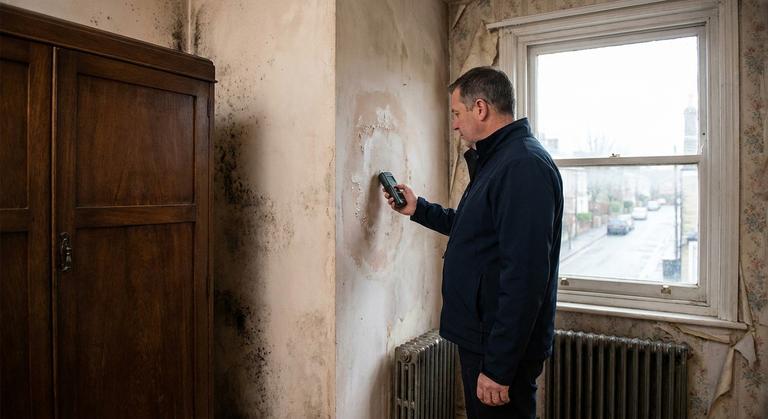
Awaab's Law turns damp and mould from a repair you schedule into a legal deadline you have to hit, and the clock starts the moment anyone in your organisation becomes aware of the problem. It is named after Awaab Ishak, the two-year-old who died in December 2020 after prolonged exposure to mould in a Rochdale flat, and it was created by the Social Housing (Regulation) Act 2023 before being commenced in phases from autumn 2025. If you manage social housing, these duties already bite. If you manage private rented stock, the direction of travel is set and the sensible move is to build the process now rather than retrofit it under pressure. Here is what the deadlines actually are, who they cover today, and what compliance looks like when an ombudsman asks you to prove it.
What Awaab's Law Actually Requires
Awaab's Law works by writing implied terms into the tenancy agreement. That distinction matters more than it sounds. This is not a standard you get inspected against once a year and then forget about; it is a contractual promise the tenant can enforce directly, on top of the Housing Ombudsman route. Miss the timescale and you have potentially breached the tenancy itself.
Phase one covers two categories: emergency hazards of any type, and damp and mould hazards specifically. Later phases extend the same clock-driven approach to the wider set of Housing Health and Safety Rating System (HHSRS) hazards, including excess cold, fire, structural and electrical risks. Always check the regulations as they stand before you rewrite policy, because the scope broadens with each phase.
The phase one timescales
- Emergency hazards: investigate and make safe within 24 hours. An emergency is anything posing an imminent and significant risk of harm, such as a sagging ceiling above a bed or water tracking into electrics. This applies to any hazard, not only damp.
- Damp and mould: investigate within 10 working days of becoming aware of the potential hazard.
- Written summary within 3 working days of the investigation finishing. It goes to the tenant in writing and sets out what was found, whether it amounts to a significant hazard, and what happens next.
- Begin work to make the property safe within 5 working days of that written summary where a significant hazard is confirmed.
- Complete the remaining works within a reasonable period, with a date agreed and communicated rather than left open-ended.
- Offer suitable alternative accommodation at the landlord's cost if the home cannot be made safe within the required timescales.
What 'becoming aware' really means
This is where most managing agents get burned. Awareness is not limited to a repair ticket raised on your system. A photo sent to a housing officer's mobile, a remark made to a gas engineer during the annual service, a line in a void inspection, a comment on a routine visit: any of these can start the clock, and none of them looks like a repair request in your audit trail.
Fix that at the front door. Train everyone with tenant contact, including your contractors, to log a damp or mould observation the same day, and make the logging route take under a minute. If your trades only report mould when they happen to remember, you have a compliance gap you cannot see.
Who Awaab's Law Applies To Right Now
Social landlords in England
Registered providers and local authority landlords in England are in scope for phase one now. That includes stock managed on their behalf by a third party, so if you are a managing agent with a social housing client, the timescales are effectively yours to deliver even though the legal duty sits with the landlord. Get that written into the management agreement, along with who pays for out-of-hours attendance.
The private rented sector
The Renters' Rights Act 2025 provides for Awaab's Law to be extended to the private rented sector, with scope and commencement to be set out in secondary legislation. Do not read 'not yet' as 'no duty'. PRS landlords already owe repairing obligations under section 11 of the Landlord and Tenant Act 1985, and the Homes (Fitness for Human Habitation) Act 2018 lets tenants sue directly where a home is unfit, with damp and mould squarely in scope. Councils can serve improvement notices under the HHSRS on top. For agents running mixed portfolios, the practical answer is one damp and mould process, at the social housing standard, applied to everything.
One point that catches national portfolios: this is England-only legislation. Wales operates under the Renting Homes (Wales) Act 2016 and its fitness regulations, Scotland under the Repairing Standard. Same principle, different statutory wording and different timescales.
Where Property Managers Get Caught Out
- Blaming tenant behaviour. A letter telling residents to open windows and dry washing outside, sent before anyone has inspected, is the most damaging document you can put in an ombudsman file. Investigate first, discuss ventilation second, and only if the survey supports it.
- Treating a mould wash as the repair. Fungicidal wash and stain-block paint deal with the symptom. If the cold bridge, failed damp-proof course, blocked cavity, leaking waste or undersized extract fan is still there, the mould returns by the next heating season and you have a fresh clock plus a documented history of failure.
- No timeline evidence. Outcomes turn on dates: when you knew, when you inspected, when the tenant received the written summary, when work started. If those dates live in someone's inbox, you do not really have them.
- Undocumented no-access. Access refusal is a legitimate reason for delay, but only if you can show dated, repeated, reasonable attempts across more than one contact method.
- Vulnerability flags that nobody sees. Infants, older residents, respiratory conditions and immunosuppression should escalate priority automatically.
- One overloaded contractor. A single damp specialist covering a portfolio means your 5 working day start becomes whatever their January diary allows.
Building a Damp and Mould Process That Survives Scrutiny
- One intake point. Every report, from every channel, lands in the same queue with a timestamp nobody typed by hand.
- A fixed triage script. Room, extent, how long it has been present, suspected moisture source, occupant vulnerabilities, photos. Consistency is what makes records defensible months later.
- A panel, not a person. Line up several damp specialists so you can dispatch inside the deadline in peak season. Platforms like PlanaJob let property managers compare quotes from vetted contractors on the same job, which keeps a panel honest on both price and lead time.
- A survey that names the cause. Insist reports distinguish condensation, penetrating damp, rising damp and plumbing leaks, with moisture readings and photographs. 'Mould present, treat and redecorate' is not an investigation.
- Two jobs, not one. Raise make-safe works and root-cause works separately, so the first is never held up by scaffolding or a specialist report on the second.
- A verification visit. Go back four to eight weeks after completion, ideally during heating season, take fresh readings and photos, and only then close the case.
- Retention. Keep the whole chain, including the written summary and the tenant's acknowledgement, for the life of the tenancy and beyond.
If you are on the trade side rather than the management side, this is a real growth area, because demand for surveyors and remediation teams who can produce evidence-grade reports rises with every phase. Contractor Club is a useful place to see how other UK trades are structuring and pricing damp work.
Evidence Your Awaab's Law Repair Timelines in PlanaJob
Strip away the legal drafting and the compliance burden here is mostly a record-keeping burden. You need to show, per property, that you knew on a given date, inspected within 10 working days, wrote to the tenant within 3, and started work within 5. Spreadsheets and email threads will not reconstruct that under pressure.
Running jobs through a platform means every stage carries its own timestamp: raised, quoted, awarded, attended, completed, with before and after photographs attached to the job record rather than sitting on an engineer's phone. When the ombudsman, the client or the insurer asks, you export the trail instead of rebuilding it. You can set your portfolio up in minutes, see how PlanaJob works for UK property managers, and find more compliance walkthroughs on the PlanaJob blog.
FAQ
Does Awaab's Law apply to private landlords?
Not in phase one, which covers social housing in England. The Renters' Rights Act 2025 provides for extension to the private rented sector, with the detail to follow in regulations. Private landlords are not off the hook in the meantime: section 11 repairing obligations, the Homes (Fitness for Human Habitation) Act 2018 and council HHSRS enforcement all already apply to damp and mould.
What happens if the tenant will not let us in?
Delay caused by genuine lack of access is defensible, but the evidence has to exist. Log every attempted appointment, use at least two contact methods, send a letter as well as a text or call, and record each refusal or no-show with a date. Keep offering slots, including outside working hours, and note any vulnerability that might explain the reluctance.
Is a mould wash and repaint enough to comply?
No. Cleaning treats the visible growth, not the moisture source, and a hazard that returns has not been made safe. Your investigation should identify the cause, whether that is condensation from inadequate ventilation, a building fabric defect or a leak, and the remediation should address it. Treat the wash as the make-safe step, then complete the actual repair and verify it in heating season.