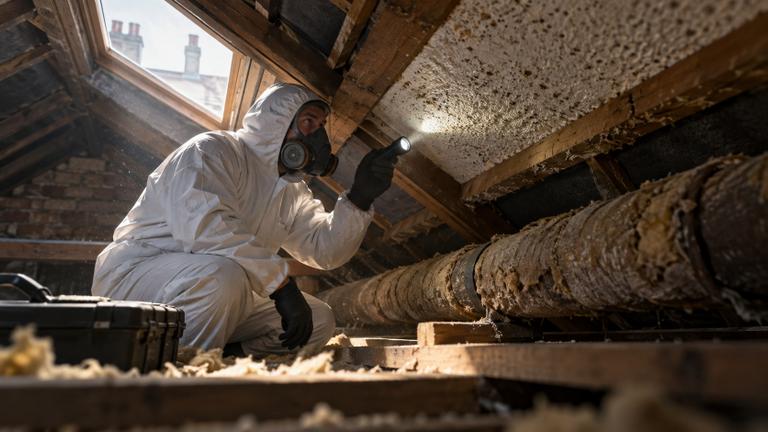
Asbestos in rental property is still one of the most misunderstood compliance risks UK landlords and letting agents deal with. It was banned from new use decades ago, but that did nothing to remove what's already built into millions of existing properties. If any part of your portfolio was built or refurbished before 2000, there's a realistic chance some asbestos-containing material is still sitting in a ceiling, a garage roof, a boiler cupboard or a length of pipe lagging. The real question for property managers isn't whether asbestos might be present, it's whether you know where it is, who's responsible for managing it, and what you're legally required to do next. Get this wrong and you risk tenant health, HSE enforcement action, and awkward conversations during a sale or refinance when a survey turns up something your paperwork never mentioned.
What Counts as Asbestos in Rental Property
Asbestos was used widely in UK construction and refit materials right up until the ban on its use took full effect around the turn of the millennium. Any rental property built, extended or refurbished before 2000 is worth treating as a candidate, regardless of how modern it looks inside.
Common places to find asbestos-containing materials (ACMs) in residential buildings include:
- Textured coatings on ceilings and walls (the classic "Artex-style" finish)
- Vinyl or thermoplastic floor tiles and their backing or adhesive
- Asbestos cement sheeting on garage and shed roofs, and some soffits and guttering
- Pipe lagging and boiler flue linings in older heating systems
- Asbestos cement water tanks and cold water cisterns in lofts
- Panels behind fire doors, storage heaters and some old airing cupboard linings
Undisturbed and in good condition, most of these materials pose very low risk - the danger comes from drilling, sanding, cutting or otherwise damaging them, which is exactly what happens during routine refurbishment if nobody's checked first.
Who Is Legally Responsible - The Duty to Manage
The Control of Asbestos Regulations 2012 place a "duty to manage" asbestos on whoever is responsible for the maintenance and repair of non-domestic premises. The practical reality of asbestos in rental property is that responsibility splits depending on which part of the building you're talking about, and a lot of landlords get this wrong.
Common Parts vs Individual Lets
The inside of a single self-contained let isn't treated as non-domestic premises for the specific duty to manage regime. That doesn't mean landlords are off the hook: repairing obligations under the Landlord and Tenant Act 1985, the Homes (Fitness for Human Habitation) Act 2018, and the Housing Health and Safety Rating System under the Housing Act 2004 all still apply, and HHSRS specifically treats asbestos as a hazard that assessors look for.
Communal areas - stairwells, hallways, bin stores, shared plant rooms, corridors in a block of flats - are treated differently. These generally count as non-domestic premises, and whoever holds the maintenance and repair obligation for them, typically the landlord, freeholder or managing agent, is the dutyholder under the regulations. That means keeping an asbestos register for those areas, assessing the condition of any known ACMs, and having a written plan for managing the risk.
HMOs and Additional Considerations
Houses in multiple occupation add another layer. Shared kitchens, bathrooms, hallways and stairwells within an HMO function much like the common parts of a block of flats, so the duty to manage is more likely to bite directly. Local authority HMO licensing conditions often expect landlords to demonstrate general awareness of building hazards, including asbestos - worth having front of mind before licence renewal, not after an inspector asks about it.
When You Need an Asbestos Survey
Deciding when to survey for asbestos in rental property largely comes down to timing. Two types of survey cover most situations property managers face:
- Management survey - a non-intrusive check to establish whether ACMs are present, where, and in what condition, used to build or update the asbestos register for ongoing management.
- Refurbishment and demolition survey - a more intrusive survey required before any work that will disturb the fabric of the building, such as rewiring, ripping out a kitchen or bathroom, removing flooring, or taking down partition walls. This kind of survey usually needs the property empty.
As a rule of thumb, commission a survey at void periods between tenancies, before any planned refurbishment or conversion, and whenever a property's use changes - for example, converting a single let into an HMO.
What to Do If Asbestos Is Found
Finding asbestos doesn't automatically mean removal. If a material is intact, undamaged and unlikely to be disturbed, the usual approach is to manage it in place rather than rip it out, since removal itself creates a disturbance risk that wasn't there before.
Practical steps once ACMs are identified:
- Record the location, extent, material type and condition in the property's asbestos register
- Set a review or re-inspection interval appropriate to the material's condition and location
- Flag the register to any contractor before they start work, not after they've already opened up a wall
- Consider earlier encapsulation or removal if tenants can access or damage the material
- Keep tenants informed if planned works affect a known ACM
Working With Contractors Safely
Not all asbestos work needs a specialist licence, but a meaningful amount does. Higher-risk work - such as removing sprayed asbestos coatings, asbestos insulation, or lagging - has to be carried out by an HSE-licensed contractor. Other work, sometimes called notifiable non-licensed work, covers lower-risk tasks like removing some textured coatings or asbestos cement sheeting, and still requires trained operatives, proper controls and notification to the HSE, even though a full licence isn't needed.
Managing asbestos in rental property safely depends heavily on who you let onto site. An electrician, plumber or kitchen fitter working to a normal schedule has every incentive to just get on with the job - drilling into a wall or lifting old floor tiles without being told what's underneath. Before any works, share the asbestos register and survey with the contractor and be explicit that work must stop if suspect material is uncovered unexpectedly.
Licensed removal is a genuine specialism rather than a general building skill, so finding a contractor who's properly licensed, insured and experienced can be harder than sourcing a plumber or electrician. It's also a trade where reputation matters - many licensed operators are active in communities such as contractorclub.vip, comparing notes on pricing and compliance paperwork, which is worth bearing in mind when vetting someone new. Platforms like planajob.com/uk/property-managers let property managers post the job and compare quotes from vetted contractors rather than relying on whoever answers the phone first.
Record-Keeping and the Asbestos Register
The asbestos register isn't a box-ticking document - it's what protects you when something goes wrong or when a buyer's surveyor asks questions during due diligence. Keep it updated after every survey and every piece of work that touches a known ACM, and make sure it's accessible to your maintenance team, your contractors, and any managing agent acting on your behalf.
For landlords running a larger portfolio, a missing or outdated asbestos register is exactly the kind of hidden liability that surfaces during a sale, refinance or valuation - easy to underestimate until it's sitting in front of a due diligence checklist. If you're thinking about the wider business economics of running a compliant portfolio, constructionarbitrage.com covers this kind of compliance-as-risk thinking in more depth.
Booking Surveys Without the Hassle
The landlords who handle asbestos in rental property well have built it into routine processes: a survey at every void period, a register that's actually reviewed, and contractors who see the paperwork before they pick up a drill. Budget survey costs into refurbishment projects at the planning stage, not after a contractor has already opened something up and stopped work mid-job.
You can book licensed asbestos surveys and compare removal quotes from vetted contractors via planajob.com/signup, rather than cold-calling firms and hoping their licence is current. For more on staying ahead of compliance obligations across a rental portfolio, the PlanaJob blog covers related topics landlords and agents ask about regularly.
FAQ
Do I need an asbestos survey before every new tenancy?
Not necessarily. You don't need a fresh survey for every single letting of a property that already has an up-to-date management survey and register. What matters is that the survey exists, reflects the property's current condition, and gets reviewed at void periods or before any refurbishment - not that it's repeated every time a tenant moves out.
Can I remove asbestos myself as a landlord?
For licensed work, no - that has to go to an HSE-licensed contractor. Even for lower-risk notifiable non-licensed work, you'd need proper training, the right controls and to follow notification requirements, which most landlords simply don't have in place. The safer and usually cheaper route is to bring in an appropriately trained or licensed contractor rather than attempt it yourself.
What happens if asbestos is found during an active tenancy?
Assess the material's condition first - if it's intact and won't be disturbed, it may just need recording and monitoring rather than urgent action. If work is needed, arrange the right survey, use a licensed or appropriately trained contractor, keep tenants informed throughout, and consider whether they'll need temporary rehousing if the work is intrusive enough to affect their ability to use the property safely.