There's a narrow window every fall when winterization is still cheap. It opens when the leaves turn and it closes the first week overnight temperatures drop below zero, because after that every furnace tech in your city is running emergency calls and the quote reflects it. This winterizing rental property Canada checklist is built around that window: what to inspect, what to book, who is legally allowed to do the work, and what to tell tenants before the first cold snap. It works for eight doors in Halifax or eighty in Calgary, with notes where climate shifts the priorities.
Set Your Calendar by Freeze-Up, Not by the Date
Canada is not one heating season. Hard frost arrives in the Prairies and northern Ontario while Vancouver Island is still mild, where the risk is wind-driven rain and moisture ingress rather than burst pipes. Atlantic Canada gets both: freeze-thaw cycles that drive water into every crack, plus salt-laden wind on exposed elevations. Timing is the piece of winterizing rental property Canada work that most schedules get wrong, and it is the cheapest to fix.
Work backwards from your local freeze-up:
- August to early September: book HVAC servicing. Techs fill their fall calendars fast, and a September appointment costs less than a November no-heat call.
- September: sign the snow removal contract. Good operators build routes early and stop taking sites once a route is full.
- September to mid-October: roof, eavestrough and exterior sealing. Most caulks, sealants and shingle adhesives have a minimum application temperature and will not cure properly in the cold.
- As early as possible: anything needing a permit, a special-order part or a rented lift. Lead times wreck schedules more often than labour does.
Heating Comes First, Always
Every winterizing rental property Canada plan starts with heat, because a heating failure in January becomes a habitability dispute overnight.
What to book, and who is allowed to do it
Gas work is licensed in every province. A furnace or boiler service means a licensed gas fitter or HVAC technician, never a general handyman, and the invoice matters if you ever have to defend your maintenance record. Ask for:
- Full furnace or boiler service: burner, heat exchanger inspection, ignition, venting, filter change.
- Heat pump check: defrost cycle, refrigerant, backup heat, and the outdoor unit sitting clear of expected snow depth with drifting space around it.
- Radiators bled and circulators checked in hydronic buildings, and glycol levels verified in any loop serving an unheated space.
- HRV or ERV core and filters cleaned. Most winter condensation and mould complaints in newer builds trace back to a neglected ventilator.
- Electric baseboards tested, with a written reminder that nothing is stored against them.
Then confirm the equipment can hold the minimum indoor temperature your provincial tenancy legislation and municipal property standards bylaw require during heating season. A furnace that copes in October can fall short in a deep cold snap.
Combustion and alarm safety
Carbon monoxide alarms are required near sleeping areas in dwellings with fuel-burning appliances or attached garages across most of the country. Check your provincial requirement, then the manufacture date stamped on the unit, because alarms expire and batteries are the least of it. If there is a wood stove or fireplace, book a WETT-certified inspection and keep the report; many insurers ask for it.
Water: Where the Expensive Claims Come From
A burst supply line does more damage in one afternoon than a year of deferred maintenance, and it almost always lets go somewhere nobody inspected. If you fund only half of your winterizing rental property Canada budget this year, spend it here.
- Close the interior shut-off to every exterior hose bib, open the bib to drain, and remove the hose. Frost-free sillcocks still split when a hose is left attached.
- Blow out irrigation lines and drain exterior water features.
- Insulate pipe runs in crawl spaces, unheated garages, cantilevered floors and exterior walls.
- Air seal around those runs. Pipes freeze because cold air is moving across them, not because the room is a couple of degrees cool.
- Confirm heat trace cable is powered, undamaged and actually plugged in.
- Test the sump pump with a bucket of water, fit a battery backup, and check the discharge line cannot freeze solid and dump back at the foundation.
- Locate, label and photograph the main water shut-off in every unit, then put that photo in the tenant handbook.
- Check the water heater's temperature and pressure relief valve and clear the drain pan.
The Envelope: Attic, Roof and Openings
Ice dams are an insulation problem wearing a roofing costume. Heat escapes into the attic, melts the snow above it, and the meltwater refreezes at the cold eave until it backs up under the shingles. Heat cable treats the symptom; air sealing and attic ventilation treat the cause.
Before the first snow:
- Get into the attic. Look for compressed insulation, blocked soffit vents, and bathroom fans discharging into the attic instead of outdoors, a common find that produces frost and then mould.
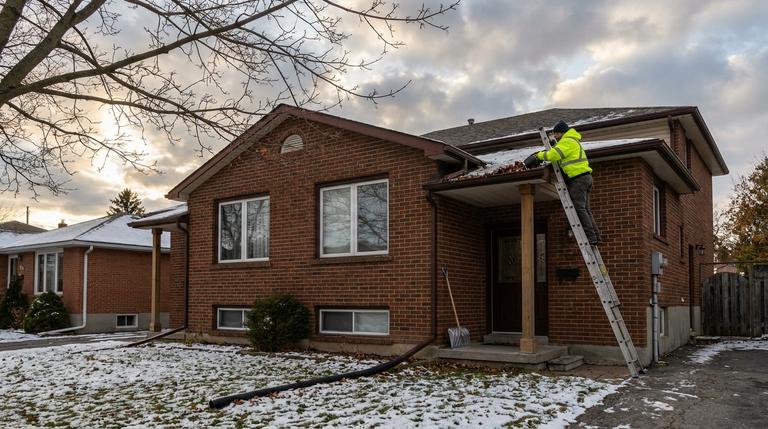
- Clear eavestroughs and downspouts, and extend discharge well away from the foundation.
- Check flashing, lifted shingles and plumbing stack boots.
- Replace tired weatherstripping and door sweeps, and adjust doors that no longer latch.
- Caulk exterior penetrations and consider interior film on older single-glazed windows.
Snow, Ice and Ground-Level Liability
- Write the snow contract properly: trigger depth, response time, salting, and where snow gets piled. Not on the walkway, not against the siding, never over an exit.
- Stake and mark high-efficiency furnace side-wall vents, dryer vents and gas meters. A vent buried by a plow windrow or drifting snow shuts the furnace down at best.
- Know your municipal sidewalk clearing bylaw and the deadline it sets after snowfall ends.
- Stock salt or grit bins, fix handrails, lay entry mats and repair exterior lighting, since it is dark by late afternoon.
- Log every service visit with date, time and photo. Slip-and-fall defence lives or dies on that record.
Vacant Units and the Insurance Fine Print
Read the vacancy conditions in your policy before a unit sits empty through winter. Most insurers impose conditions on unoccupied buildings and some require documented checks at set intervals. If the unit stays heated, fit a smart thermostat with a low-temperature alert so a failure reaches you at 2 a.m. rather than in April. If it will be unheated, that is a plumber-led drain-down with antifreeze in the traps, not a thermostat setting.
Tell Tenants What You Need From Them
The cheapest item on any winterizing rental property Canada checklist is a one-page seasonal notice. Send it in October:
- Do not shut the heat off when travelling; leave it at an agreed minimum.
- During extreme cold, open cabinet doors under sinks on exterior walls.
- Report any drip, damp patch or cold radiator the day you see it.
- Run the bathroom fan during and after showers. Frost inside the windows means humidity, not a broken window.
- Keep furniture and storage clear of baseboard heaters and vents.
- Here is where the water shut-off is, and here is the after-hours number.
Booking the Trades: Winterizing Rental Property Canada Without the October Scramble
The checklist is the easy half. The hard half is getting six trades into five buildings inside four weeks.
- Bundle by trade, not by property. One HVAC visit covering every furnace in the portfolio beats five call-outs and five travel charges.
- Get quotes in September, while contractors are still competing for fall work. Prices firm up the moment the no-heat calls start, a seasonal supply squeeze that writers at Construction Arbitrage unpack well.
- Vet before you book: trade licence, provincial workers' compensation clearance, liability insurance, and two references from other property managers.
- Keep a bench. Good trade businesses change hands quietly as owners retire, which is why marketplaces like Contractor Exit exist. If your only reliable furnace tech is one retirement away, that is a single point of failure heading into winter.
Platforms like PlanaJob let property managers post a job once and compare quotes from vetted contractors side by side, which takes most of the phone tag out of that four-week window. See how it works for Canadian property managers, or create an account and load your fall list in an afternoon. Turn this checklist into booked jobs: raise each line as its own job, set the dates, and schedule the whole fall winterization in one pass. More seasonal maintenance guides sit on the PlanaJob blog.
FAQ
When should I start winterizing a rental property in Canada?
Earlier than feels necessary: book HVAC servicing in August, sign snow contracts in September, finish roof, eavestrough and sealing work by mid-October while sealants still cure, and send the tenant notice then too. In colder regions, pull each step forward two to three weeks.
Is winterization the landlord's responsibility or the tenant's?
Systems and structure - heating, plumbing, roof, envelope - sit with the landlord or manager under provincial tenancy legislation everywhere in Canada. Tenants are responsible for ordinary cleanliness and for reporting problems promptly. Snow clearing and yard care can sometimes be assigned to a tenant in a single-family rental, but only in writing and only where provincial rules allow it.
What is the costliest winterization mistake property managers make?
Treating frozen pipes and ice dams as weather events rather than maintenance failures. Both have cheap preventive fixes - air sealing, insulation, draining exterior lines - that cost a fraction of the remediation, and insurers ask what was done beforehand. The runner-up is booking trades in November alongside everyone else.