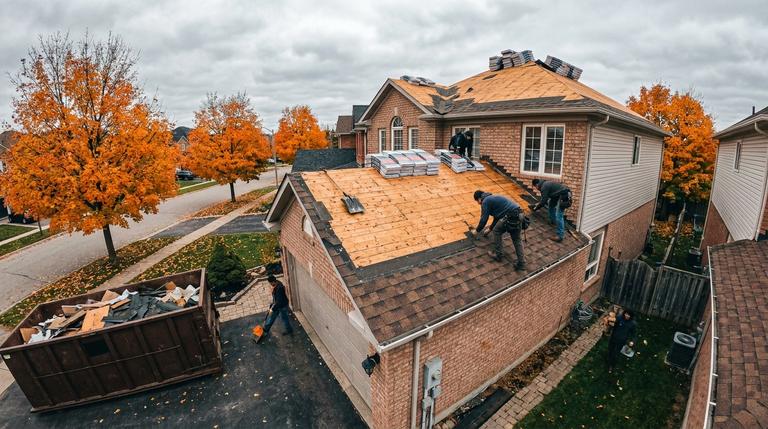
A roof is usually the largest single capital expense a residential building will hand you between purchase and sale, and the quotes never seem to agree with each other. Roof replacement cost in Canada swings with material choice, roof geometry, province, season, and whatever the crew finds once the old covering comes off. This guide explains how Canadian roofers actually build a price, how asphalt, metal, and flat roof systems compare over an ownership horizon, and how property managers can collect bids that are genuinely comparable instead of three different jobs wearing the same title.
How Canadian Roofers Build a Quote
Sloped roofing is priced per square, which is trade shorthand for 100 square feet of roof surface. A bid starts with measured area plus a waste factor, then adds everything the covering needs to work as a system: tear-off of the old material, a disposal bin and dump fees, underlayment, ice and water membrane along the eaves and valleys, new flashing at chimneys and wall junctions, vents, and the labour to install it all. Steep pitches and tall buildings push the price up because production slows and fall-protection requirements grow.
Then there is the part nobody can see from the driveway: the deck. Rotten or delaminated sheathing only reveals itself after tear-off, so a professional quote states deck repair as a unit price per sheet of plywood rather than a shrug. Insist on that line. An open-ended extras-as-found clause is the most common reason a roofing invoice lands far above the number ownership approved.
What Drives Roof Replacement Cost in Canada?
Whatever material you choose, the same handful of variables explains most of the spread between bids:
- Size and pitch - area sets the base price, steepness sets the labour rate and the safety setup.
- Complexity - valleys, dormers, skylights, and chimneys all add cutting, flashing, and time.
- Tear-off - stripping one layer is standard; multiple layers or old cedar shakes under the shingles cost more to remove and dispose of.
- Deck condition - sheathing replacement is the classic mid-job extra, so get it priced per sheet up front.
- Material and warranty tier - builder-grade and premium architectural shingles are different products at genuinely different prices.
- Access - tight urban lots, landscaping to protect, or nowhere to drop a bin all slow the job down.
- Region and timing - labour rates, disposal fees, and seasonal demand vary widely across the country.
- Code and permits - eave protection membrane, ventilation upgrades, and municipal permit fees are part of the real number, not extras.
Asphalt Shingles: The Canadian Baseline
Asphalt covers the large majority of sloped residential roofs in Canada, and for rental property it is usually the rational default: the lowest upfront price of the three systems, the deepest pool of installers, and a competitive market that keeps quotes honest.
Three-tab versus architectural
Three-tab shingles are the entry product; architectural (laminate) shingles cost moderately more and buy better wind performance, longer warranties, and better curb appeal. Most Canadian roofers now quote architectural by default, but confirm which tier is in each bid before you compare numbers. In hail-prone parts of the Prairies, ask for pricing on impact-rated shingles as well - some insurers look on them favourably, and hail is the region's signature roof killer.
Lifespan in a Canadian climate
Freeze-thaw cycling, ice damming, wind, and UV all shorten shingle life relative to the number on the wrapper, so treat warranty periods as marketing and plan capital reserves around a shorter, realistic service life. Attic insulation and ventilation matter as much as the shingle itself: a poorly vented attic bakes shingles in summer and feeds ice dams in winter, and no premium product installs its way around that.
Metal Roofing: Pay More Once
Metal is the long-horizon option. Exposed-fastener panels sit at the economical end, standing seam with concealed clips at the premium end, and metal shingle products in between. The rule of thumb quoted across the industry is that metal runs roughly two to three times the upfront cost of a comparable asphalt job, in exchange for a service life that can outlast two full asphalt replacement cycles. When a search for roof replacement cost in Canada produces a number that makes ownership flinch, it is usually a standing seam bid - and sometimes it is still the right answer.
The math favours metal on buildings you intend to hold for decades, and anywhere repeat access is expensive. Two cautions: metal sheds snow aggressively, so budget for snow guards above entrances, walkways, and lower roofs, and standing seam is a specialist trade, which in smaller markets can mean a very short list of genuinely qualified installers.
Flat and Low-Slope Roofs: A Different Trade
If you manage low-rise apartments, mixed-use buildings, or additions, you are buying a membrane system rather than shingles, priced on the field area plus detail work. The common Canadian systems are EPDM (rubber), TPO (a heat-welded white membrane), and two-ply modified bitumen, which Western Canada usually calls torch-on. Flat systems are where roof replacement cost in Canada varies most from building to building, because no two low-slope roofs share the same insulation, drainage, and mechanical layout.
Three things move a flat roof quote more than the membrane brand: the insulation package above the deck, which is often upgraded at replacement and can rival the membrane as a line item; drainage, including tapered insulation and new drains to correct ponding; and detailing around parapets, curbs, and HVAC penetrations. One more check that protects you twice: torch-applied systems involve open flame, so confirm the contractor's hot-works procedures and insurance before signing, because your building insurer will care as much as you do.
Region and Season Move the Number
The same roof does not cost the same in Vancouver, Winnipeg, and Halifax. Labour rates, disposal charges, and travel time differ, and sales tax treatment varies by province, so compare bids on their pre-tax totals. Regional labour supply is the quiet force behind roof replacement cost in Canada: a market with six busy crews prices differently from one with sixty.
Season matters just as much. The Canadian roofing calendar is compressed, spring and fall book out first, and asphalt shingles need warmth to self-seal, which limits winter installation in most of the country. A useful habit for planned work: inspect and gather quotes over winter, then book early for a spring or early-summer slot before storm season fills every schedule.
How to Get Apples-to-Apples Roofing Quotes
The fastest way to overpay on roof replacement cost in Canada is comparing three bids that describe three different jobs. Fix that with process:
- Write one scope sheet - materials, tiers, and expectations - and give every bidder the same document.
- Specify full tear-off, and ask how many layers the bidder assumed.
- Require a unit price per sheet for deck replacement before work starts.
- Ask exactly where ice and water membrane will be installed, not just whether it is included.
- Get the warranty split in writing: manufacturer material warranty and contractor workmanship warranty, each in years.
- Ask for proof of liability insurance and workers' compensation coverage - WSIB in Ontario, WorkSafeBC in British Columbia, or your province's equivalent.
- Pin down the payment schedule, and be wary of any bid that wants most of the money before materials arrive.
- Confirm the housekeeping: bin placement, landscape protection, and a magnetic sweep for nails at the end.
Chasing all of that by phone and email is tedious, which is why platforms like PlanaJob let property managers post a scope once and compare quotes from vetted, insured contractors side by side. If roofing is one line in a wider maintenance workload, see how the whole workflow fits together on the PlanaJob property managers page, and browse the other big-ticket trades in the cost guides on the PlanaJob blog.
It also pays to understand the other side of the table. Every serious bid carries overhead, seasonal risk, and warranty liability, and the business strategy writing at constructionarbitrage.com is a useful window into how good roofing companies build their margins. That context matters when a suspiciously cheap bid lands, because a price with no margin in it usually turns into a corner cut on your roof.
If a roof replacement sits in this year's capital plan, do not settle for three incomparable PDFs. Post the scope once and get apples-to-apples quotes from insured roofing contractors - creating a PlanaJob account is free and posting the job takes minutes.
FAQ
How long does a roof replacement take?
Most single-family asphalt replacements finish in one to three days once materials are on site, weather permitting. Metal and flat roof projects typically run longer because of detailing and, on flat roofs, insulation and drainage work. For occupied rentals, tell tenants the dates in advance: tear-off is loud, and driveways and parking areas are usually out of action while the bin is on site.
Can a roof be replaced in winter in Canada?
Sometimes, but with limits. Asphalt shingles rely on heat to seal down, so most crews avoid installing them in deep cold, while metal and some flat roof systems tolerate winter work better. If a roof fails in January, expect a temporary repair or emergency membrane first, with the full replacement booked for the main season.
Should I repair or replace an aging roof?
Isolated damage on a roof with life left in it is a repair. Widespread granule loss, curling shingles, or chronic leaks appearing in new places usually mean serial repairs will cost more than replacement within a few years. Pay for an honest inspection with photos, then decide with the building's hold period in mind - the answer is different for an asset you are selling next year than for one you plan to keep for twenty.